





October in review: Innova’s 2027 trends, El Niño risks, MAHA food reform

Key takeaways
- Innova Market Insights’ 2027 trends put nutrient density, protein quality, and metabolic health at the center of F&B innovation.
- El Niño raised uneven supply risks across cocoa, coffee, sugar, palm oil, and seafood.
- US support for additive regulation and ultra-processed food labeling extended beyond MAHA supporters.
In October 2026, Innova Market Insights’ 2027 trends put nutrient density, protein quality, and metabolic health at the center of F&B innovation. Nestlé USA’s forecast reinforced the shift toward products combining nutritional benefits, while suppliers focused on delivering protein enrichment with appealing taste and texture.
Supply resilience remained a pressing concern as El Niño created uneven risks across cocoa, coffee, sugar, palm oil, and seafood. Dependence on imported feed and fertilizer also exposed vulnerabilities in protein supply chains, reinforcing the need for targeted procurement and greater sourcing flexibility.
In the US, public backing for tighter food additive regulation and ultra-processed food labeling extended beyond supporters of Make America Healthy Again (MAHA), adding pressure on manufacturers to review formulations. Alongside these developments, fermentation, exotic citrus, and sensory innovation offered further opportunities to differentiate familiar products.
We look back at some of the standout stories from last month.
Swicy flavor trends: How formulators refine sweet heat for food and beverages
Agrana, Kalsec, and OSF Flavors described a more precise phase of sweet-heat innovation, spanning fruit-chili pairings, dairy desserts, beverages, and savory concepts. Successful formulations depend on controlling how sweetness, acidity, aroma, and pungency interact during eating and processing, giving manufacturers opportunities to create layered experiences with recognizable flavor and carefully managed heat.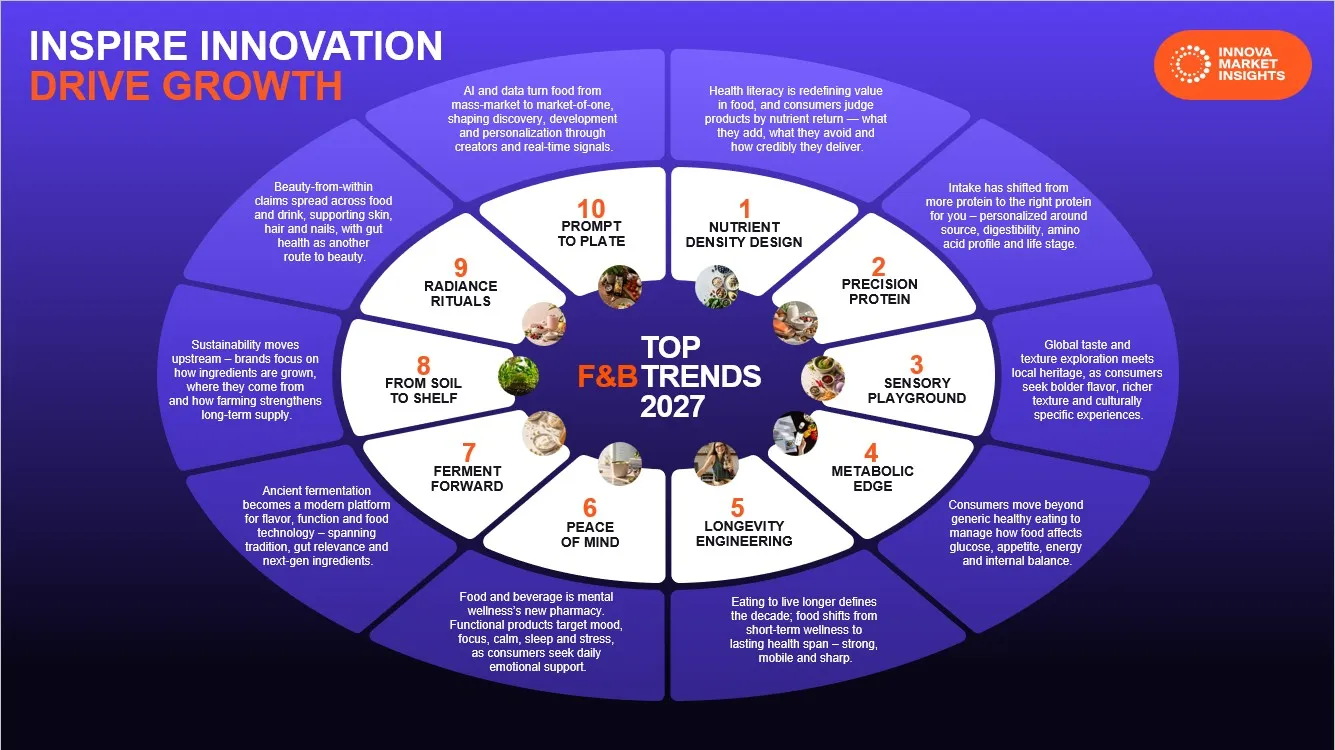 Innova’s trends identify nutrient density and protein quality as key priorities for F&B NPD.
Innova Market Insights’ top 2027 F&B trends: Nutrient density, protein quality & metabolic health
Innova Market Insights’ 2027 trends placed nutrient density, protein quality, metabolic health, and longevity at the center of product development. Its research found 59% of consumers globally read all or most nutrition information on packs, highlighting demand for familiar products that deliver stronger nutritional value alongside appealing sensory experiences and more targeted health positioning.
El Niño reshapes food commodity risks as supply pressures diverge
El Niño created different pressure points across cocoa, coffee, sugar, palm oil, and seafood, with Peruvian anchovy disruption already affecting fishmeal and fish oil markets. Rabobank, Beroe, and AHDB emphasized assessing individual commodities and regions, combining sourcing flexibility and risk management with disciplined purchasing as weather and market conditions evolve.
Global protein supply faces risks from imported feed and fertilizer dependence
The Protein Sovereignty Index warned that domestic food production can conceal dependence on imported feed and fertilizer. Canada was the only assessed country rated “Sovereign.” For F&B businesses, the findings highlighted the value of tracing suppliers’ input dependencies, diversifying sourcing, and planning for disruptions that can raise costs across protein supply chains. El Niño has raised uneven supply risks across cocoa, coffee, sugar, palm oil, and seafood.
Nestlé USA: Benefit stacking, texture and zest to shape F&B innovation in 2027
Nestlé USA’s 2027 forecast put products combining multiple benefits at the center of innovation, with protein increasingly paired with fiber, probiotics, or collagen. Zesty flavors, fruit-forward coffee, and more regionally specific cuisines offered further differentiation, while texture and inclusions strengthened the link between sensory experience, indulgence, and consumers’ perceptions of value.
Fermented foods: Health drives interest but taste keeps consumers coming back
Danone, Novonesis, and Daesang outlined how fermentation can support gut health positioning, protein enrichment, and simpler ingredient lists while developing appealing flavors and textures. Cultures and enzymes offer routes to sugar reduction and improved product performance, but commercial success also requires consistent production, shelf life stability, and responsible communication of health benefits.
The next citrus wave: Suppliers turn exotic varieties into scalable flavor solutions
Yuzu, calamansi, and pomelo opened opportunities across bakery, confectionery, dairy, and sauces as manufacturers explored more distinctive citrus profiles. Kerry, ADM, JPL Flavours, and Symrise described the sourcing and processing challenges behind wider adoption, with limited raw material availability, heat sensitivity, and flavor stability shaping the economics of scaling these ingredients.
Hydration beyond the hype: Developing next-generation functional beverages
Electrolyte drinks expanded into everyday routines through sparkling formats, powder mixes, and reduced-sugar products. The growing market offers beverage manufacturers new consumption occasions, but meaningful hydration positioning depends on mineral levels, intended users, and the fluid losses a product is designed to replace. Taste and convenience remain central to broader appeal. Support for tighter food additive regulation extends beyond MAHA supporters.
Protein beyond grams: Leaft, Lallemand and Arla tackle quality, taste and texture
Leaft Foods, Lallemand Bio-Ingredients, and Arla Foods Ingredients highlighted amino acid composition, digestibility, and application behavior as key considerations in protein enrichment. Their approaches ranged from Rubisco’s ability to build structure to proteins designed to minimize textural changes, showing why successful fortification depends on matching nutritional quality and functionality to each product.
America’s appetite for food reform extends beyond MAHA’s supporter base
Annenberg Public Policy Center survey findings showed 80% of US adults supported labeling ultra-processed foods and 75% favored tighter regulation of dyes and chemical additives. The breadth of support suggests continued pressure on manufacturers to review formulations and ingredient communication while preserving taste, food safety, and shelf life.
Black sesame: A dark horse in reshaping bakery, desserts and beverages
Black sesame gained visibility across pastries, ice cream, café drinks, and confectionery, offering roasted nuttiness, subtle bitterness, and striking color within familiar formats. The ingredient creates opportunities for premiumization, but lasting demand depends on balanced flavor, reliable quality, and an enjoyable eating experience that encourages repeat purchases. Sour flavors and layered textures shaped Halloween confectionery innovation.
Barry Callebaut rewrites the chocolate flavor playbook with Flavourcode
Barry Callebaut introduced Flavourcode, using controlled cocoa fermentation to target distinctive, repeatable chocolate profiles at commercial scale. Its first 70% dark chocolate showcased tropical fruit notes across biscuit, confectionery, and ice cream concepts, illustrating opportunities to build premium products through flavor complexity while exploring higher-cocoa, lower-sugar formulations.
Halloween 2026 candy trends turn sour, crunchy and unexpected
Tastewise reported US consumer demand for sour candy up 28% year-on-year and crunchy candy up 14% as Halloween innovation focused on sensory surprise. Suppliers highlighted acidity control and moisture migration as challenges in layered confectionery, while Potatoes USA’s Trick-or-Tater campaign showed how the occasion is creating unexpected purchase opportunities beyond candy.