




Barry Callebaut rewrites the chocolate flavor playbook with Flavourcode
Can targeted fermentation create more distinctive chocolate profiles at scale?

Key takeaways
- Flavourcode uses controlled cocoa fermentation to develop distinctive and scalable chocolate flavor profiles.
- Callebaut Flavourcode 01 is a 70% dark chocolate tested across biscuit, confectionery, and ice cream applications, with 54% dark and milk profiles in development.
- The platform is also being explored for premiumization, supply chain scale-up, and lower-sugar reformulation.
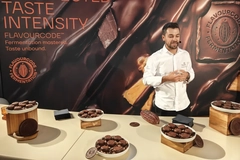 Francisco Moreira, head of the Callebaut Chocolate Academy in Belgium, showcasing a biscuit concept with a 70% Flavourcode coating.
Barry Callebaut is bringing fermentation deeper into chocolate NPD with Flavourcode — its latest innovation platform designed to give manufacturers greater control over flavor differentiation at scale. The approach targets distinctive cocoa profiles while opening opportunities across finished applications, supply chain scale-up, and higher-cocoa, lower-sugar reformulation.
Food Ingredients First brings exclusive insights from the cocoa and chocolate solutions provider’s Innovation Summit in Belgium, where executives and technical experts outlined how Flavourcode can move chocolate development beyond cocoa percentage and toward more targeted sensory profiles.
“Flavourcode is a new innovation platform that opens a new chapter in chocolate taste innovation,” Dries Roekaerts, president of Customer Experience at Barry Callebaut, told us at the event.

“The key behind it is a proprietary fermentation method which unlocks distinctive flavors from the cocoa bean that, in the past, have remained hidden. That creates chocolates with much more depth and intensity, and we can reproduce it consistently and at scale, which makes a big difference to our industry.”
Artisan creativity to scalable chocolate innovation
Barry Callebaut showcased Flavourcode 01, its first 70% dark chocolate expression, across biscuit, confectionery, and ice cream concepts. It is also exploring dark 54% and milk profiles for future food manufacturing applications.
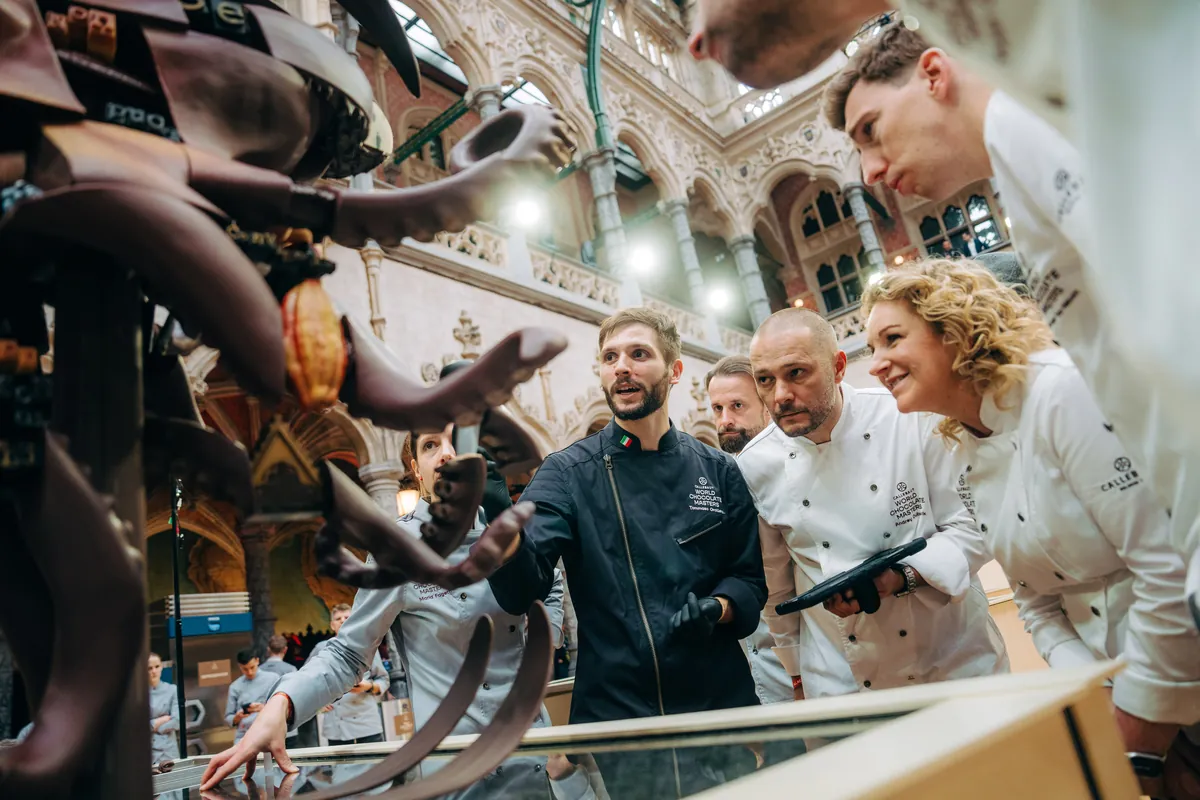 Barry Callebaut’s Innovation Summit in Antwerp was held alongside the World Chocolate Masters 2026 final, won by Italy’s Tommaso Grollero.The innovation was unveiled at Antwerp’s Handelsbeurs alongside the World Chocolate Masters 2026 final, where Italy’s Tommaso Grollero was named winner. Fifteen finalists competed under the “Play & Taste” theme across four chocolate-focused categories, testing flavor, technique, artistry, and commercial thinking.
Roekaerts said bringing the two events together was intended to connect artisan creativity with innovation at scale.
“We believe that bringing [customers] and making them experience the creativity and the inspiration from our artisan community is helping them also to get to know the trends of the future and what’s happening in the chocolate world for them to scale it up with their brands.”
Why fermentation in chocolate flavor?
During the summit, participants tasted Flavourcode 01, a 70% dark chocolate with passion fruit, pineapple, mango, and ripe banana notes, followed by dried-fruit characteristics and a cocoa finish.
Fermentation specialist Christian Weij explored fermentation’s role in flavor development through a guided tasting of fermented butter, barley, tomato, and “coffee ketjap” made using fermented coffee waste.
“ Fermentation is actually all the food that we have that has been changed by microbes. So it’s bacteria, yeast, and molds that create the really nice flavor, but also the preservation of it,” he explained.
“In chocolate, there is also a yeast which gives it a really good flavor.”
Research has identified fermentation as a crucial post-harvest stage of cocoa beans, during which naturally occurring yeasts and other microorganisms break down sugars in the pulp surrounding freshly harvested beans. This helps shape the precursors that influence the final chocolate flavor.
 Watch our conversation with Dries Roekaerts on Flavourcode, cocoa fermentation, and scalable chocolate innovation.Barry Callebaut says Flavourcode intervenes at this early fermentation stage after cocoa pods are opened, rather than beginning with recipe development, roasting, or conching.
Widely available beans naturally rich in cocoa undergo a series of fermentations in sealed vessels.
“Our invitation now is to make the Flavourcode platform work for you [manufacturers] — to develop with us a chocolate recipe for your consumer and your brand that gives you a future-fit recipe,” CEO Hein Schumacher said at the summit.
Navigating cocoa sourcing complexity
Scaling Flavourcode brings sourcing and logistics challenges, with West Africa still supplying nearly 70% of global cocoa, and diversification constrained by the crop’s smallholder-based supply chain.
Roekaerts described Flavourcode as a “proven technology,” but said the challenge is rolling it out across different origins.
“We are centralizing the fermentation, so in certain countries, that is a different way, a different supply chain, also logistically. But we’re very confident that, with the benefits it brings for all players across the value chain, that’s something we’ll be able to implement.”
Barry Callebaut’s direct cocoa sourcing spans Brazil, Côte d’Ivoire, Cameroon, Ecuador, Indonesia, Ghana, and Nigeria, underscoring the logistical complexity of rolling a centralized fermentation model across different origins.
The company says its public sourcing map covers 100% of its direct cocoa supply chain.
Flavourcode beyond chocolate bars
In breakout sessions, attendees tasted the 70% Flavourcode chocolate in finished applications.
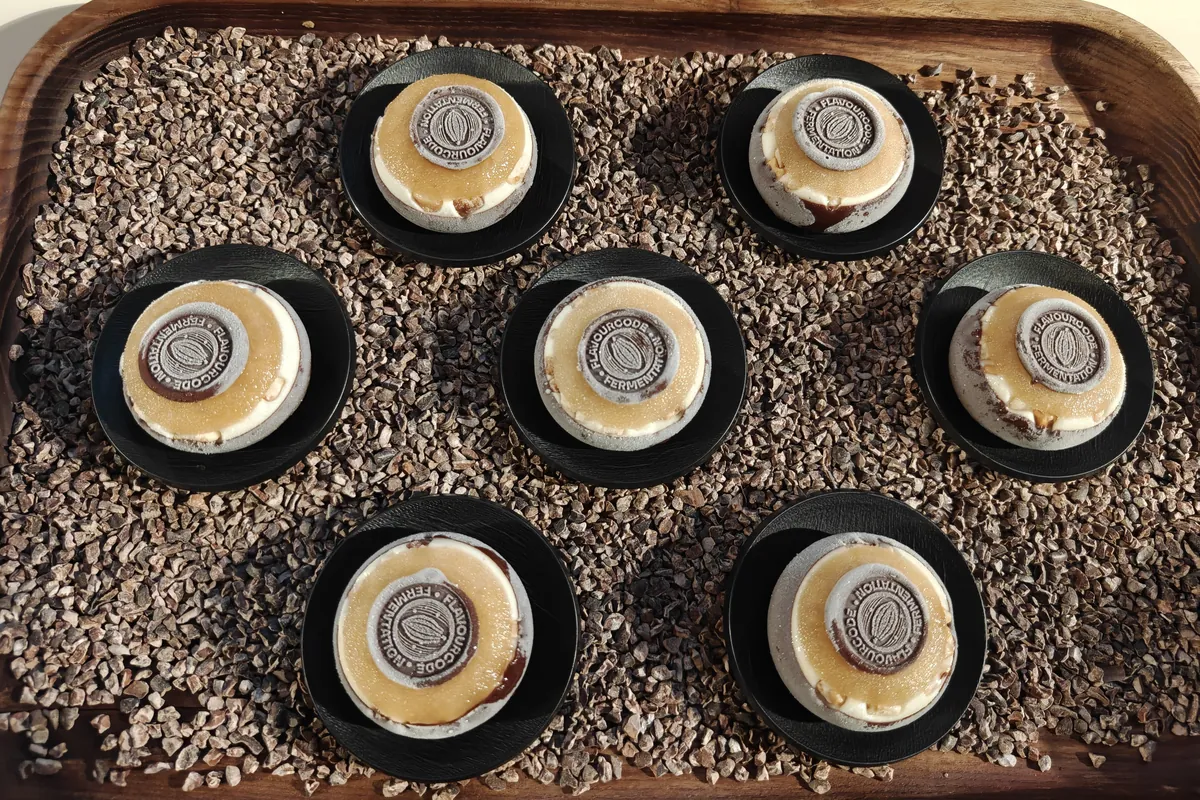 A Flavourcode ice cream concept combining a chocolate ice cream center with Tahitian vanilla, quince, macadamia sable, and a Flavourcode chocolate dip was on display.Francisco Moreira, head of the Callebaut Chocolate Academy, Belgium, created a biscuit concept using an outer 70% Flavourcode coating.
“You have the crumbly biscuit, the creamy inside, and this gianduja, which is crunchy but at the same time when you’re tasting it, it melts automatically,” he explained.
For frozen applications, Barry Callebaut chef chocolatier Joël Perriard paired a Flavourcode ice cream center with Tahitian vanilla ice cream, quince, macadamia sablé inclusions, and a Flavourcode chocolate dip.
“With these three flavors, we will create a flavor that is not an ingredient in the product. You will feel a very strong note of honey,” he told participants.
The tasting illustrated how ingredient interactions can generate additional perceived flavor notes — in this case, honey — without that ingredient being present in the formulation.
Roekaerts pointed to commercial opportunities across these categories.
“We see it coming to life in ice cream, in confectionery, also in certain biscuit applications, so it’s a versatile product with flavor profiles that we can roll out very widely.”
Taste, texture and premiumization
The sensory opportunity comes against a difficult commercial backdrop, with chocolate manufacturers balancing premiumization against reformulation pressures and cocoa market volatility.
Barry Callebaut’s Global Chocolate business returned to 3.2% growth in Q3 FY2025/26 after declining across the first nine months. The company has also cited overcapacity, supply disruption, and cocoa price volatility as pressures on profitability.
Research conducted by Barry Callebaut in collaboration with market research firm Walr and global trend forecaster WGSN surveyed 24,000 consumers across multiple markets and identified intentional indulgence as an overarching trend, according to WGSN CEO Carla Buzasi.
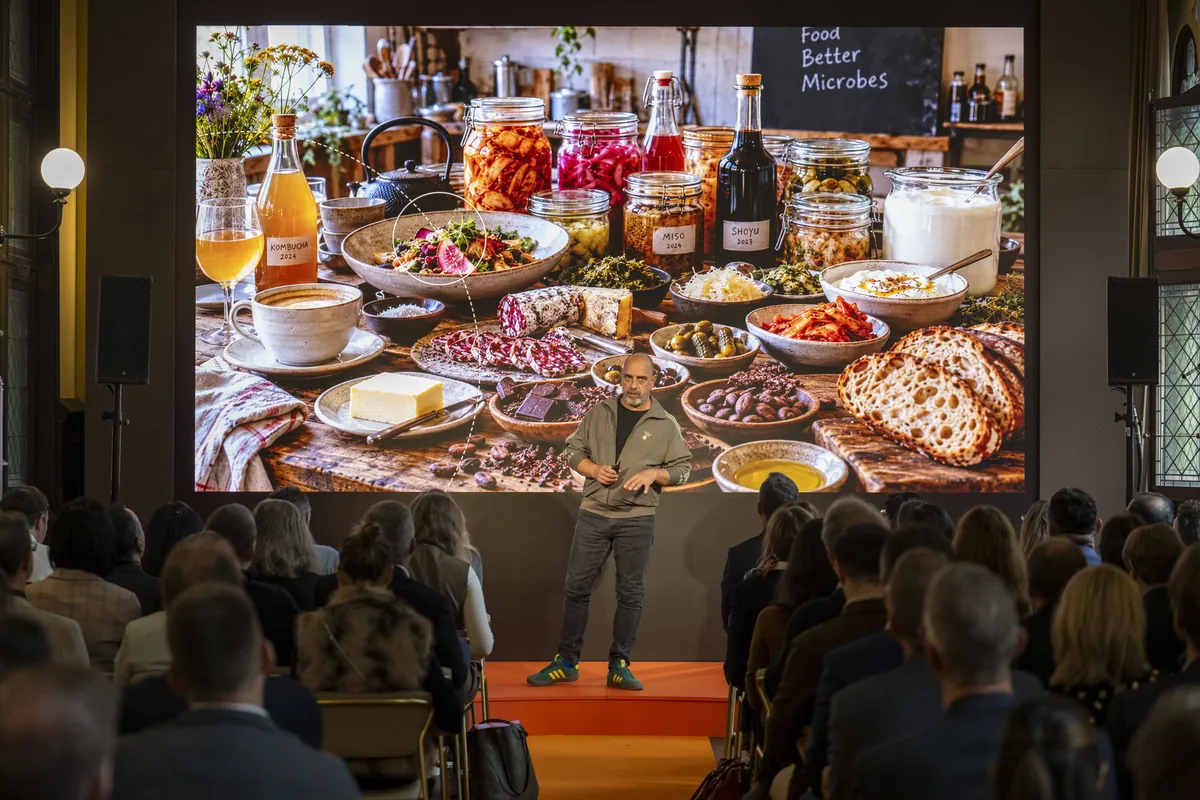 Fermentation specialist Christian Weij led a tasting to show how microbes shape flavor through fermentation.“It doesn’t matter which consumer cohort we’re looking at, which drivers are there, taste remains the most important. It’s where everything starts and where everything finishes,” she said at the event.
Innova Market Insights’ data points in a similar direction. Its 2026 European chocolate research finds that flavor preferences are becoming more complex, while creamy, crispy, and crunchy are consumers’ top textures for indulgent appeal.
Innova says combining these textures can create greater sensory contrast and help justify premium positioning. For Barry Callebaut, however, premiumization also has to compete with affordability, with Roekaerts positioning the first Flavourcode chocolate at an “entry-level premium ticket.”
Steering flavor, cutting sugar
Against these sensory and commercial pressures, Barry Callebaut is positioning Flavourcode as a way for manufacturers to differentiate chocolate through targeted flavor profiles rather than cocoa percentage alone.
Roekaerts emphasized that the approach starts with the desired taste before fermentation translates that target into a finished recipe.
“One is to define the flavor profile that best fits with the consumer and the brand of our customers. Then the fermentation translates that taste profile into a product, into a recipe, into a future-fit recipe for the brand.”
“With the technology that we have developed, we are exploring many taste profiles from fruity to botanical, and we are convinced that we can steer the taste profile of the chocolate for our customers.”
Roekaerts also highlighted reformulation opportunities as manufacturers respond to demand for lower-sugar products.
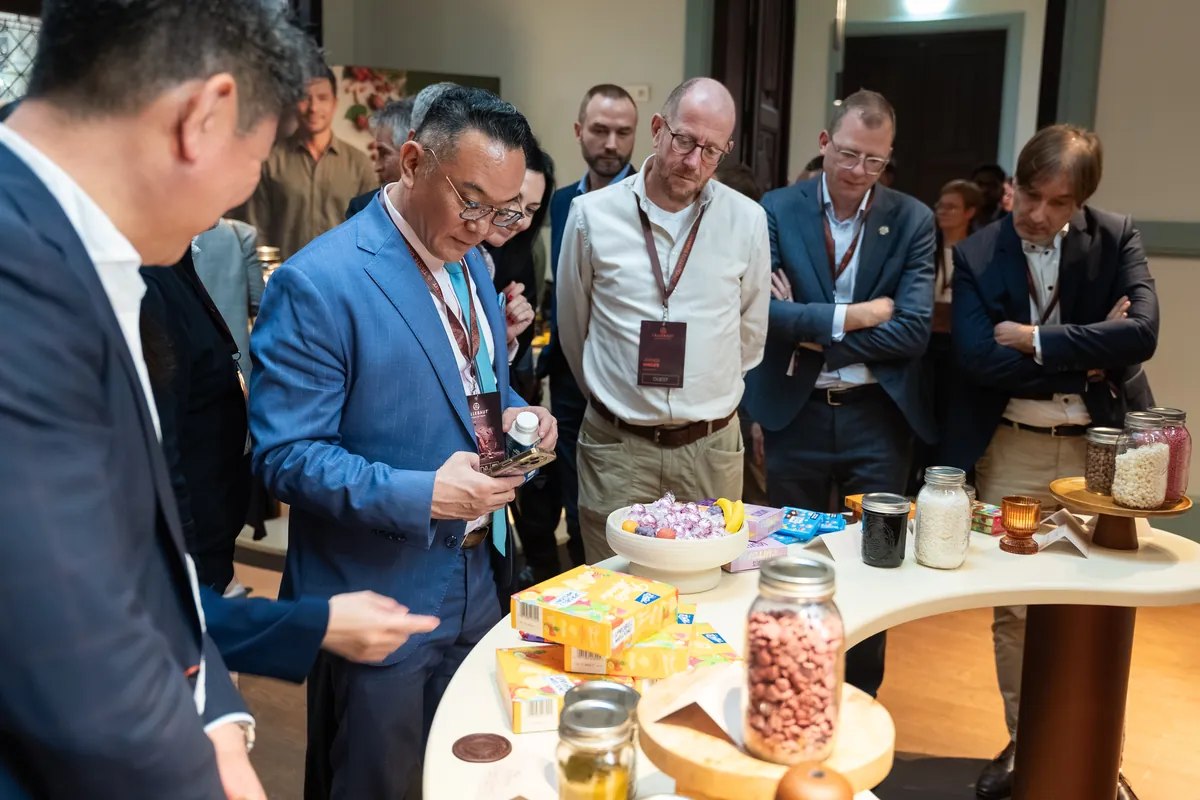 Industry attendees assessed how Flavourcode could translate into scalable chocolate applications.“Through Flavourcode, we can also work on the bitterness of the chocolate, which allows chocolate recipes to be higher in cocoa and hence contain less sugar.”
The approach reflects wider industry efforts to manage bitterness as manufacturers explore higher-cocoa, lower-sugar formulations.
Flavourcode beyond launch
Flavourcode will be available to EU artisans, culinary professionals, and food manufacturers from November 2026, with a wider global rollout to follow. Additional taste profiles are also planned.
The next test will be whether manufacturers can turn those fermentation profiles into differentiated products while meeting processing, supply, and cost requirements.
“We’ll be working with customers to define the right taste profile for their consumer, and then leverage the technology behind to develop and lock in the recipe that’s unmistakably theirs for the future ahead,” Roekaerts said.