



El Niño reshapes food commodity risks as supply pressures diverge

Key takeaways
- El Niño is reshaping food commodity risk unevenly, with cocoa, coffee, sugar, palm oil, and seafood facing different pressure points.
- Seafood is already feeling the shock, while cocoa and coffee markets are pricing in disruption.
- Experts urge manufacturers to stay flexible, target vulnerable commodities, and avoid blanket stockpiling.

El Niño’s impact on the F&B industry is already visible, but manufacturers are not facing a uniform shock. From cocoa and coffee to sugar, palm oil, and seafood, the effects are emerging at different speeds — with some markets already pricing in disruption while physical supply pressures in others may take longer to materialize.
El Niño is a recurring climate pattern in which unusually warm Pacific Ocean waters disrupt weather patterns around the world.
The National Oceanic and Atmospheric Administration’s latest outlook says El Niño continues to strengthen, with a strong-to-very strong event more than 83% likely through January to March 2027. However, the agency cautions that “stronger events” do not guarantee more severe impacts, although they increase the likelihood of certain El Niño-related effects.

Recent Food Ingredients First coverage has shown how the strengthening El Niño is already increasing commodity risk. While Rabobank has flagged exposure across cocoa, palm oil, and robusta, procurement intelligence firm Beroe has warned of growing price and procurement pressures across cocoa, sugar, and vegetable oils.
We now take a closer look at how these risks are impacting F&B supply chains, with Carlos Mera, head of Agri Commodities Market Research at Rabobank, Karthick SS, senior domain analyst for Agro at Beroe, and Susie Stannard, lead dairy analyst at the Agriculture and Horticulture Development Board (AHDB), UK.
Pricing El Niño risk before crop losses occur
Mera says cocoa and robusta coffee markets are already incorporating an El Niño risk premium.
“Coffee markets, particularly robusta, are pricing future weather risks. The strength of deferred contracts suggests concern not only for current production, but also for flowering and yield potential in the 2027/28 crop cycle,” he tells Food Ingredients First.
 Karthick SS: Procurement risks over the next 90 days are expected to remain concentrated in a few weather-sensitive food commodities.Beroe also identifies cocoa as the highest procurement risk in its near-term market outlook, forecasting prices to rise by nearly 9%.
“Although stronger port arrivals and improving exchange inventories are preventing a sharper rally, buyers should continue to expect elevated volatility and intermittent supply tightness,” says Karthick SS.
Meanwhile, Mera says sugar and palm oil have become increasingly sensitive to weather developments across Asia.
“In both cases, the main concern is drier conditions in key Asian producing regions, particularly India, Thailand, Indonesia, and Malaysia.”
He expects the greatest sugar and palm oil production risks to emerge possibly in 2027, rather than immediately.
Ingredient buyers watch regional impacts
However, Mera cautions that the strength of El Niño itself should not be taken as a direct measure of the severity of agricultural disruption.
“The key point is that a very strong El Niño does not automatically translate into severe agricultural disruption. Commercial impacts depend on how weather patterns develop in specific producing regions and during critical crop growth stages.”
For food manufacturers, Mera highlights rainfall and reservoir levels across Southeast Asia, especially Indonesia, Malaysia, and Vietnam, as key indicators to watch.
“These regions are central to palm oil and robusta coffee production,” he says.
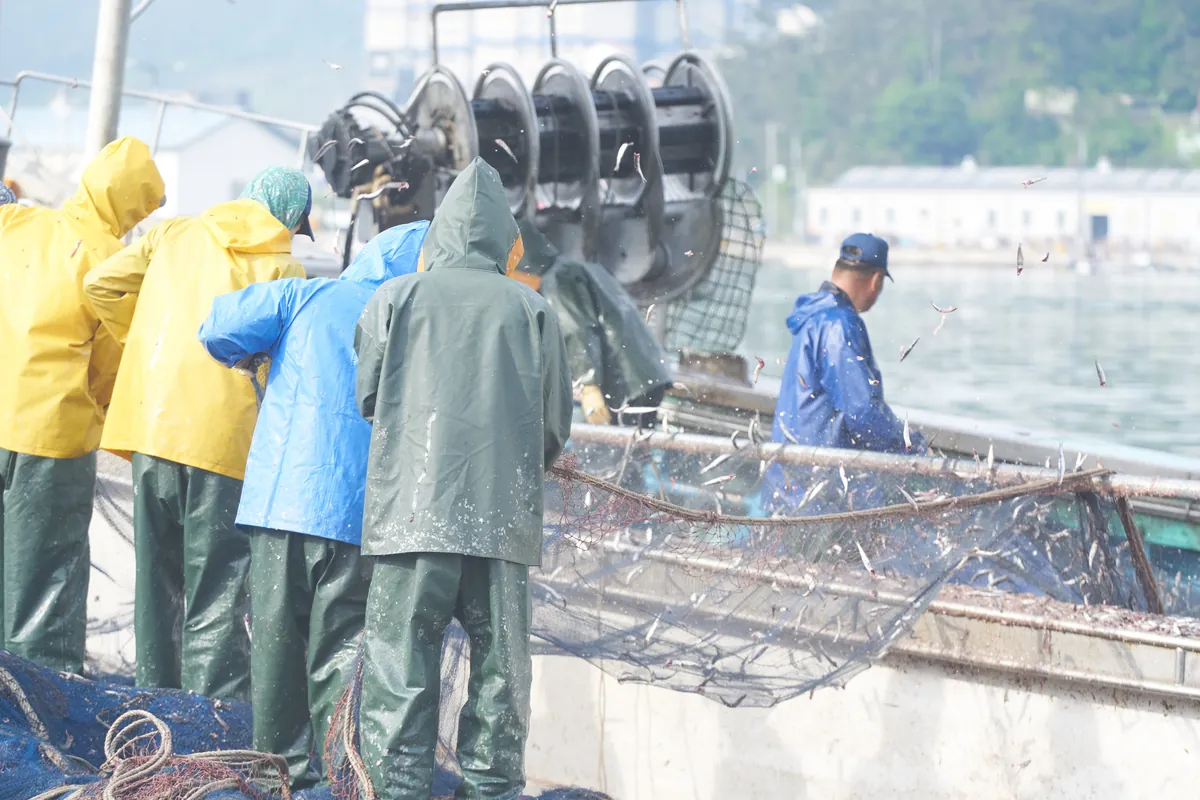 Seafood is already feeling El Niño’s physical supply impact as anchovy output tightens.He also points to rainfall and temperature patterns during cocoa development in key growing regions in West Africa, the strength and distribution of the Indian monsoon, and weather conditions in Australia as important indicators for ingredient buyers.
“In short, it is not the Pacific temperature anomaly itself that matters most to ingredient buyers, but whether it translates into sustained production stress in a handful of strategically important exporting regions.”
El Niño disruption hits seafood
In seafood, “the supply shock has already arrived,” Mera says.
“Peru’s anchovy fishery, the world’s largest source of fishmeal and fish oil, has been severely affected by warmer ocean temperatures.”
Rabobank’s report says fishmeal prices have more than doubled year on year, while fish oil prices have risen more than threefold since July 2025.
“For ingredient manufacturers involved in aquaculture, animal nutrition, or specialty oils, this is already a commercial reality rather than a future risk,” says Mera.
Vegetable oils and grains face mixed outlook
However, Karthick SS notes that weather is only part of the commodity-price equation.
“Although a potential El Niño event could amplify weather-related uncertainty, it is not the sole market driver. Biofuel demand, energy markets, government policies, and regional supply fundamentals are also expected to influence commodity pricing and availability,” he says.
Vegetable oils point toward this interaction, with Karthick SS warning that European rapeseed oil and US soybean oil warrant close monitoring. He expects rapeseed oil prices to rise by around 2% and US soybean oil by approximately 5%.
 Susie Stannard: El Niño may affect UK dairy indirectly by raising global dairy prices and feed costs.The forecast for grains is more balanced than other commodity categories. Rabobank describes El Niño as a “more benign weather regime than La Niña” in parts of the Americas, where additional rainfall may benefit Argentina and the southern US.
“Companies should also be aware that El Niño creates winners as well as losers,” says Mera. “Improved growing conditions in parts of Argentina, North America, for example, may offset production challenges elsewhere, particularly when it comes to global grain and oilseed availability.”
Dairy feels “indirect” pressures
In the UK, AHDB’s Stannard says El Niño itself should not be expected to cause UK heatwaves. She does not anticipate a direct El Niño-related heat effect on milk yields, fat, or protein.
Instead, the country’s dairy sector could be “indirectly affected by the impact on markets,” she tells us.
“If El Niño were to cause drought in New Zealand or South America, that could help push up global dairy prices. Conversely, it could increase input costs by increasing the cost of feed if it damages global grain production.”
Responding to El Niño volatility
Rabobank and Beroe emphasize targeted risk management for F&B manufacturers facing El Niño-related commodity risks.
“The next 90 days call for selective procurement rather than broad inventory accumulation,” says Karthick SS.
Commodities exposed to increasing production uncertainty, particularly cocoa and Indian sugar, require higher forward coverage as weather-related disruptions could tighten availability and sustain upward price pressure, he explains.
 Carlos Mera: Manufacturers should prioritize risk management over prediction and avoid overreacting to weather headlines.Karthick SS also stresses that vegetable oils require greater commercial flexibility than stockpiling, while comfortable global corn supplies allow for phased purchasing strategies.
“By aligning procurement decisions with the underlying drivers of each commodity rather than reacting uniformly to market volatility, manufacturers can strengthen supply continuity, protect margins, and optimize working capital without creating unnecessary inventory exposure.”
Mera similarly says: “Manufacturers should focus on risk management rather than prediction.” He points to geographical sourcing diversification, close supplier communication, and reviews of hedging strategies as some of the steps companies can take.
He also advises companies to “resist the temptation to overreact to headlines.”
“Commodity markets often price weather risks months before any physical impact becomes visible. In some cases, markets can move more dramatically than underlying supply-and-demand fundamentals ultimately justify.”
For Mera, the most effective response combines preparation with flexibility.
“The most successful procurement strategies over the coming year will likely be those that combine preparedness with discipline: protecting supply chains against credible risks while remaining flexible enough to avoid locking in decisions based solely on worst-case scenarios.”