



Chicken-fed salmon raises sustainability concerns as producers rethink fish feed

Key takeaways
- Poultry by-products are entering Norwegian salmon feed, raising consumer acceptance and animal welfare concerns.
- Research supports moderate inclusion, but additional omega-3 sources are needed to maintain nutritional quality.
- Sustainability benefits depend on sourcing and full life-cycle impacts, while transparency remains essential.
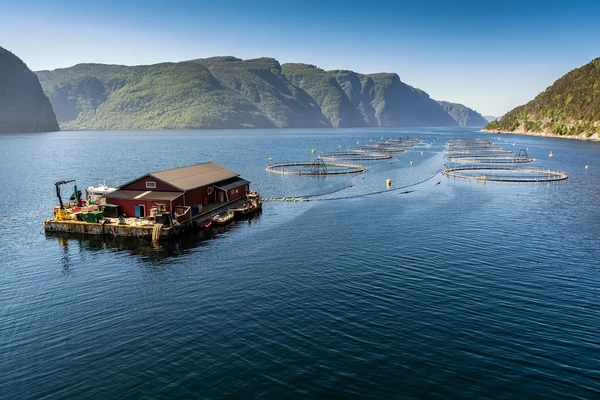
Farmed salmon are being fed chicken by-products as Norway’s feed industry turns to alternatives to marine ingredients. The move revives concerns about consumer acceptance and whether the shift delivers environmental benefits or transfers pressure onto other animals.
Poultry-derived ingredients offer a locally available protein source that can support salmon growth and reduce reliance on fishmeal, according to Margareth Øverland, professor of aquaculture nutrition at the Norwegian University of Life Sciences. However, Eurogroup for Animals questions their sustainability credentials and warns that ingredient substitution cannot resolve the wider problems of intensive salmon farming.
European restrictions on processed animal protein, introduced following the “mad cow disease” (BSE) crisis, were partially lifted in 2013 to permit its use in aquaculture feed. Uptake has nevertheless been held back by concerns about shoppers’ reactions.

“Salmon producers and retailers were concerned that consumers would react negatively to salmon fed chicken by-products, even though the ingredients are scientifically proven to be safe,” Øverland tells Food Ingredients First.
She says salmon diets containing chicken by-products alongside fishmeal and plant proteins are common in Chile and North America, with those countries exporting salmon to Europe for many years.
“As a result, the Norwegian feed industry is starting to introduce some poultry by-products in their salmon feed.”
Growth and formulation performance
Øverland describes poultry-derived proteins as affordable ingredients available locally in large quantities.
“These products are high-quality proteins with a favorable amino acid composition similar to that of fishmeal. They do not contain any antinutritional factors, and they are cheap and locally available in large quantities.”
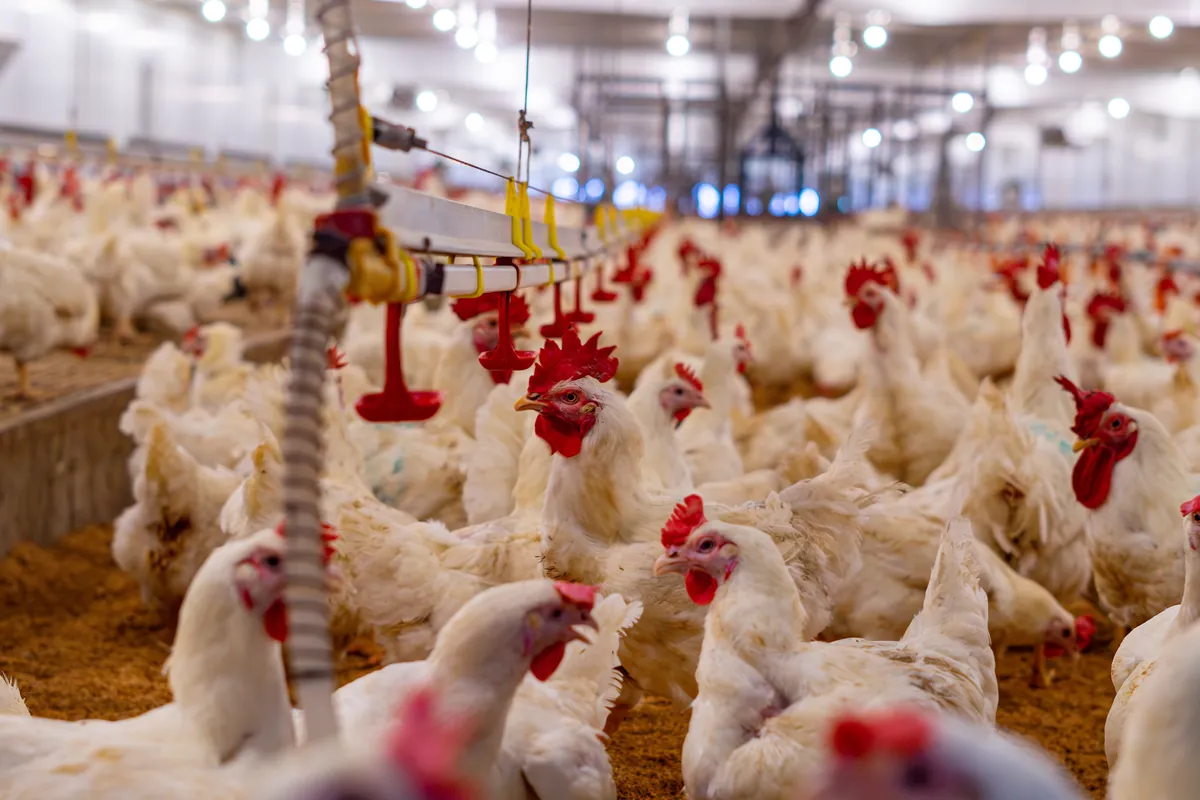 Poultry offers an alternative protein source for salmon feed.Øverland’s research found that moderate poultry meal inclusion supported growth comparable to a commercial control diet containing fishmeal, soy protein concentrate, wheat gluten, and rapeseed meal.
“Also, we did not find any problems related to gut health or fish welfare scores or product quality when the fish were fed the poultry meal-based diets. In fact, the fish fed the poultry meal diet had a higher condition factor and a lower skin ulcer score.”
The findings support its use within a balanced formulation, although the research does not establish an upper inclusion limit, she notes.
“We fed salmon diets containing a moderate level of poultry meal of up to 10% with good results, but being such a high-quality protein source, I would also expect good results with a higher inclusion level.”
The omega-3 challenge
Replacing protein ingredients does not remove the need to supply essential fatty acids. Poultry oil lacks the long-chain omega-3s that support fish health and make salmon nutritionally valuable for consumers, Øverland explains.
“To address this, the feed industry is partially replacing fish oil with a combination of algal oil, which is rich in long-chain omega-3 fatty acids, and poultry oil, which provides both saturated and unsaturated fatty acids,” she says.
“Together, these ingredients can help provide a fatty acid balance similar to that achieved with fish oil.”
Retailers defend sourcing approach
Jim Bligh, director of corporate affairs and food policy at the British Retail Consortium (BRC), emphasizes feed controls and retailers’ work with suppliers.
“All fish feed is licensed and strictly controlled by the Food Standards Agency. Retailers work closely with their suppliers to source more sustainable feed, taking into account factors such as the environmental impact of ingredients and alternative options that can reduce the pressure on wild-caught fish species.”
Øverland argues that poultry by-products can deliver environmental benefits when replacing higher-footprint ingredients, including some imported plant materials, while recycling nutrients into food production.
“Sustainability assessments should consider the full life cycle, including poultry production, processing, transport, and any reductions in the use of plant and marine feed ingredients,” she says.
Animal welfare objections
Keri Tietge, food systems project manager at Eurogroup for Animals, challenges the suggestion that using poultry by-products necessarily strengthens sustainability.
“Substituting one industrial by-product with one that is notoriously intensive and controversial is not an argument for sustainability,” she tells Food Ingredients First.
She says the ingredients’ origins require scrutiny, pointing to fast-growing chicken breeds, high stocking densities, and poor living conditions in intensive production systems. Salmon feed reformulation raises questions about sustainability and consumer acceptance.
“Additionally, while poultry by-products can replace some fishmeal in salmon feed, this is a partial substitution, not a like-for-like replacement of all marine ingredients. Crucially, it does not resolve salmon farming’s continued reliance on fish oil, meaning that pressure on wild fish populations will persist.”
Responding to the BRC, Tietge argues that alternative ingredients alone cannot make intensive salmon farming sustainable.
“We must not simply shift the burden onto other animals or ecosystems to sustain an inherently resource-intensive production model.”
Eurogroup for Animals advocates phasing out wild-caught fish in aquaculture feed, prioritizing non-animal alternatives such as algae, and stopping the expansion of intensive carnivorous aquaculture.
Transparency for consumers
For Øverland at the Norwegian University of Life Sciences, consumer acceptance requires openness about feed composition and evidence on safety, fish health, and product quality.
“Producers and retailers should be fully transparent about what salmon are fed and should also communicate and provide evidence that salmon fed poultry by-products are safe, free from BSE-related risks, and maintain fish health and product quality.”
She also challenges perceptions that animal-derived feed ingredients are inherently unnatural.
“In the wild, salmon feed on other fish, insects, marine worms, and various aquatic invertebrates.”