



Halloween 2026 candy trends turn sour, crunchy and unexpected
Potatoes crash the treat bowl as brands chase sensory spectacle

Key takeaways
- Sour candy demand is surging, with Gen Z and GLP-1 consumers helping drive growth.
- Crunch and layered textures are becoming key differentiators in Halloween confectionery.
- Potatoes USA is challenging traditional Halloween treats with its unconventional Trick-or-Tater campaign.
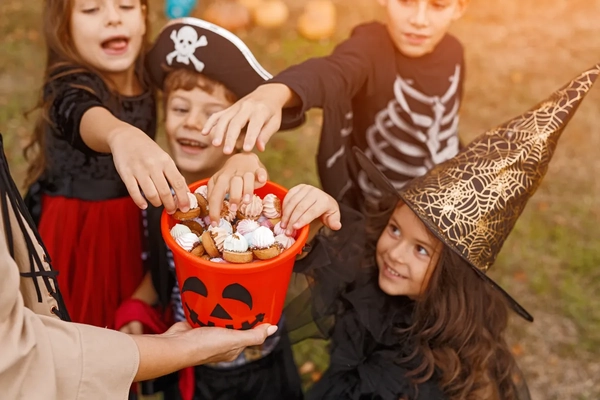
F&B innovation opportunities are moving beyond spooky colors and limited-edition packaging as consumers globally gear up to celebrate Halloween tomorrow. NPD priorities are shifting toward creating surprise through flavor progression and multisensory effects, while increasingly complex concepts are raising formulation challenges around stability and shelf life.
Sour candy demand is rising, crunch is gaining traction, and manufacturers are experimenting with heat, layering, freeze-drying, and unexpected category crossovers to enhance the consumer appeal of festive offerings.
Sour is showing the strongest consumer-demand growth heading into Halloween, while crunch leads on texture, according to Tastewise’s October 2026 US candy data brief.
US demand for sour candy has grown 28% year-over-year, partly fueled by GLP-1 shoppers, who are 4.3 times more likely to reach for sour candy. Meanwhile, demand for crunchy candy is up 14%, while freeze-dried candy demand has slipped 4%.

Food Ingredients First discusses what direction Halloween NPD is taking this year with experts at Tastewise, Cargill, Corbion, Sensient, and Potatoes USA.
Sour surges
Sour is resonating with younger consumers as Gen Z over-indexes threefold for sour candy compared with the average consumer, while mothers over-index 2.7 times, Tastewise’s data finds.
“Spicy candy shouldn’t be sold short, just yet. Its demand is up 13% from last year, but the demand has tapered off sharply after May,” Miriam Aniel Oved, head of Integrated Marketing at Tastewise, tells us.
“Sour candy has overtaken it by about 20 times the demand, as well. While it still remains relevant, it has twisted from a primary flavor type to a complementary one.”
 Seles Gupta: Flavor stability at low pH is becoming more important as brands push for stronger sour profiles.Major brands are already translating the sour trend into Halloween NPD. Mars has expanded its seasonal fun-size range with Skittles Sours. Hershey has introduced Sour Strips to its Halloween portfolio alongside Jolly Rancher Sour Gummies Minis and Sour Gummies Awesome Reds.
Hershey says 64% of surveyed parents were likely to purchase sour strips or belts this month, while 74% were likely to buy gummy candy and fruit chews.
Nadya Lotay, Food & Beverage commercial marketing director at Cargill, says fruit accounts for 45% of European Halloween sugar confectionery launches tracked over the past five years by Innova Market Insights. Sour represents 14% and continues to grow.
Meanwhile, Jasper Kappelle, Confectionery manager EMEA at Corbion, cites the Innova report stating that Halloween-positioned confectionery launches in Europe grew at a 20% CAGR between 2021 and 2025. Sour was the third most prominent flavor direction in European sugar confectionery.
“What we increasingly discuss with customers is how to go beyond simply making a gummy more sour and instead create a sensory journey.”
“That could mean combining liquid and powdered acid solutions within one application, for example, a sour coating, followed by the gummy and then a liquid or powder-filled center,” he says.
“Swicy” takes a back seat
Tastewise’s report says spicy candy demand remains 13% above last year but has fallen sharply since peaking in May. However, “swicy” notes are still appearing in more layered formats in Halloween NPD.
PepsiCo’s Cheetos Sweet Phantom Heat combines cinnamon-sugar sweetness with heat and tingling sensations, while Müller’s Frijj Chilli Chocolate brings sweet heat into chilled dairy. The launches support Tastewise’s view that spice is increasingly becoming a complementary note to sour confectionery.
“The fusion of sweet heat is a perfect example of using what is already popular and adding that new twist to it,” Oved says.
“With sour candy being up 28%, and Gen Z showing a favorable opinion of it, by adding some chili flavor to sour or fruity candy, consumers get the best of both worlds.”
Crunch grows
Texture is emerging as an important factor besides flavor in Halloween treats. Tastewise says crunchy candy demand is up 14% year-over-year and stood 23% above the Halloween 2025 benchmark by July. Mothers over-index 2.7 times for crunchy candy, followed by Gen Z at 2.2 times.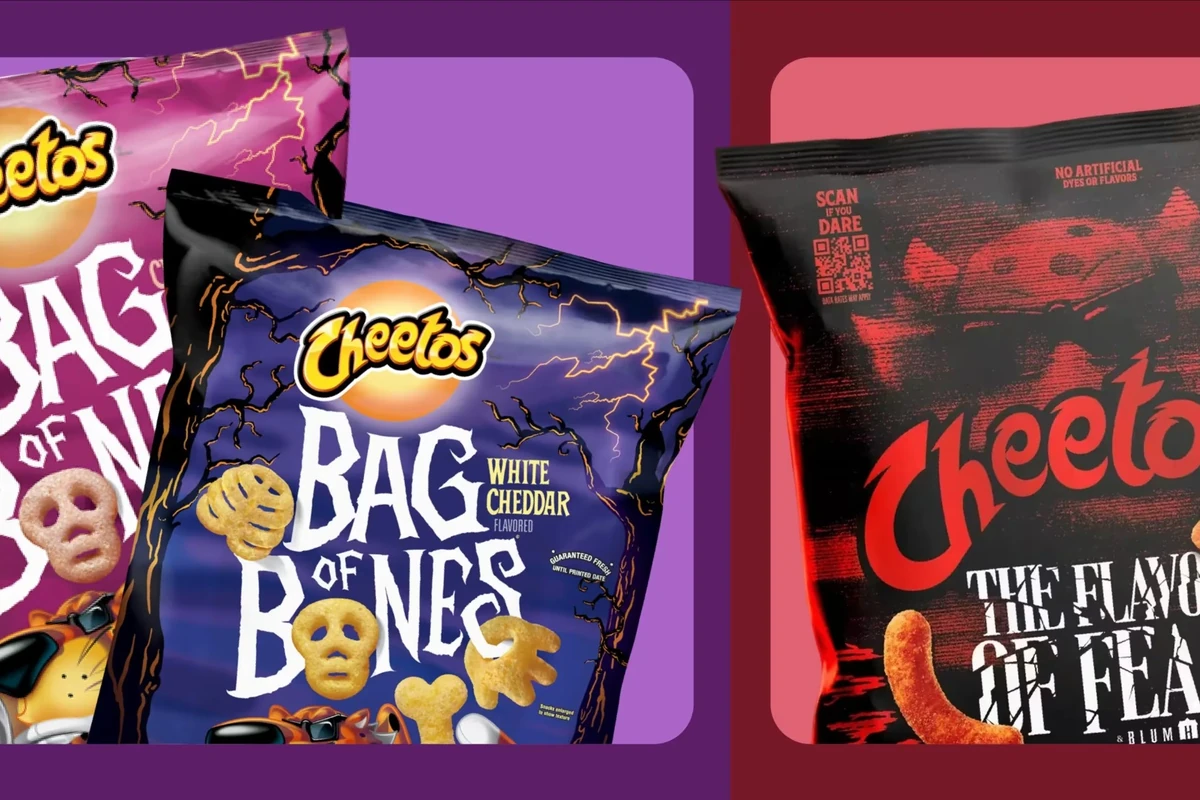 Cheetos’ Halloween launches highlight the shift toward experience-led snacking, with Bag of Bones using playful shapes and Sweet Phantom Heat layering sweetness, heat, tingling, and fizz.
Recent NPD suggests manufacturers are increasingly making texture a key selling point. Aldi’s new Halloween Munch Mix layers crunchy pretzels and crispy malt balls with popcorn and chocolate. Cloetta has paired soft foam centers with crunchy sprinkles in its new Sprinkled Foamies, including a Sour Bubblegum variant combining sourness and crunch.
“The trend toward crunchy candy is expected to persist and increase year over year, presenting an optimal time to get in with the trend to capitalize on its expansion,” Oved says.
Balancing crunch and chew
Cargill’s Future of Food research finds 71% of surveyed European consumers say texture plays a key role in food enjoyment, while 53% want to explore new things when indulging, including multi-textured experiences.
But balancing a crisp inclusion alongside a soft or chewy center can present formulation challenges, Lotay notes. Moisture or oil migration between components can soften the crisp element.
“Texture, therefore, needs to be considered across the whole formulation. But for more complex concepts, the texturizing system needs to work together with fillings, coatings, and inclusions to deliver the intended experience throughout the product’s shelf life.”
Meanwhile, Seles Gupta, application scientist at Sensient Flavors & Extracts, points to the flavor challenge in sour candies, where brands must “keep it exciting without letting it take over.”
“Too much acid can flatten a flavor, or mask fruit top notes, so we use flavors that can hold their character at low pH and use sourness enhancers to lift the impact without adding more acid.”
Beyond the freeze-dried hype
Halloween-centered freeze-dried confectionery NPD is moving differently. Tastewise reports demand has declined 4% year-over-year and remained broadly flat since spring, with its demand index at 85 by July compared with a Halloween 2025 benchmark of 100.
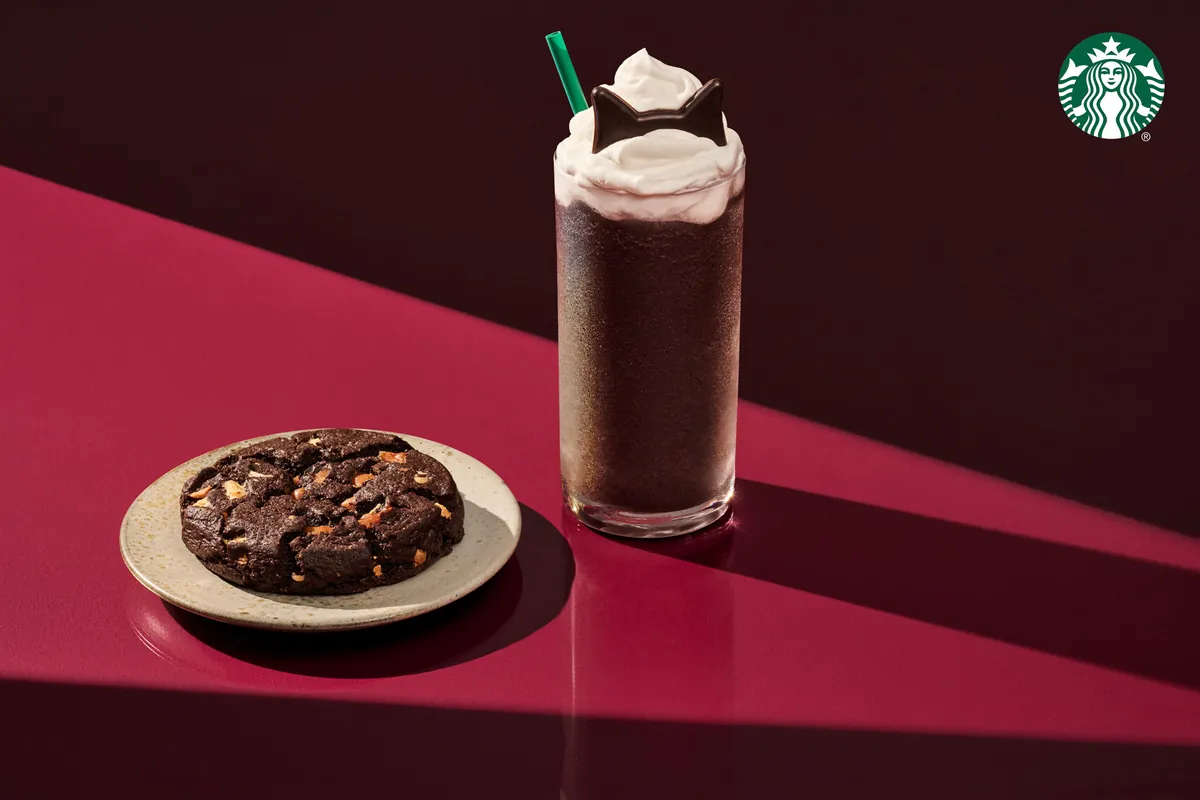 Starbucks’ Black Cat Frappuccino taps Halloween theatricality with eye-catching design and localized flavor combinations.“The US online retail market is seeing this slowdown. The market is mainly built on established players such as Skittles and Sow Good, and only one brand, M&M’s, launched a new freeze-dried candy product in the past 12 months,” Oved says.
Oved describes this as freeze-dried candy entering a new phase, where brands must offer consumers choices beyond novelty alone.
However, Mars’ Skittles Pop’d Creepy Crunch creates an interesting counterpoint. The Halloween launch uses freeze-drying to create an airy and crunchy version of the familiar candy at a time when demand for freeze-drying itself is cooling, but demand for crunch is rising.
Turning treats into an event
Gupta at Sensient says that flavor layering and multi-sensory concepts are becoming a differentiation tool in Halloween launches. He points to pairings, such as sour green apple with mulberry and cola with plum, which offer a “funky” effect.
“Requests for pumpkin-spiced latte-flavored caramel sauces and pumpkin-flavored inclusions show brands want the Halloween experience carried through every layer, whether that’s a chocolate bar or a filled confection.”
He sums up the shift: “Brands increasingly want products that look and taste like an event.”
That theatricality is also evident in Starbucks’ Black Cat Frappuccino, which taps visual spectacle and localized flavor development to capture consumer attention. Its US version centers on chocolate notes and cat-ear decoration, while the Asia-Pacific interpretation pairs raspberry-blackcurrant with mocha.
Potatoes for Halloween?
An unconventional example of Halloween category disruption is presented by Potatoes USA. Its Trick-or-Tater initiative encourages households to offer potatoes alongside candy.
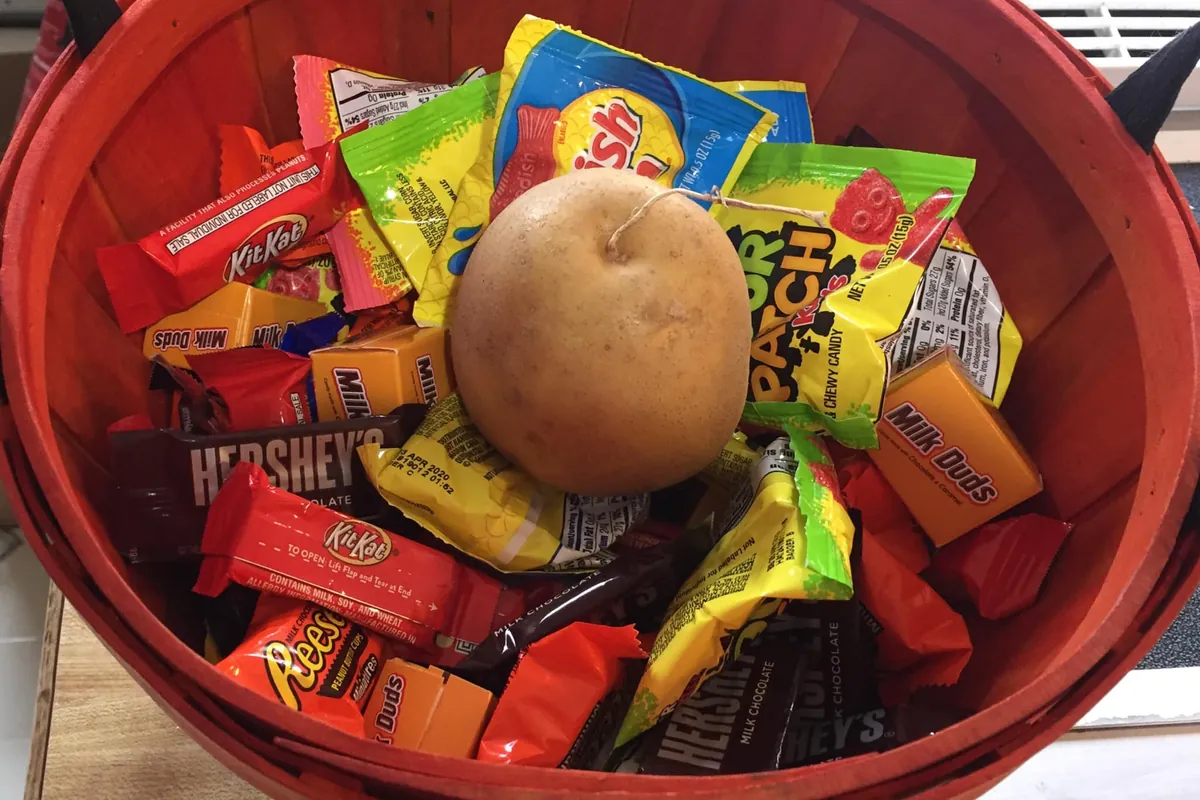 Potatoes USA’s Trick-or-Tater campaign turns potatoes into an unexpected Halloween treat, highlighting category disruption.Kayla Vogel, manager of community engagement at Potatoes USA, says potatoes resonate precisely because consumers do not expect them.
“Potatoes aren’t traditionally associated with Halloween, which is exactly why Trick-or-Tater has resonated. The trend shows that consumers are eager to take part in traditions that are a little different, especially when those traditions create a shareable experience.”
She adds that one of the biggest commercial opportunities is how easy it is for growers, processors, and consumers to participate without requiring special packaging or products.
“Consumers can pick up a ten-pound bag of potatoes or small bags of chips at the grocery store and easily join the tradition.” This creates an additional purchase occasion immediately before November — Potatoes USA’s biggest sales month.
As Halloween trends evolve each year, the occasion is increasingly serving as a testing ground for more ambitious F&B innovation. Innova research has highlighted the expansion of Halloween-themed launches beyond confectionery into cereal and bakery through limited-edition flavors and playful formats.
For formulators, the opportunity is to translate the theatricality consumers expect into products that maintain their flavor, texture, and stability throughout shelf life, ensuring novelty does not come at the expense of performance.