


February in review: Major divestments, cultivated cacao bets, fertilizer trade tensions

Key takeaways
- F&B giants reshaped portfolios amid earnings pressure, with IFF and dsm-firmenich divesting major business units.
- Chocolate and alternative protein innovation accelerated, as companies invested in cultivated cacao.
- Agricultural supply shocks intensified, including soaring US beef prices and global fertilizer trade restrictions.
In February 2026, major F&B companies released their full-year results amid challenging global headwinds, including inflationary pressures, rising energy costs, and supply chain disruptions. IFF put its Food Ingredients segment up for sale, while dsm-firmenich agreed to sell its Animal Nutrition & Health business.
Barry Callebaut outlined a roadmap for the chocolate industry following the cocoa crisis, as Cargill and Puratos revealed investments in cultivated cacao for commercial food applications.
European farm groups warned of a fertilizer price crisis as the EU increased restrictions on Russian imports. US beef prices surged, driven by the smallest cattle herd in 75 years and a parasitic fly crisis on the Mexican border.
We look back at the biggest stories from February.

Barry Callebaut maps post-crisis growth in chocolate confectionery trends report
Barry Callebaut released its “Top Chocolate Confectionery Trends 2026 & Beyond” report, framing a path forward for the chocolate industry after last year’s cocoa crisis. The company also committed €250M (US$297 million) to upgrade the world’s largest chocolate factory, and launched an AI innovation center for chocolate in Singapore.
ADM earnings slide as flavors and specialty ingredients offer relief
ADM released its full-year earnings report for 2025, revealing that Nutrition, which includes flavors and specialty ingredients, was the company’s only growth segment. Full-year revenues fell amid weaker global food demand and industry-wide issues with corn crop quality. We looked at the company’s 2026 outlook.
Ingredion banks on texture innovation as beverage sweetener demand cools
Ingredion posted record full-year reported earnings per share of US$11.18 — up from US$9.71 in 2024 — despite a 3% decline in net sales to US$7.2 billion, as the company’s texture and clean label portfolio outperformed a struggling North American sweetener business hit by production setbacks and weakening beverage demand.
dsm-firmenich completes consumer pivot with €2.2B Animal Nutrition divestment
dsm-firmenich agreed to sell its Animal Nutrition & Health business to private equity firm CVC Capital Partners for approximately €2.2 billion (~US$2.6 billion), which includes an earnout of up to €500 million (US$590 million). The deal marked the final step in dsm-firmenich’s transformation into a consumer-focused company. A new Systemiq analysis, supported by Good Food Institute Europe, found that alternative proteins could add €111 billion (US$131 billion) to the EU economy over 15 years — if made a strategic priority.
Europe’s untapped protein opportunity could rival wine sector by 2040
New analysis from Systemiq, backed by the Good Food Institute Europe, found that alternative proteins could add €111 billion (US$131 billion) to the EU economy within 15 years — if they’re treated as a strategic priority. Rupert Simons, partner at Systemiq, discussed the findings and why the economic promise of alt-protein has been underestimated.
Functional mushrooms move beyond supplements into mainstream F&B ingredients
Functional mushrooms are moving into mainstream F&B, from coffee and energy drinks to chocolates and gummies. As consumer interest rises and launches grow, the industry faces challenges around standardization and species differentiation. We explored how this evolving market is positioning mushrooms as scalable, science-backed ingredient platforms.
US beef prices surge as supply crisis triggers political intervention
US beef prices are climbing at nearly six times the rate of overall food inflation, driven by the smallest cattle herd in 75 years and a parasitic fly crisis on the Mexican border. The situation triggered a rapid political response from the Trump administration, which ordered antitrust investigations and expanded Argentine import quotas to ease consumer costs.
IFF posts full-year net loss as US$1.15B write-down sets stage for Food Ingredients sale
International Flavors & Fragrances (IFF) reported a full-year net loss of US$374 million for 2025, driven largely by a US$1.15 billion write-down on the value of its Food Ingredients business — a segment the company is now actively putting up for sale.
Kerry full-year results: Taste innovation drives gains following dairy divestment
Kerry Group reported 3% volume growth and EBITDA margin expansion in its first full year since the divestment of Kerry Dairy Ireland. Demand for Tastesense salt and sugar reduction technologies, fermentation-derived taste systems, and a new enzyme-based natural sweetness platform drove gains across snacks, bakery, and beverages.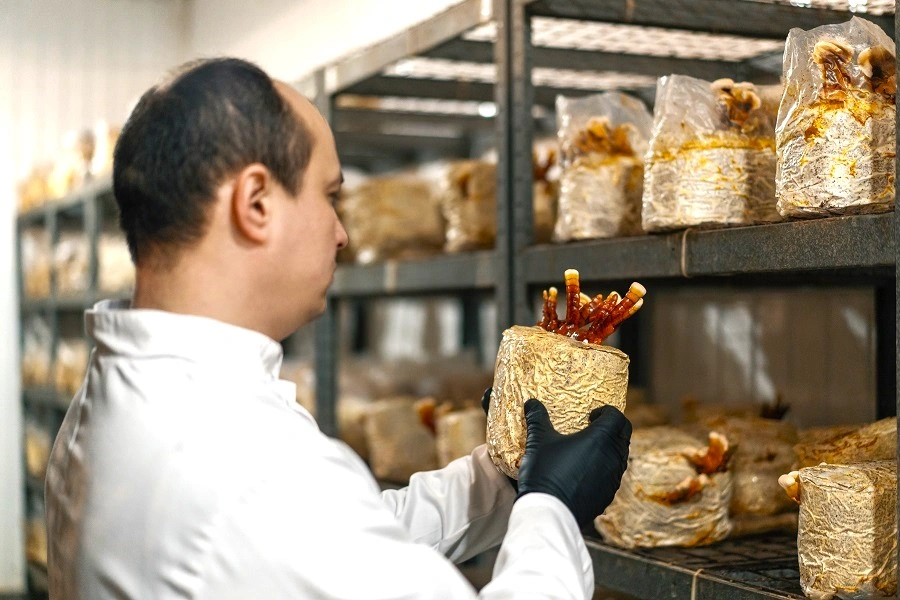 Functional mushrooms are entering mainstream F&B, but as demand and product launches grow, the sector faces hurdles around standardization and species differentiation.
Ahold Delhaize’s reformulation drive elevates “healthy” own-brand F&B sales
Ahold Delhaize, one of Europe’s largest grocery groups, posted Q4 net sales of €23.5 billion (US$27.8 billion), with more than half of its own-brand food sales now meeting healthy product criteria. We unpacked what the retailer’s 2026 investment plans signal for ingredient suppliers.
Nestlé posts steady organic growth as infant formula recall casts shadow over 2026 outlook
Nestlé reported full-year 2025 sales of CHF 89.5 billion (US$101.5 billion) with 3.5% organic growth. However, net profit dropped 17% to CHF 9 billion (US$10.2 billion), as the company’s 2026 outlook was clouded by the financial and reputational fallout from the recent global infant formula recall that triggered criminal complaints in France.
EU restrictions on Russian fertilizer threaten to drive up global edible oil prices
Europe is making it significantly harder to import fertilizer from Russia. Farm groups said fertilizer imports have already collapsed by more than 80%, and warned of a repeat of the 2022 price shock — when fertilizer costs surged globally, and food prices followed. For the food ingredients sector, one of the most exposed downstream markets is palm oil.
Danone’s high-protein bet pays off as dairy giant posts solid growth
Danone reported full-year 2025 sales of €27.3 billion (US$28.6 billion), up 4.5% on a like-for-like basis, with double-digit growth in its high-protein portfolio and strong performance in Specialized Nutrition underpinned the French dairy giant’s continued recovery.
How the alcohol industry is rethinking R&D amid falling global consumption
The global alcohol industry is in structural retreat as global consumers continue to drink less. We spoke with major industry trade bodies and producers to get a picture of how the alcohol sector will change in the coming years, and what can be done to protect industry stakeholders while benefiting consumers.
Puratos poised to launch “world’s first” chocolate with cultured cocoa for professionals
Puratos joined forces with California Cultured to launch the “world’s first” chocolate product for professionals containing cultured cocoa. Youri Dumont, business unit director for Chocolate at Puratos, told us how the company utilizes its evaluation methodologies designed for chocolate flavor profiling. Also, Cargill collaborated with Kokomodo to validate and scale cultivated cacao for commercial food applications.