
EU restrictions on Russian fertilizer threaten to drive up global edible oil prices

Key takeaways
- EU carbon levies, escalating tariffs, and new sanctions have collapsed Russian fertilizer imports by over 80%, threatening European food production and global commodity markets.
- Indonesia’s palm oil sector faces downstream risk as potash supply tightens, with smallholders most exposed to reduced fertilizer application and multi-season yield declines.
- The food ingredients industry is developing fermentation-based palm oil alternatives, but these remain years from scale, leaving edible oil supply chains vulnerable to a repeat of the 2022 price shock.
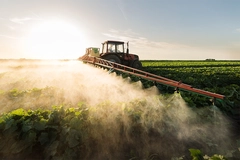
Europe is making it significantly harder and more expensive to import fertilizer from Russia, through a combination of new carbon levies, escalating tariffs, and fresh sanctions. Farm groups say fertilizer imports have already collapsed by more than 80%, and warn of a repeat of the 2022 price shock — when fertilizer costs surged globally, and food prices followed. For the food ingredients sector, one of the most exposed downstream markets is palm oil.
Since January 1, the EU’s Carbon Border Adjustment Mechanism (CBAM) — a carbon levy on imports of emissions-heavy products — has applied to fertilizers entering the bloc. At the same time, tariffs on Russian and Belarusian fertilizer that took effect in July 2025 are set to rise sharply.

Currently set at €40–45 (US$42–47) per ton depending on the product category, the duties will escalate to between €315–430 (US$331–452) per ton by mid-2028, according to the regulation voted through by the European Parliament in May 2025 and formally adopted by the Council in June 2025.
On top of this, the European Commission proposed a new cap on ammonia imports from Russia on February 6, 2026, as part of its 20th sanctions package, which was announced by European Commission President Ursula von der Leyen.
Finland and Sweden had pushed for an outright ban on all Russian fertilizer, with Swedish foreign minister Maria Malmer Stenergard and Finnish counterpart Elina Valtonen writing to EU foreign policy chief Kaja Kallas in January to argue the case. Sweden estimated a full ban could strip around €1.4 billion (US$1.47 billion) in revenue from Russia.
Brussels stopped short — a sign of just how dependent the bloc remains on Russian fertilizers. The country supplies roughly a quarter of the EU’s fertilizer imports, according to the EU Council.
A collapse already underway
The combined effect of CBAM and rising tariffs has already been dramatic. Copa and Cogeca, Europe’s largest farming and agri-cooperatives lobby, says European Commission data shows nitrogen fertilizer imports fell to just 179,877 tons in January 2026, down from 1.18 million tons a year earlier. The group describes this as “a harsh reality that is now knocking at the EU’s door.”
Nitrogen fertilizers account for around 46% of total EU fertilizer use, with more than 30% of that volume traditionally imported, according to Copa and Cogeca. The group adds that current stocks cover only 45–50% of what farmers need for the 2026 harvest, with particularly low levels in Italy and Ireland. It is calling for the immediate suspension of CBAM on fertilizers.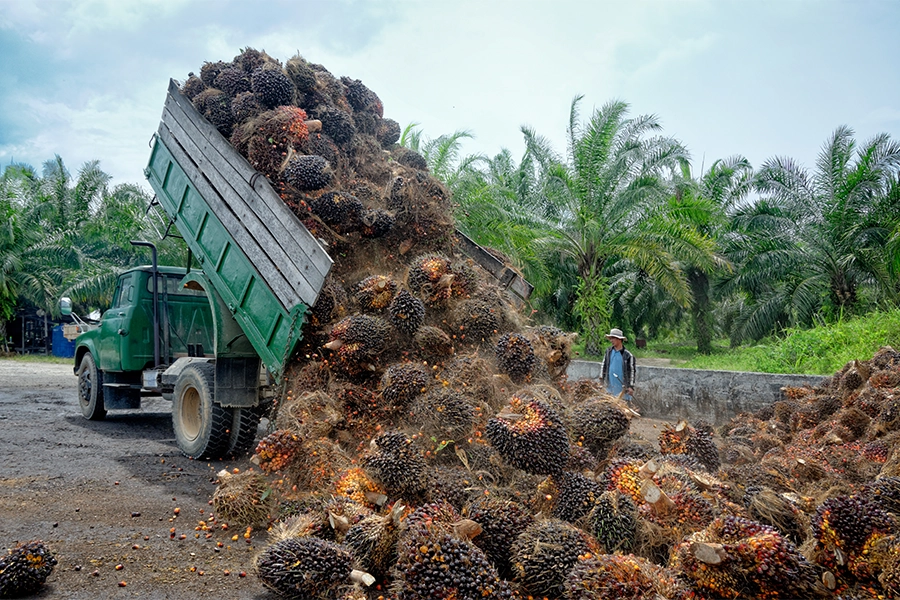 EU sanctions on Russian fertilizers threaten palm oil supply, risking another edible oil price surge.
The lobby group had already raised the alarm in March 2025, warning that the Commission’s sanctions proposal was adopted without a prior impact assessment on food security.
The EU’s dependence on Russian fertilizer has been a recurring concern since the start of the Ukraine conflict. In 2023, the World Economic Forum ranked a looming food supply crisis among the top four global threats, citing the lagged effect of fertilizer price spikes on downstream food production.
The 2022 precedent
The last time global fertilizer markets were disrupted at this scale was in 2022, after Russia’s invasion of Ukraine. World Bank data shows fertilizer prices had already risen 80% in 2021, then surged a further 30% following the invasion. The bank’s fertilizer affordability index — which measures the ratio of fertilizer prices to food prices — nearly doubled from its long-term average, according to its commodity markets analysis.
The consequences for edible oils were immediate. Indonesia — the world’s largest palm oil producer — banned palm oil exports in April 2022 in a bid to stabilize domestic cooking oil prices, sending shockwaves through global supply chains. “Nobody can compensate for the loss of Indonesian palm oil. Every country is going to suffer,” Rasheed JanMohd, chairman of Pakistan Edible Oil Refiners Association, told Food Ingredients First at the time. The FAO vegetable oil price index rose by more than 23% in a single month during that period.
EU Agriculture Commissioner Christophe Hansen acknowledged the vulnerability at the Munich Security Conference last week. “Russia considers grains as its second oil,” Hansen said at the conference, as reported by France24. “They are using it massively, and we need, therefore, to work on our dependencies, because dependencies are vulnerabilities.”
Not everyone in Europe opposes higher barriers to Russian imports. Yara, Europe’s largest fertilizer producer, has publicly called for the EU to reduce its reliance on Russian supply and has resisted any suspension of CBAM. But European farmers are caught in between — Copa and Cogeca says fertilizer accounts for 15–30% of arable farmers’ input costs, and the arable sector has recorded negative margins for three consecutive years.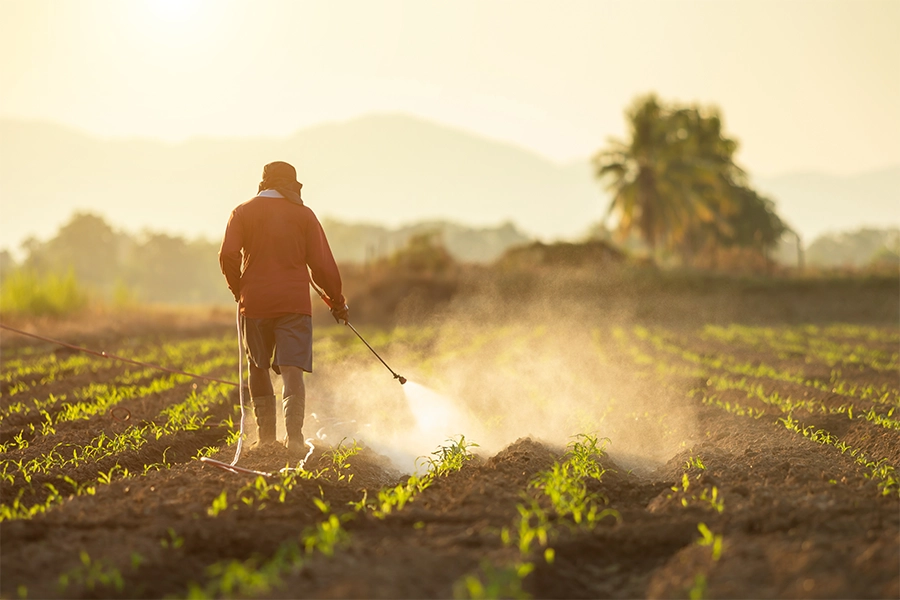 Tighter fertilizer imports could drive up palm oil costs, impacting global food ingredient markets.
What this means for palm oil
This is where the story connects to food ingredients. Potassium is one of the most important nutrients for oil palm productivity, and Indonesia — responsible for more than half of global palm oil output, imports millions of tons of potassium chloride annually, with Russia and Belarus among its significant suppliers.
If global potash prices rise as EU sanctions redirect trade flows, fertilizer application rates tend to fall — particularly among smallholders with limited access to subsidies. Indonesian smallholder plantations are expected to account for around 60% of the country’s oil palm area by 2030, according to the Palm Oil Barometer by Solidaridad — making them a critical variable in global output.
Oil palm biology compounds the problem: reduced fertilization doesn’t just affect the current harvest, it depresses yields across several subsequent seasons. Even a modest sustained decline in Indonesian palm output would tighten global edible oil supply and increase substitution pressure on soybean and rapeseed oil.
The downstream exposure for the food industry is significant. Data from Innova Market Insights shows the use of fat and oil ingredients in F&B launches has been growing steadily, with Europe accounting for 39% of global product launches in the category. Bakery leads at 22% of global product launches, followed by Snacks and Confectionery. Any sustained increase in edible oil costs feeds directly into formulation budgets across these segments.
Indonesia hedges its bets
Jakarta appears to be positioning itself accordingly. In September 2025, the EU and Indonesia finalised a comprehensive trade deal — the Indonesia-EU Comprehensive Economic Partnership Agreement. Three months later, on December 21, Indonesia signed a free trade agreement with the Russia-led Eurasian Economic Union in St. Petersburg, in the presence of Russian President Vladimir Putin, according to Reuters.
That deal explicitly covers zero tariffs on a wide range of fertilizers. Potassium fertilizer is among the EAEU’s main exports to Indonesia, alongside coal, wheat, and ferroalloys. Indonesia has effectively secured institutional frameworks to maintain fertilizer supply from both sides — but even with preferential access, it isn’t immune if global benchmark prices rise. EU restrictions on Russian fertilizers may spark a repeat of 2022's edible oil price crisis.
Industry prepares for volatility
Some in the ingredients sector are already building alternatives. Dutch biotech firm NoPalm Ingredients partnered with Belgian dairy cooperative Milcobel in September 2025 to scale production of fermentation-based palm oil substitutes using whey permeate.
The company claims its fermentation process can reduce CO₂ emissions by up to 90% compared to conventional palm oil and projects cost parity with tropical fats by 2028, with its first demonstration factory set to be operational in 2026. Meanwhile, Danish emulsifier specialist Palsgaard is developing palm-free emulsifier systems, and US biotech Checkerspot has produced a high-oleic palm oil alternative from microalgae fermentation.
These remain niche solutions for now. But the Innova Market Insights Lifestyle & Attitudes Survey 2025 shows 48% of consumers globally say they “always or often” seek information on food quality before purchasing — a figure that rises further when supply chain transparency is factored in. If palm oil prices spike again, reformulation pressure could accelerate.
“Palm oil free” product claims had already seen a 73% compound annual growth rate between 2015 and 2017, according to earlier Innova data, with Bakery accounting for more than half of those launches.



Upcoming webinars

2027 Food Safety Risks for Quality & Compliance Leaders
FoodChain ID

Formulating for function: Developing benefit-led beverages with natural colours, botanicals, and flavours
Givaudan Sense Colour
Let's reveal the grain potential: Innovate
Meurens Natural