

Kerry full-year results: Taste innovation drives gains following dairy divestment


Key takeaways
- Kerry Group reported 3% volume growth and an EBITDA margin expansion from 17.1% to 17.9% in FY 2025, with constant-currency-adjusted EPS rising 7.5% to 481.5 cents.
- Snacks (+7%), bakery (+5%), and pharma (+8%) led volume growth, driven by demand for Tastesense salt and sugar reduction, fermentation-derived taste systems, and proactive health ingredients.
- The company launched fermentation-based Tastesense technologies, a breakthrough enzyme sweetness system, and natural cocoa replacements.
Kerry Group reported 3% volume growth, EBITDA margin expansion from 17.1% to 17.9%, and constant currency adjusted earnings per share growth of 7.5% in 2025 — its first full year following the divestment of Kerry Dairy Ireland. Demand for Tastesense salt and sugar reduction technologies, fermentation-derived taste systems, and a new enzyme-based natural sweetness platform drove gains across snacks, bakery, and beverages.
The Tralee-headquartered group reported revenue of €6.8 billion (US$7.1 billion), a 2.5% decline on a reported basis reflecting the Dairy Ireland exit and currency translation headwinds of 3.9%. Adjusted EPS reached 481.5 cents, landing within the upper half of the company’s 7–11% guidance range. Kerry announced a new €300 million (US$315 million) share buyback program, commencing February 17.

Taste technology as growth driver
Snacks was Kerry’s fastest-growing food end-use market, with 7% volume growth, driven by savory taste systems and Tastesense salt-reduction technologies. Bakery posted 5% growth on the back of enzymes, preservation, and taste systems. Beverages grew 3%, driven by Tastesense sugar reduction, natural extracts, and proactive health ingredients — a portfolio aligned with Innova Market Insights’ 2026 trends, which identified functional beverages as one of the fastest-growing innovation segments globally.
The Pharma & Other end-use market grew 8%, the strongest performance of any segment, driven by Kerry’s proactive health ingredients portfolio, including the newly launched Plenibiotic postbiotic targeting digestive and skin health. Innova’s top 2026 trend report places gut health as a central consumer priority, with 59% of global consumers viewing it as important for whole-body wellness.
The EBITDA margin bridge in Kerry’s results presentation shows the Accelerate program’s cost initiatives contributed half of the margin improvement, with operating leverage and portfolio mix accounting for the remainder alongside a net positive effect from acquisitions and disposals, including the Dairy Ireland exit.
Kerry’s innovation pipeline
Kerry increased R&D expenditure to €314 million (US$330 million) in 2025, up from €304 million (US$319 million). The company launched next-generation Tastesense sweet and salt reduction technologies derived from fermentation, a breakthrough enzyme system it describes as delivering significantly more effective natural sweetness, and KerryXperience fermentation-based savory solutions.
Kerry also developed natural cocoa replacement systems using less than 50% cocoa raw materials. The company has previously discussed cocoa reformulation as a priority, given sustained price volatility, and a system that preserves taste profiles while halving raw material dependence addresses a significant cost pressure facing confectionery and bakery manufacturers.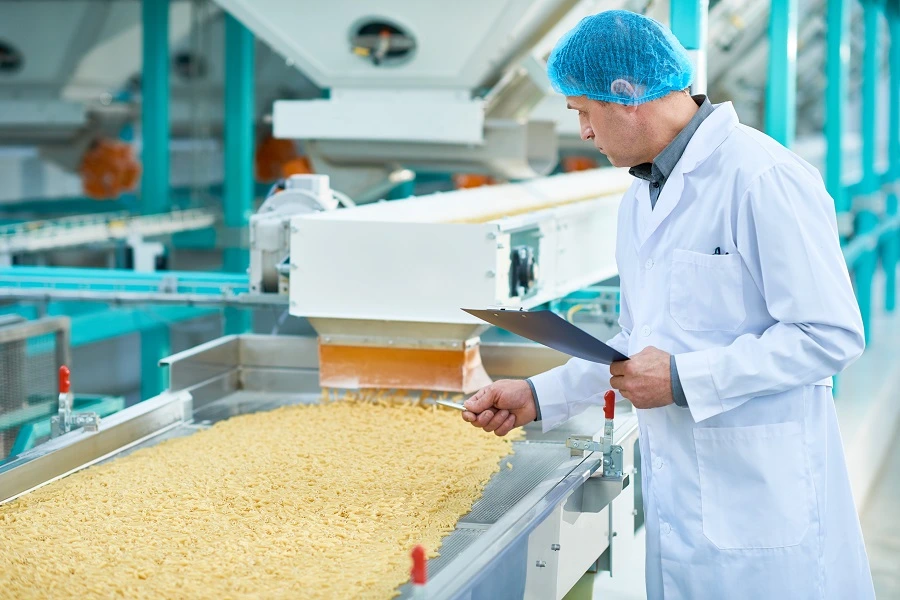 Snacks was Kerry's fastest-growing food end use market in 2025, with 7% volume growth driven by demand for Tastesense salt reduction and savory taste systems.
Technology investments in the year included a new Biotechnology Centre in Leipzig, Germany, enzyme capacity expansion in Cork, Ireland, enhanced cocoa taste capabilities in Grasse, France, and coffee extraction capabilities in Pennsylvania, US, acquired through the Martin Bauer Group deal in April. Kerry also opened innovation centres in Frankfurt, Germany, Dubai, and South Jakarta, Indonesia, and commissioned a manufacturing facility in Karawang, Indonesia.
The sensory science and AI-powered tools the company has been developing for reformulation work underpin several of these launches, including the Tastesense Advanced platform, which uses 360 sensory profiling to maintain flavor integrity in reduced-sugar and reduced-salt applications.
Regional performance
The Americas delivered 3.8% volume growth with a 20.3% EBITDA margin — the group’s highest — with Q4 momentum accelerating to 4.4%. Growth was led by snacks, dairy, and bakery across both retail and foodservice, with LATAM performance driven by Brazil and Central America.
APMEA posted 4.2% volume growth led by bakery, meat, and meals, with Southeast Asia the strongest subregion. Volumes in China “remained challenged,” according to the company. Kerry continued to expand its local taste capacity in the region, opening its first manufacturing facility in Egypt, a new facility in Rwanda, and expanded capacity in the Middle East and Southeast Asia. EBITDA margin rose from 16.0% to 16.7%.
Europe was the weakest region, with volumes declining 0.5% for the year and deteriorating to -2.6% in Q4 amid soft retail conditions. Beverage and snacks grew, but performance across other food categories offset those gains. The region nonetheless delivered the strongest margin improvement, with EBITDA margin rising from 16.6% to 17.5%, driven by cost efficiencies and portfolio benefits.
Kerry’s outlook 2026
Kerry is guiding for 6% to 10% constant currency adjusted EPS growth in 2026, with currency translation expected to create a headwind of approximately 4%. The group launched Accelerate 2.0, a program running to 2028 focused on manufacturing footprint optimization and digital transformation across operations, commercial functions, and global business services.
Kerry’s EBITDA margin has expanded by 3.2 percentage points since 2021. The company is targeting 18–19% by the end of 2026 and 19–20% by 2028. Foodservice volumes grew 4.6% in 2025 against soft industry traffic data, and emerging markets volumes rose 5.3%, led by Southeast Asia and LATAM. Kerry returned €715 million (US$751 million) to shareholders through dividends and buybacks in the year.


Upcoming webinars

Oat-Standing Ingredients - Showcasing Irish Grain Through Innovation
Tirlán Ingredients

2027 Food Safety Risks for Quality & Compliance Leaders
FoodChain ID

Formulating for function: Developing benefit-led beverages with natural colours, botanicals, and flavours
Givaudan Sense Colour