


RAPS: How encapsulation boosts flavor control in bakery, snacks & meat

Key takeaways
- RAPS positions encapsulation as a precision design tool, allowing tailored coatings and release triggers across bakery, snacks, meat, dairy, and convenience applications.
- Its Flavocaps microencapsulation technology allows controlled and delayed release of flavors to enhance stability in baking and frying processes.
- The technology supports sugar and salt reduction and clean label reformulation by improving taste efficiency and reducing reliance on additives.
The F&B industry has conventionally used encapsulation technology to trap flavor compounds within a protective coating, controlling their release and extending shelf life. The technique has now evolved into a “functional design tool,” with potential use supporting manufacturers’ reformulation goals in sugar or salt reduction by improving the efficiency and timing of taste delivery.
Germany-based RAPS is tapping into encapsulation through its “Flavocaps” technology, helping formulators integrate sensitive or reactive ingredients into complex processes with high precision and reliability. The 100-year-old company has evolved from a spice trader to a global solutions provider, supplying seasoning blends and functional ingredients to food manufacturers, foodservice, retail, and butcheries.
Flavocaps overcomes the formulation challenge of conventionally manufactured flavorings, which quickly evaporate and are affected by light and oxygen. The process involves encapsulating sensitive, volatile aromatic substances into a matrix of maltodextrin and starch.

While the importance of encapsulation remains crucial for flavor protection, its role has evolved in modern food formulation, Agneta Hoffmann, chief marketing officer at RAPS Group, tells Food Ingredients First.
She describes microencapsulation not as an add-on to its existing applications, but “as part of the product architecture.”
“By applying tailored coatings — for example, fat-based systems, waxes, starches, or maltodextrin — we create a defined protective barrier around active or taste-giving components. This protects them against heat, humidity, oxygen, or mechanical stress and, at the same time, enables controlled or delayed release exactly when and where it is required.”
While flavor stabilization is one field of application, Hoffmann emphasizes the method’s further potential lies in functional systems, such as acids, carbonates, acetates, salts, and sugars. Moreover, manufacturers can use it to stabilize extracts or other reactive ingredients, separate them from interacting components, and release them in a targeted way during baking, cooking, or storage.
“This is particularly relevant in bakery dough systems, sour coatings, meat and sausage applications, but also in dairy, convenience, and frozen foods,” Hoffmann adds.
 Agneta Hoffmann: Encapsulated taste systems protect ingredients and release flavor at the right time during production or in the final product.
Why control flavor release?
RAPS’ Flavocaps technology enables precise control over the release of taste-giving ingredients, including spices, flavors, extracts, or acids.
“By combining formulation expertise with process know-how and a flexible microencapsulation toolbox, from lipid-based (e.g., fat or wax coatings) to carbohydrate-based coatings (e.g., starches, maltodextrins), we tailor release behavior and stability to specific products and manufacturing environments,” says Hoffmann.
Manufacturers can adjust the coating’s composition, thickness, particle size, and multi-layer structures, helping them define whether components are released “immediately, under heat, in the presence of moisture, or in distinct stages during processing and consumption.”
She explains why this level of control is highly relevant in industrial applications.
“In snacks, taste components must withstand extrusion or frying and still deliver a clear impact. In sauces or ready meals, acids or extracts should not react prematurely during production but unfold their effect at the desired point, thus ensuring balanced taste and stability throughout shelf life.”
Coated acids can also be used to create “targeted sour bursts or layered acidity profiles,” adding extra freshness and multi-sensory effects without affecting the base matrix during processing. This allows developers to design what she describes as “more dynamic taste experiences” while maintaining process stability.
“Without encapsulation, volatile or reactive ingredients may dissipate, degrade, or interact too early within the matrix. Flavocaps technology ensures that release is intentional and aligned with the product concept, creating consistent taste profiles and enabling differentiated, reliable solutions across diverse categories.”
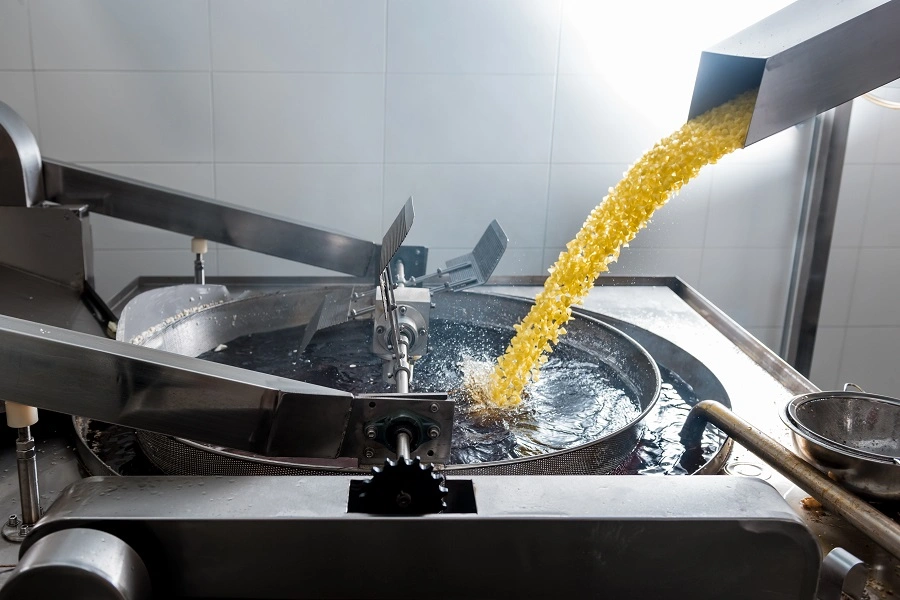 High-heat processes like frying, extrusion, and baking can cause sensitive flavor ingredients to evaporate, degrade or react too early without protection.
Supporting clean label and reduced additives
Encapsulated systems can play an important role in reformulation, as consumers increasingly turn against sugar, salt, and synthetic additives. This can be achieved not primarily by “doing more with less salt,” but by bringing more precision and stability into the way taste-giving and functional components perform, Hoffmann explains.
“Through targeted coating, sensitive ingredients, such as spices, herbs, extracts, flavors, or even natural acids, can be protected from heat, moisture, and oxidation. This preserves their sensory profile during processing and storage and reduces the need for additional stabilizers or corrective additives.”
Coated acids or other functional components can be released in a controlled manner during processes like baking, cooking, or at a defined pH level, which Hoffmann says can help “avoid premature reactions, off-notes or unwanted interactions within the matrix.”
“The result is a cleaner taste profile and more predictable functionality, even in complex formulations. Encapsulation, therefore, supports clean label strategies not by masking deficits, but by improving how natural, taste-giving ingredients are integrated into the system.”
Overcoming formulation challenges
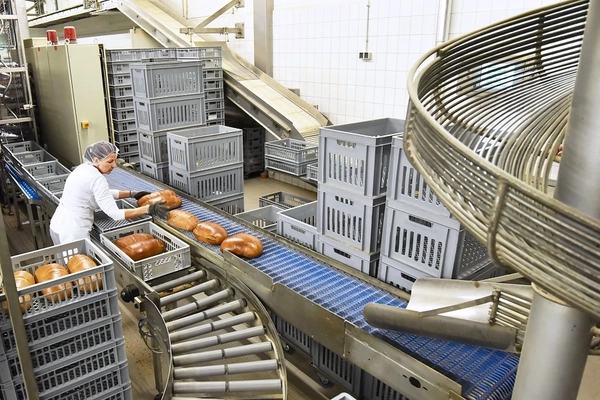
F&B companies often use encapsulation to protect and lock in flavor and fat in meat-free burgers and meatballs, and to enhance the volume and stability of baked products.
However, while developing and scaling encapsulated taste systems, they face technical challenges, such as maintaining the reproducibility of particle structure and release behavior from pilot to full scale, while ensuring the particles “withstand heat, shear, and fluctuating moisture,” Hoffmann notes.
“In practice, that means controlling particle size distribution, coating uniformity, moisture, mechanical stability/abrasion, flowability, and dust, and consistent release triggers (e.g., temperature, moisture, mechanical stress).”
RAPS overcomes these hurdles by combining its expertise in fluid-bed-based coating with application know-how and tight control of process parameters, including airflow, spray, and drying.
Another challenge is high-heat or high-shear processes like extrusion, baking, or frying, where sensitive flavor ingredients can “evaporate, degrade, or react too early within the matrix.”
“Encapsulation creates a protective barrier that shields spices, extracts, flavours, acids, and other functional components from heat, oxygen, and mechanical impact.” This improves taste retention, process stability, and performance in demanding production environments.
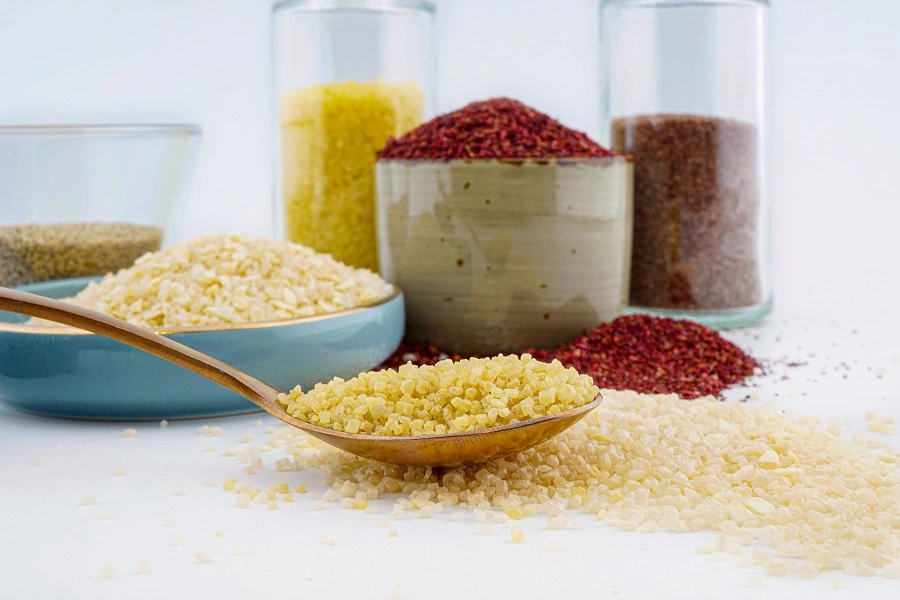 RAPS’ Flavocaps technology enables precise control over the release of spices, flavors, extracts, and acids.
The future of encapsulation
Over the next five years, Hoffmann expects “targeted sensory effects” to be one of the strongest drivers of innovation in microencapsulation.
“Controlled release makes it possible to design layered taste profiles, delayed sour notes, masking effects, or multi-stage perception, opening new opportunities for differentiation across a wide range of F&B applications.”
Beyond sensory design, she anticipates microencapsulation’s role in supporting reformulation goals, such as sugar or salt reduction, by improving the efficiency and timing of taste delivery, “rather than increasing the dosage of compensating ingredients.”
Hoffmann predicts a sharpened focus on personalized nutritional benefits and added functionality to also drive encapsulation innovations. “As nutritional value increasingly influences consumer choice alongside taste, technologies that stabilize and deliver selected bioactives or functional ingredients in a controlled way will become more relevant.”
“Our aim is not to position microencapsulation as a universal solution, but as a precise technological tool to create reliable, differentiated taste and process performance under real industrial conditions.”.
The company is investing in a multi-million-euro project as part of its long-term growth strategy, scheduled for completion by 2027.