



US beef prices surge as supply crisis triggers political intervention


Key takeaways
- Ground beef hit US$6.69 per pound in December 2025 — up 19.3% year-over-year and 72% since 2020 — with the USDA forecasting a further 6.9% wholesale increase in 2026.
- The US cattle herd fell to a 75-year low of 86.2 million head, while screwworm border closures have cut off more than 1.2 million head of annual Mexican feeder cattle imports.
- The Trump administration has launched a DOJ antitrust probe into the “big four” packers and quadrupled Argentina’s beef import quota, even as industry data shows packers operating at a loss.
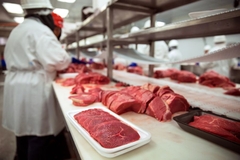
US beef prices are climbing at nearly six times the rate of overall food inflation, driven by the smallest cattle herd in 75 years and a parasitic fly crisis on the Mexican border. The situation has triggered a rapid political response from the Trump administration, which has ordered antitrust investigations into the country’s dominant meat packers, while simultaneously expanding Argentine import quotas to ease consumer costs.
Major processors, including Tyson Foods and JBS, are reporting hundreds of millions of dollars in quarterly beef losses, and the USDA Economic Research Service forecasts wholesale beef prices to rise a further 6.9% this year. On the retail side, grocery chains are reworking their pricing, assortment, and markdown strategies to manage what has become one of the most visible grocery cost pressures on US consumers.
The inflation outlier
Beef has become the standout driver of US food price increases. Bureau of Labor Statistics data for December 2025 shows that the all-food Consumer Price Index rose 3.1% year-over-year, with food-at-home prices up 2.4%. Ground beef, however, surged 19.3% over the same period to US$6.69 per pound — the highest on record and a 72% increase since 2020.
The USDA’s Food Price Outlook, updated in January 2026, projects farm-level cattle prices will increase a further 6.1% this year, following a 20.8% rise in 2025. Wholesale beef prices are expected to rise 6.9% in 2026, after gaining 13.9% last year. Farm-level cattle prices were 23.9% higher in November 2025 than a year earlier, according to the USDA’s Economic Research Service, while wholesale beef prices were up 15.1% over the same period.
A 75-year supply low
The underlying driver is a cattle herd that continues to shrink. The USDA Cattle Inventory Report, published on January 30, recorded the total US inventory at 86.2 million head as of January 1 — down 0.35% from the previous year and the lowest since 1951. Beef cows declined 1% to 27.6 million head, marking the seventh consecutive annual decrease since 2019.
Ground beef reached US$6.69 per pound in December 2025 — a 72% increase since 2020.The 2025 calf crop was estimated at 32.9 million head, the smallest since 1941. Beef replacement heifers ticked up 1% to 4.71 million head, but cattle on feed totaled 13.8 million, a 3% reduction from the prior year. The biological cycle of cattle production means meaningful herd growth is unlikely before 2027 at the earliest, with high input costs, aging producer demographics, and competition for land all slowing the rebuild.
Compounding the domestic shortage, the US-Mexico border has been closed to live cattle since July 2025 due to the northward spread of the New World screwworm — a parasitic fly that was first detected in southern Mexico in November 2024 and has since moved to within roughly 200 miles of the US border. USDA AMS data shows the US imported approximately 1.24 million head of cattle from Mexico in 2024, the vast majority feeder cattle.
With no timeline for reopening, those imports are effectively zero for 2026. USDA has committed more than US$850 million to the response, including a US$100 million Grand Challenge for innovative prevention tools and a new sterile fly dispersal facility in Texas capable of releasing 100 million flies per week.
Packers hemorrhage money
The supply squeeze is hitting all four of the country’s dominant beef processors. Tyson Foods reported a US$319 million operating loss in its beef division in the first quarter of fiscal 2026 — more than 12 times the US$26 million loss a year earlier. The company permanently closed its Lexington, Nebraska, US, beef plant in January, cutting 3,200 jobs and removing around 5,000 head of daily processing capacity.
JBS, the world’s largest meat company, posted a US$293 million loss at its North American beef operation in Q2 2025, an 11-fold widening from the prior year. By Q3, JBS reported that overall adjusted EBITDA fell to US$1.835 billion from US$2.153 billion a year earlier, despite net sales rising 13% to US$22.6 billion. Both companies have partially offset beef losses through strong chicken, pork, and prepared foods performance.
At National Beef, which is controlled by Brazil’s Marfrig, the North American segment’s margin declined from 4.5% to 3.6% in Q3 2025. Sales volume fell 6.3%, and EBITDA dropped 6.4% year-over-year, with the company saying tight cattle supplies were not fully offset by higher beef prices.
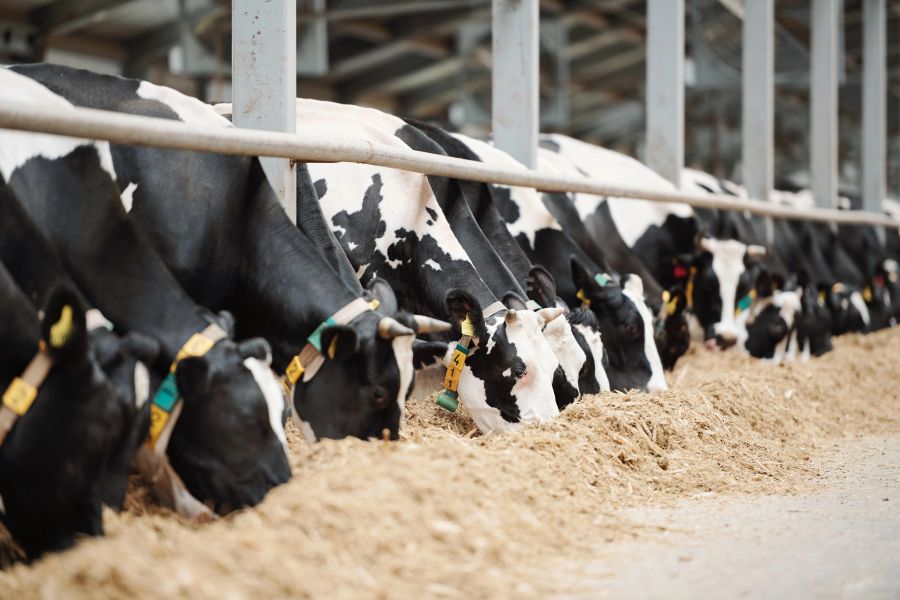 The US cattle herd fell to 86.2 million head in January 2026, its lowest level since 1951.Cargill, the only privately held member of the big four, does not report segment-level beef losses. But the company cut 8,000 jobs globally and consolidated from five business units to three in the face of what CEO Brian Sikes called an “extremely challenging” year.
Washington intervenes
The political response has escalated in stages. On November 7, 2025, President Trump directed the Department of Justice to investigate the “big four” meat packers — JBS, Cargill, Tyson Foods, and Marfrig-owned National Beef — for “potential collusion, price fixing, and price manipulation.” The four companies control roughly 85% of the US beef processing market, up from 36% in 1980, according to the White House.
On December 6, Trump signed a broader Executive Order directing both the DOJ and the Federal Trade Commission to form task forces investigating anticompetitive conduct across the US food supply chain, covering meat processing, seeds, fertilizer, and agricultural equipment.
Julie Anna Potts, president and chief executive of the Meat Institute, pushed back, stating that packers have been operating at a loss for more than a year. USDA data shows meat packers received just 5% of each retail dollar for choice beef between January and August 2025, with producers receiving 54% and retailers 41%.
Then on February 6, 2026, Trump signed a proclamation temporarily quadrupling the tariff-rate quota for Argentine lean beef trimmings — permitting an additional 80,000 metric tons in four quarterly tranches of 20,000 metric tons each, beginning February 13. The National Cattlemen’s Beef Association raised concerns over disease risks from expanding Argentine imports without stronger inspection protocols.
Retailers adjust
At the grocery level, retailers are adapting strategies to manage the sustained cost pressure. Amanda Oren, vice president of industry strategy for grocery, North America, at Relex Solutions, tells Food Ingredients First that the response goes beyond simply raising prices.
Relex is a retail supply chain planning firm valued at US$5.7 billion following a Blackstone-led funding round, with more than 700 retail clients globally and a Gartner Magic Quadrant Leader designation in supply chain planning. Oren works directly with major US grocery chains on pricing, assortment, and demand planning.
“Instead of across-the-board price hikes, many are using targeted pricing, promotions on key cuts, and pack-size flexibility to protect entry price points,” she says. “There’s also more emphasis on transparency and timing — deciding when to pass through increases and when to absorb short-term pressure to avoid sticker shock.”
Oren notes that retailers are also deploying markdown strategies for products with less shelf life — an approach that was “looked down on at times in the past but has been a much-needed lever to pull to decrease waste.” She adds that retailers broadly share the view that beef has become a leading indicator of food inflation, partly because of how frequently consumers purchase it.
“Looking to the second half of 2026, retailers are planning for continued cost pressure, since cattle herd numbers take a long time to rebuild,” Oren says. “They’re staying on top of pricing, promotions, and assortment, with an emphasis on protecting trust and value perception as shoppers remain more selective.”




Upcoming webinars

Oat-Standing Ingredients - Showcasing Irish Grain Through Innovation
Tirlán Ingredients

2027 Food Safety Risks for Quality & Compliance Leaders
FoodChain ID

Formulating for function: Developing benefit-led beverages with natural colours, botanicals, and flavours
Givaudan Sense Colour