
How the alcohol industry is rethinking R&D amid falling global consumption

Key takeaways
- The World Health Organization puts global alcohol consumption down 12% between 2010 and 2022.
- Major producers feel the impact, with profits falling sharply despite booming alcohol-alternative portfolios.
- Health labeling pressure intensifies over on-pack cancer warnings, while GLP-1 drugs and generational moderation reshape consumer demand.
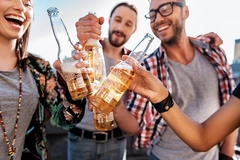
The global alcohol industry is in structural retreat as global consumers continue to drink less. Producers are scrambling to reformulate beverage R&D and regain their falling profits.
Core beer fell below half of Carlsberg’s revenue for the first time in 2025. Pernod Ricard offloaded the bulk of its international wine portfolio to concentrate on premium spirits and non-alcoholic alternatives. Diageo’s operating profit dropped 27.8% in the fiscal year to June 2025, yet its alcohol-free portfolio grew roughly 40% over the same period.
Across the three major categories, the numbers point in the same direction: IWSR data shows spirits volume down 1.3%, wine down 2.4%, and beer down 0.2%, while the World Health Organization puts global consumption down 12% between 2010 and 2022.

The world’s largest producers are responding with significant R&D investment. Carlsberg has deployed over 100 scientists to work on alcohol-free flavor parity, European distillers are retooling botanical expertise for zero-proof products, and the wine sector is building a no- and low-alcohol category it concedes will not offset structural decline.
Food Ingredients First speaks with major industry trade bodies and producers to get a picture of how the alcohol sector will change in the coming years, and what can be done to protect industry stakeholders while benefiting consumers.
A structural shift or a rough patch?
Major European trade bodies and alcoholic beverage producers offer different readings of whether the decline is permanent.
“A big part of it is due to the structural consumption decline we observe in traditional markets,” Ignacio Sánchez Recarte, secretary general of CEEV, the European wine trade body, tells us. “There is a generational shift and the way the oldest generation used to consume wine — almost on a daily basis during lunch or dinner — is a behavior not replicated by new generations due to the change of lifestyle.”
Spirits Europe points to “post-pandemic normalization” and inflation pressures on discretionary spending, but concedes that consumers are making “more deliberate choices, particularly a move toward drinking less but better.” Premiumization “has not disappeared but is becoming more selective, with consumers potentially trading up on fewer occasions,” a spokesperson for the EU trade body tells us.
Carlsberg frames the trend differently. “We see the trend of moderation as a major opportunity,” says Mark Rasmussen, senior communications advisor at Carlsberg.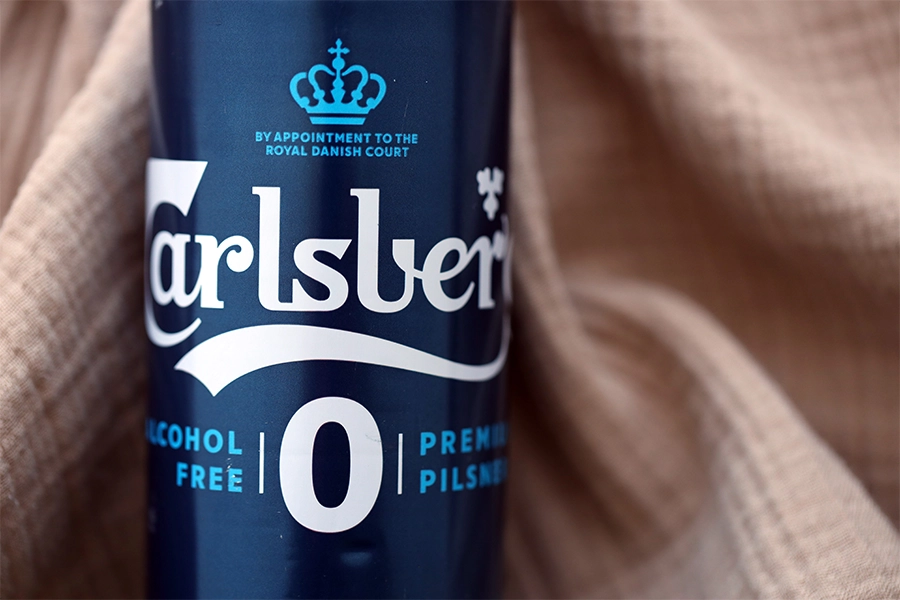 As global alcohol consumption declines, major producers like Carlsberg and Diageo shift focus to alcohol-free and low-alcohol products, with R&D investments aiming for flavor parity and new consumption occasions.
Lab research and vitamin fortification
At 49%, Carlsberg’s core beer revenue share tells only part of the story. Soft drinks and non-alcoholic beer combined now account for a third of sales. Soft drinks alone doubled to 30% of total volumes following the Britvic acquisition.
Alcohol-free brews grew 4% organically and now represent 7% of total beer volumes in Western Europe, with five markets approaching the 10% threshold. The category is accretive to both revenue per hectoliter and margins. Excluding Ukraine, alcohol-free beer was Carlsberg’s fastest-growing category last year, with 50 new alcohol-free brews launched in 2025 alone.
The Carlsberg Research Laboratory is central to the strategy. “Today the lab has over 100 scientists working on the future of beer, including using science to eventually create alcohol-free brews that taste just as good as their full-alcohol siblings,” Rasmussen says. The same laboratory invented the pH scale, and in 2022 one of its scientists won a Nobel Prize for click chemistry.
Carlsberg’s 2025 acquisition of British soft drinks company Britvic has added a functional beverages dimension. “Britvic’s origins were as a vitamin company, so their R&D and innovation in functional beverages and low- and no-sugar drinks is something the beer category can learn a lot from,” Rasmussen says. Synergy targets have been upgraded to £110 million (US$139 million), with 30% already delivered — double initial expectations.
On the consumer side, Carlsberg is leaning into “Zebra Striping” — alternating between alcoholic and non-alcoholic drinks in a single occasion. Scan data shows consumers purchasing alcohol-free products also buy regular beer, Rasmussen says. The company has debuted products around this behavior, including mixed six-packs at European festivals and a “Day” and “Night” version of the same beer at Denmark’s Roskilde Festival. In January, Carlsberg launched Nordlyst, a 2.5% ABV session lager in Denmark.
Alcohol-free beer penetration is “about the same for consumers above and below 35 years old,” Rasmussen adds, suggesting the opportunity extends beyond younger demographics.
Botanicals for the zero-proof era
In spirits, the formulation challenge differs but the direction is the same. “Distillers are leveraging their expertise in flavor extraction, botanicals, and blending to develop high-quality alternatives that meet evolving expectations around taste and experience,” Spirits Europe says. Non-alcoholic options are “expanding the category by creating additional consumption occasions and appealing to consumers who may otherwise opt out.”
Major producers are backing the shift with capital. Diageo’s non-alcoholic portfolio — led by Seedlip, Gordon’s 0.0, and Tanqueray 0.0 — grew roughly 40% organically in fiscal 2025, making the company the world’s largest non-alcoholic spirits brand owner at four times the size of its nearest competitor.
In September 2024, it acquired Chicago-based Ritual Zero Proof, the top-selling non-alcoholic spirits brand in the US. Pernod Ricard took a stake in Almave, the Lewis Hamilton-backed non-alcoholic blue agave spirit distilled in Jalisco, and has launched Beefeater 0.0% and Seagram’s 0.0%.
In a signal of where it sees future growth, Pernod Ricard completed the disposal of its international wine portfolio — including Jacob’s Creek, Brancott Estate, and Campo Viejo, brands generating over 10 million cases annually — in April 2025, to sharpen its focus on premium spirits and no-low alternatives.
Spirits Europe declined to comment on the potential demand impact of GLP-1 weight-loss drugs, which clinical research has linked to reduced alcohol cravings, describing it as a medical issue outside its expertise. The trade body also declined to address the US$22 billion in ageing inventory reportedly held across the five largest listed spirits producers.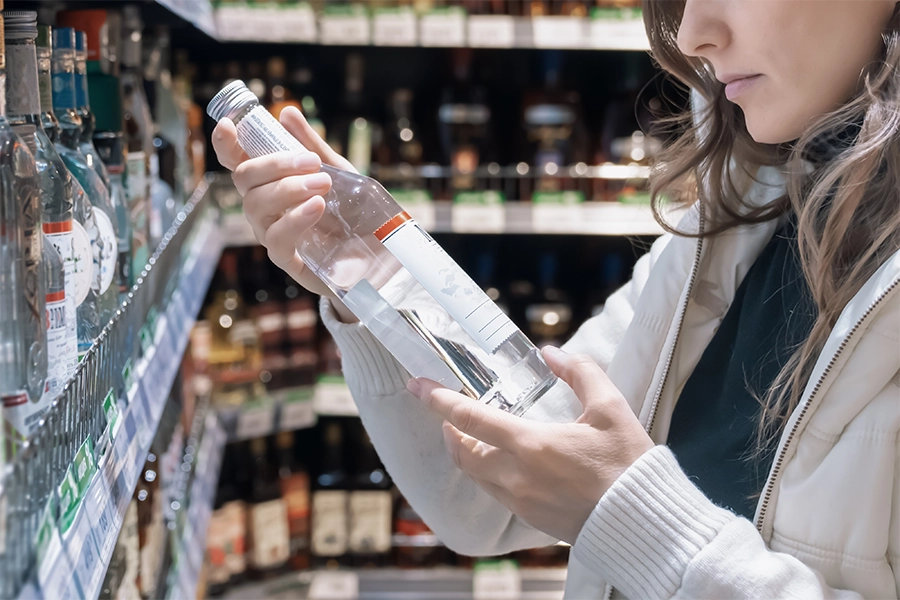 Amid rising health concerns, the alcohol industry faces increasing pressure for cancer warning labels, while generational changes and GLP-1 weight-loss drugs reshape consumer demand toward moderation.
Wine’s harder road
Wine faces the steepest volume decline of any major alcohol category — and the fact that Pernod Ricard, the world’s second-largest spirits company, chose to shed the bulk of its wine business underscores the trajectory. Sánchez Recarte describes no- and low-alcohol wine as “currently the fastest-growing segment within wine,” playing “an important strategic role by allowing wine to remain relevant in occasions where alcohol consumption is reduced or avoided altogether.”
CEEV is direct about the limits. “This segment will not, in the short term, offset the structural decline in traditional wine consumption,” Sánchez Recarte says. “The objective is not to reverse long-term volume trends overnight, but to ensure that wine — in all its forms — continues to be present in modern lifestyles, thereby safeguarding its cultural relevance.”
On GLP-1 drugs, CEEV engages where Spirits Europe does not, arguing that wine’s association with the Mediterranean diet and moderate consumption positions it “relatively well” to align with consumers’ preference for “moderation, intentionality, and overall well-being.” Per capita wine consumption in France has roughly halved since the 1970s, and UK consumption is down 14% since 2000.
An EU wine policy package passed in December 2025 and validated by the European Parliament in February introduces support for oenotourism, stronger promotion programs, and harmonized QR code labeling. CEEV flags concerns about what it describes as a “relatively complex” legal framework for marketing no- and low-alcohol wines.
The labeling battleground
All three sectors are converging on a shared response to growing pressure around health labeling. The US Surgeon General’s January 2025 advisory described alcohol as the third leading preventable cause of cancer in the US, linked to an estimated 100,000 cases and 20,000 deaths annually, and called for updated warning labels. Ireland is pressing ahead with cancer warning labels effective September 2028.
“Public policy should prioritize information over fear-based messaging, such as some of the blunt and simplistic health warning labels we’ve seen,” Spirits Europe says. CEEV argues that any labeling must be “harmonized, proportionate, and evidence-based,” advocating QR codes linking to standardized information rather than on-pack warnings. Both trade bodies have open complaints at the European Commission against Ireland’s measure.
Carlsberg says it is “monitoring the impact of GLP-1s as the new generation of weight-loss medicine is being rolled out to more markets,” but adds that “initial data indicates we are not seeing any significant impact on alcohol purchase.” The company maintains that “the future of beer is bright, because the foundation of beer is strong.”
CEEV’s ambition is more measured: to ensure wine remains present in modern lifestyles. The gap between those two positions frames the question the ingredients industry will need to answer over the coming decade.



Upcoming webinars

2027 Food Safety Risks for Quality & Compliance Leaders
FoodChain ID
Formulating for function: Developing benefit-led beverages with natural colours, botanicals, and flavours
Givaudan Sense Colour
Let's reveal the grain potential: Innovate
Meurens Natural