


Cargill-Kokomodo collaboration poised to scale cell-based cacao

Key takeaways
- Cargill and Kokomodo are collaborating to validate and scale cultivated cacao for commercial food applications.
- Cell-based cacao aims to reduce climate, supply, and price volatility risks by producing real cacao from non-GMO cell lines.
- Commercial rollout could begin as early as 2027, pending regulatory approval, with functional validation results expected in the coming months.
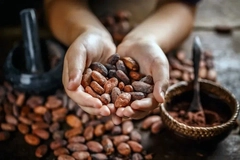
Kokomodo has joined forces with Cargill in a project supported by European food innovation initiative, EIT Food, to evaluate cell-based cacao ingredients for commercial food applications. It comes in the wake of the cocoa crisis, which saw prices skyrocket and heavily impact confectionery and chocolate brands.
Volatility and uncertainty have become part of the operating environment in the chocolate industry. Cultivated cacao could be a significant development in helping chocolate manufacturers mitigate and navigate the complex disruptions that have put the sector under so much pressure in recent years.
Even though the crisis is seemingly easing — as cocoa prices begin to decline amid improved weather conditions in key African growing regions — the industry is looking at long-term solutions to the volatile commodity.

There are many replacement solutions already on the market, but the ultimate alternative could lie in cell-based cacao, which would be a climate-resistant ingredient with all the qualities of traditional cacao.
The solution It can also overcome traditional cacao farming challenges, such as pesticide use and labor concerns, and demonstrates how Cargill is testing cellular agriculture within its portfolio.
Kokomodo’s cultivated cacao
Kokomodo, a subsidiary of Pluri, produces functional cacao ingredients that preserve cacao’s natural flavor and bioactive properties while ensuring year-round availability and sustainability.
In collaboration with Cargill, Kokomodo will explore how cell-based cacao can integrate across multiple categories, including beverages, dairy, and confectionery, by investigating Kokomodo cacao’s functionality, sensory performance, and scalability in industrial settings. The aim is to establish new and resilient supply chains.
Results from functional validation are expected in the coming months.
Speaking to Food Ingredients First, Yaky Yanay, CEO of Pluri — a biotechnology company specializing in 3D cell-expansion technology to expand its footprint beyond regenerative medicine into scalable foodtech — explains how partnering with Cargill can build a pathway to climate-resilient, deforestation-free cacao supply chains.
“Cultivated cacao is real cacao grown from selected non-GMO cacao cell lines using cellular agriculture, rather than harvested from cacao trees grown on plantations. Instead of relying on traditional farming, Kokomodo grows cacao cells in clean, controlled environments using Pluri’s advanced biofarming technology. This allows the cells to develop in optimal conditions year-round, producing high-quality cacao with consistent flavor and functionality. The result is authentic cacao, made differently,” Yanay tells us.
“The global cacao supply chain is under increasing strain. Rising global demand, climate change, soil degradation, and deforestation are making traditional cacao farming more difficult and less predictable.”
“Much of the world’s cacao is produced in regions like West Africa, where climate pressures are already impacting yields and threatening rainforests. As temperatures rise and weather patterns shift, cacao trees are becoming more vulnerable to disease and lower productivity.”
“Cellular agriculture offers a complementary solution, one that reduces environmental impact while helping ensure a stable, resilient supply of cacao to meet growing global demand.”
 Chocolate brands have been under pressure in recent years as the cocoa crisis led to record price spikes and supply chain disruptions.
Validating functionality and scalability
He stresses that global demand for chocolate continues to grow, and supply gaps are expected to widen. Cultivated cacao can help bridge those gaps by supplementing conventional production and reducing pressure on fragile ecosystems.
“Cultivated cacao is designed to work alongside traditional cacao — not replace it. This is about building resilience into the system, not disrupting farmers,” Yanay says.
Addressing the costs of scalable cultivated cacao, he says that, as with most emerging technologies, early-stage production costs are higher. However, Pluri has invested heavily, including over US$400 million into its proprietary 3D cell expansion and biofarming platform, to drive scalability and cost efficiency.
“The goal is to deliver a high-quality, audience-specific cacao product at commercially viable pricing. With industrial scaling, this is considered achievable,” Yanay continues.
“Cost competitiveness will largely depend on scale. As production volumes increase and manufacturing efficiencies improve, costs are expected to decrease significantly. Importantly, cultivated cacao also reduces exposure to climate shocks and crop volatility, which can dramatically impact traditional cacao prices. Long-term, scalability and sustainability are expected to make the economics increasingly attractive.”
Regulatory and commercialization timelines
Food companies are responding well to this new technology, with growing industry interest in sustainable, long-term solutions for sourcing and leveraging ingredients to develop chocolate and confectionery products.
“The collaboration between Kokomodo and Cargill reflects serious industry engagement. Through support from EIT Food, the partnership is evaluating cultivated cacao ingredients across multiple applications. Major food companies are actively exploring how cellular agriculture can strengthen supply chains and reduce environmental risk,” says Yanay.
“Cargill’s partnership with Kokomodo signals confidence in both the technology and the product quality. While Cargill is a prominent example, broader interest from food manufacturers continues to grow as companies look for sustainable sourcing solutions. Industry leaders increasingly recognize that being part of the solution is essential for long-term resilience,” he adds.
He explains that if development and regulatory processes proceed as planned, products containing cultivated cacao could begin entering the market as early as 2027.
“Functional validation results from the Kokomodo-Cargill collaboration are expected in the coming months, marking an important step toward industrial adoption.”
But first, regulatory processes and approvals are needed.
“In the US, cultivated food products typically go through regulatory review under the FDA’s Generally Recognized as Safe (GRAS) framework. Kokomodo plans to file its regulatory submission in 2026. While the company cannot comment on approval timelines, it is working toward commercialization following regulatory review,” explains Yanay.



Upcoming webinars

2027 Food Safety Risks for Quality & Compliance Leaders
FoodChain ID

Formulating for function: Developing benefit-led beverages with natural colours, botanicals, and flavours
Givaudan Sense Colour

Let's reveal the grain potential: Innovate
Meurens Natural