Ahold Delhaize’s reformulation drive elevates “healthy” own-brand F&B sales


Key takeaways
- Ahold Delhaize posts Q4 net sales of €23.5 billion (US$27.8 billion), with 52.1% of its own-brand food sales now meeting the company’s healthy product criteria.
- Albert Heijn’s reformulation efforts have cut the equivalent of 117 million sugar cubes, 52,000 kg of salt, and 282,000 kg of saturated fats from own-brand products.
- For 2026, Ahold Delhaize plans over €1.25 billion (US$1.48 billion) in cost savings while accelerating own-brand investment, price competitiveness, and store openings.
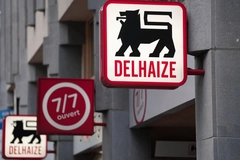
Ahold Delhaize has reported fourth-quarter 2025 net sales of €23.5 billion (US$27.8 billion), an increase of 6.1% at constant exchange rates, with 52.1% of own-brand food sales now classified as “healthy” — a figure that signals the Belgian-Dutch retailer’s reformulation commitments and health-driven product strategy are succeeding commercially.
Full-year net sales hit €92.4 billion (US$109 billion), with an underlying operating margin of 4.0%. Comparable sales excluding gasoline rose 2.5% in Q4, outpacing a US supermarket market where volumes declined 2% over the year.
Own-brand as growth engine
The company’s 2026 strategy puts own-brand assortment expansion at the center of its growth model — a move with direct implications for ingredient suppliers serving the private-label channel. “Our focus on affordable, healthy, and convenient options is especially important amid continued pressure on household budgets,” the company says.

Innova Market Insights’ latest private label analysis backs up the commercial logic. The research firm notes that while retailer brands reliably deliver value, they need to close the perception gap with national brands on quality, nutrition, and variety — areas where reformulation and ingredient innovation are the primary levers.
Separately, Innova data shows that nearly a third of US consumers have increased their private label purchases, while name brands saw a 13% net decline.
Ahold Delhaize is investing on both sides of this equation. In the US, its Food Lion brand delivered 53 consecutive quarters of comparable sales growth, while private-label innovation expanded through lines such as Nature’s Promise and Taste of Inspirations. Innova’s US private label report specifically names Ahold Delhaize as a retailer expanding its own-brand innovation, noting the company’s target to grow private label sales share to 45%.Albert Heijn reached a record market share of 38.2% in 2025, with its AH Terra plant-based range now spanning around 350 products.
Reformulation at retail scale
The health positioning isn’t just about assortment breadth — it’s driving reformulation specs that flow directly to ingredient suppliers. Albert Heijn, the company’s flagship Dutch brand, has cut the equivalent of 117 million sugar cubes from own-brand products through reformulations across popcorn, nut bars, and muesli.
The brand has also reduced salt by more than 52,000 kg in products like cheese spread and salsa, and removed over 282,000 kg of saturated fats from items including pancakes and coffee bread.
These retailer-led reformulation efforts sit within a broader industry push. Innova data shows 60% of consumers globally now opt for the reduced-sodium claim, with an 11% year-over-year rise in low-salt product launches.
Meanwhile, 72% of consumers worldwide are actively limiting sugar intake — dynamics that ingredient suppliers are racing to address through umami-based flavor systems, clean label salt modulators, and fermentation-derived sweetness platforms.
Plant-based protein and 2026 outlook
The retailer’s European brands are targeting a 50% plant-based protein sales split by 2030. Albert Heijn’s own-brand plant-based assortment, AH Terra, now consists of around 350 products. In mid-2025, the brand launched 15 hybrid products blending animal and plant-based ingredients — using field bean protein, sugar beet fiber, and butter beans — priced the same as, or cheaper than, their fully animal-based equivalents.
For 2026, Ahold Delhaize is guiding for an underlying operating margin of around 4%, with over €1.25 billion (US$1.48 billion) in savings through its “Save for Our Customers” program. Muller says the savings will fund “price investments, further investments in our omnichannel capabilities in both regions to drive sales growth, and ongoing investments in technology and AI.”
The company expects mid- to high-single-digit underlying EPS growth at constant exchange rates and free cash flow of at least €2.3 billion (US$2.72 billion).


Upcoming webinars
Oat-Standing Ingredients - Showcasing Irish Grain Through Innovation
Tirlán Ingredients

2027 Food Safety Risks for Quality & Compliance Leaders
FoodChain ID

Formulating for function: Developing benefit-led beverages with natural colours, botanicals, and flavours
Givaudan Sense Colour