

Nestlé, Lactalis & Danone face court action over infant formula scandal


Key takeaways
- Foodwatch files criminal complaint in France naming seven infant formula manufacturers, including Nestlé, Lactalis, and Danone; eight families have joined with more expected.
- Filed “contre X” under French procedure, the complaint opens an investigation that could expand to include food safety authorities.
- Authorities in Belgium, Luxembourg, Brazil, and the Netherlands have confirmed infant illness linked to recalled formula; French prosecutors are separately investigating two infant deaths.

Dutch consumer watchdog Foodwatch has filed a criminal complaint in Paris, France, naming seven infant formula manufacturers — Nestlé, Lactalis, Danone, Vitagermine (Babybio), Hochdorf, La marque en moins, and Granarolo — over their handling of a global contamination crisis. The complaint, filed “against X” under French procedure, opens an investigation that could expand to include food safety authorities.
Eight affected families have reportedly joined the complaint to date.
Under French law, a complaint “contre X” allows prosecutors to investigate all parties potentially responsible, with formal charges determined during the investigation.
The complaint targets companies whose products have been recalled over contamination with cereulide, a heat-stable bacterial toxin. Recalls began in December 2025 and have since expanded to affect more than 60 countries, with manufacturers including Nestlé, Danone, Lactalis, Vitagermine (Babybio), Hochdorf, La marque en moins, and Granarolo all withdrawing products from shelves.
“There is absolutely no acceptable excuse for these late recalls,” says Ingrid Kragl, director of information and research at Foodwatch. “Manufacturers of infant formula are legally obliged to guarantee the safety of the products they place on the market. The companies we are targeting have shown enormous negligence.”
Kragl says the companies are now “minimizing the problem and denying the link between the use of the recalled milk powders and the serious symptoms that many babies have experienced,” calling this response “extraordinarily indecent.”
The crisis has already hit investors. Nestlé shares have fallen nearly 10% in January, while Danone dropped 4% to its lowest level since January 2025. Analysts from US investment bank Jefferies estimate Nestlé’s financial exposure could reach €1 billion (US$1.1 billion), though the company maintains the recall represents less than 0.5% of annual sales. For Danone, the stakes are higher: infant formula accounts for approximately 21% of group revenue, compared to around 5% for Nestlé.
Nestlé disputes Foodwatch’s account, claiming it was “the first in the industry to detect the issue” through its own testing — not via notification from the Chinese supplier, as Foodwatch alleges (citing sources from French authorities). Nestlé says it “acted swiftly” once it confirmed the contamination and maintains it has received no medical reports confirming illness linked to its products. CEO Philipp Navratil issued a public apology in mid-January, saying the company is “cooperating in full transparency” with authorities.
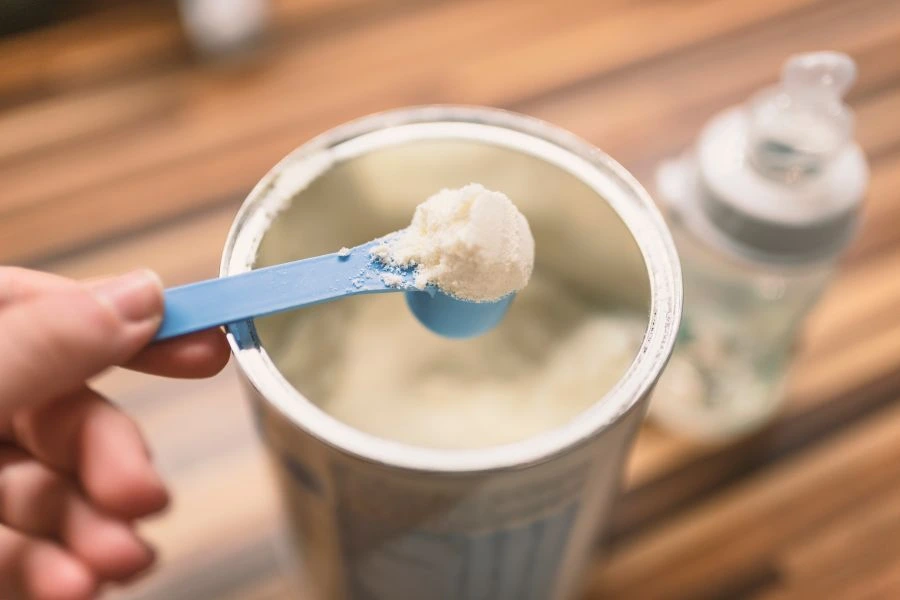 Cereulide contamination traced to ARA oil from a Chinese supplier has triggered recalls across more than 60 countries.Lactalis and Danone subsequently announced their own withdrawals, with Singapore’s Food Agency detecting cereulide in Danone’s Dumex brand on January 17. Danone recalled Gallia and Blédina products on January 23, citing “new recommendations from a European authority.”
Lactalis has said it “acted without waiting for results” from supplier investigations. Danone has stated it detected no cereulide in its own testing but recalled products following guidance from European authorities.
Confirmed illness cases mount
Authorities in Belgium, Luxembourg, and Brazil have publicly confirmed links between consumption of recalled formula and infant illness. In the Netherlands, four babies are now known to have fallen ill after consuming the affected products. French prosecutors have opened investigations into the deaths of two infants who had consumed recalled Nestlé formula, though no causal link has been established.
Foodwatch’s complaint requests a criminal investigation into potential violations, including endangering infant health, aggravated deception, marketing harmful products, and failing to execute timely recalls.
The contamination has been traced to arachidonic acid (ARA) oil, an omega-6 ingredient supplied by a Chinese manufacturer to multiple formula producers. Nestlé informed Dutch authorities on December 9, 2025, following internal testing at its Nunspeet facility in the Netherlands — yet mass public recalls did not begin until early January 2026.
Timeline under scrutiny
The delay is central to Foodwatch’s case. According to the organization’s investigation, Lactalis products now being recalled had been on sale since January 2025 — a full year before withdrawal. Nestlé and Danone products were sold for months before recalls were issued.
“That the food was sold for months by Nestlé and Danone — and even a year in the case of Lactalis — is scandalous,” Kragl says.
Recalls have left parents checking batch numbers across more than 60 countries.François Lafforgue, the lawyer representing Foodwatch and the affected families, says the manufacturers’ liability “seems clear to us.” He adds: “These manufacturers could not have been unaware of the food safety obligations incumbent upon them. We ask for the greatest rigor in this case, which concerns the health of babies.”
Lafforgue previously represented Foodwatch in complaints against Lactalis over salmonella-contaminated infant formula in 2018 and against Nestlé over E. coli-contaminated Buitoni pizzas in 2022. Both companies were subsequently indicted.
Evidence preservation warning
Foodwatch is urging parents not to discard product packaging or remaining formula, warning that some retailers and brands have instructed consumers to throw away or return boxes.
The organization says Nestlé’s Guigoz brand asked parents to return packaging — a practice Foodwatch argues could compromise evidence needed for testing and legal proceedings.
“The powder may be needed as evidence and for tests,” the organization states. Parents who suspect their child has consumed affected products should retain all packaging and seek medical advice if symptoms develop.
Regulatory failures alleged
The European Food Safety Authority (EFSA) issued a statement yesterday confirming it has received illness reports linked to the recalled products.
The European Commission has now asked EFSA to establish an acute reference dose for cereulide in infants — a threshold that would determine at what contamination level products should be recalled. The guidance is expected in early February, nearly two months after the first recalls began.
The Foodwatch complaint also targets national food safety authorities. Nestlé reported the contamination to the Dutch authority, the NVWA, on December 9. Yet, when Foodwatch asked about the issue on December 15, NVWA responded that “no distribution in the Netherlands and Belgium has taken place.”
By January 5, Dutch products were being recalled. NVWA later explained that the scope changed after Nestlé’s tracing investigation revealed the contamination came from a raw material affecting multiple products.
Foodwatch also questions why Italy — not the Netherlands — filed the first EU alert on December 12, given the contamination was identified at Nestlé’s Dutch facility.
Food Ingredients First has contacted Nestlé, Lactalis, Danone, Vitagermine, and NVWA for comment.