


Health-forward F&B: Ingredients move from better-for-you to “more per bite”

Key takeaways
- Health-forward F&B innovation shifts from single claims to holistic, multifunctional products that support protein intake, gut health, and longevity.
- Ingredient suppliers use dairy fractionation, hybrid protein systems, fermentation, enzymes, AI, and sensory science to make healthier products more enjoyable, affordable, and scalable.
- Major ingredient suppliers agree that collaboration across suppliers, brands, start-ups, and researchers will be essential to deliver the next wave of nutrition-led innovation.

Food and beverage innovation is entering a new phase. Over the next decade, health-forward products will be judged less by isolated claims and more by how effectively they support multiple aspects of well-being at once — energy, satiety, digestion, mood, cognition, healthy aging, and metabolic health — without compromising taste, convenience, or affordability.
For ingredient suppliers, this is changing the formulation brief. Products must be nutrient-dense but enjoyable, functional but familiar, science-backed but scalable, and increasingly sustainable. Food Ingredients First speaks with major ingredient suppliers Valio, Hydrosol, IFF, FrieslandCampina Ingredients, and dsm-firmenich to understand how health-forward innovation is evolving across F&B.

Annamari Lammi, senior vice president for Business Unit Powders at Valio, sees consumers increasingly treating food as part of personal health management.
“In the next five to ten years, one of the biggest forces shaping food innovation will be consumers’ growing desire to optimize everything — from energy, appearance, and cognitive performance to mood and healthy aging,” she says. “Food is increasingly seen as part of personal healthcare and daily performance management.”
Lammi expects strong growth in “mood foods” that support mental well-being, stress management, relaxation, and focus. She also believes the mainstream adoption of weight management medications will accelerate demand for nutrient-dense, high-protein, and portion-conscious products that deliver “more value in every bite.”
This “more per bite” idea is becoming one of the defining concepts in health-forward innovation. For Valio, dairy ingredients are strongly positioned because they naturally combine high-quality protein, essential nutrients, and functionality. Lammi says the company is rethinking dairy innovation through applications that combine taste with multiple benefits, “from digestive comfort and satiety to cognitive and metabolic support.”
“The future belongs to foods that work harder for consumers, while still delivering enjoyment,” she adds.
Holistic health becomes the mainstream brief
Dr. Dorotea Pein, director for technology and innovation at Hydrosol, also sees health moving beyond single claims into a broader well-being proposition.
“Health is increasingly viewed from a holistic perspective. Physical and mental well-being are taking center stage,” she says. “Demand-driven products, for example, are rich in protein and fiber and can also be fortified with vitamins and minerals. If a product can offer these benefits at a certain price, consumers will choose the products with the benefits.”
Hydrosol’s emphasis is pragmatic: health benefits must be delivered in products consumers can afford and enjoy. Pein also points to the rise of personalized nutrition, with products tailored to specific consumer groups. “For example, we have developed various ‘best-ager’ concepts that cater to the ongoing longevity trend.”
Across the supplier landscape, this longevity focus is converging with metabolic health, gut health, and protein enrichment. FrieslandCampina Ingredients says “protein is the new baseline,” with Floor van der Horst, global marketing director for Performance & Active Nutrition, noting that 60% of consumers are actively trying to increase their protein intake. This demand is being fueled by healthy aging, GLP-1 users, and a broader shift toward nutrient density.
However, van der Horst stresses that protein volume alone is not enough. Consumers want protein that is “high quality, convenient, and genuinely enjoyable to eat.” That is pushing suppliers to solve format-specific challenges in ready-to-drink beverages, bars, and ready-to-mix products, where viscosity, texture, heat stability, and shelf life performance can determine commercial success.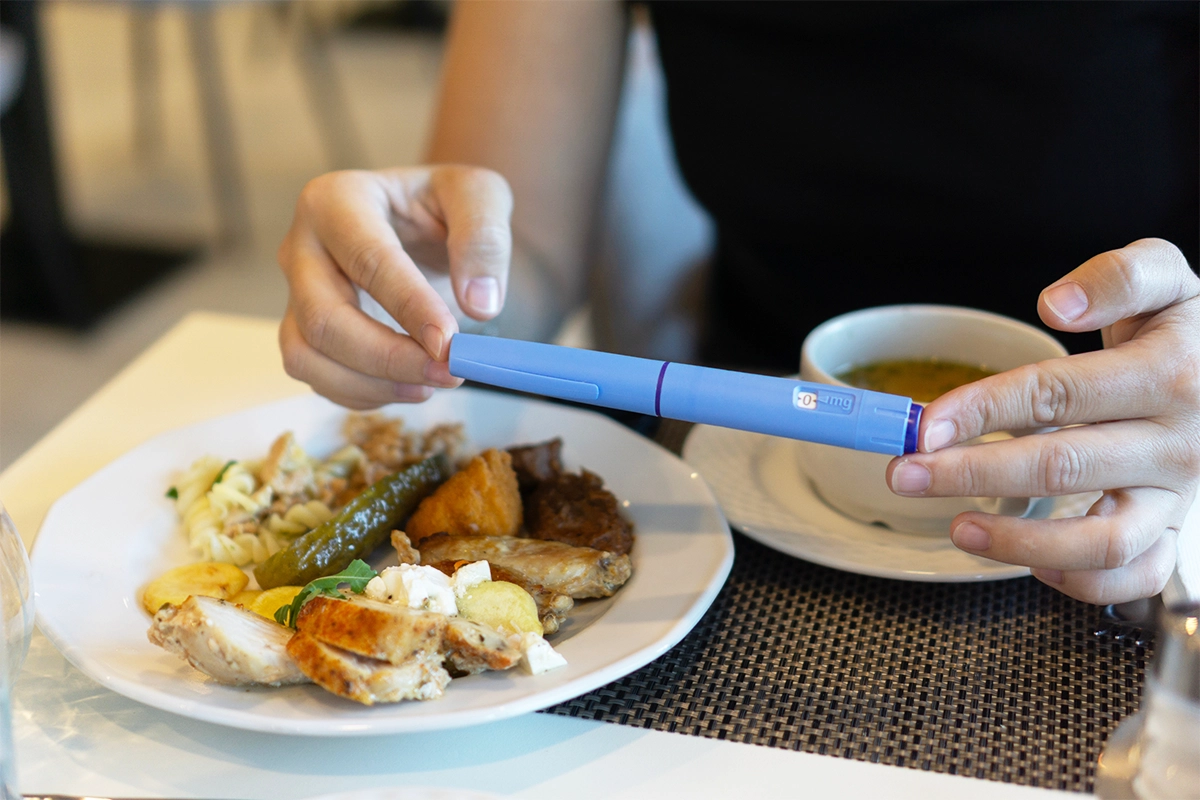 Ingredient suppliers say “more per bite” nutrition is becoming a key innovation target, as GLP-1 use, healthy aging, and holistic wellness drive demand for high-protein, nutrient-dense foods.
Hybrid proteins and better-for-you formats
While dairy is well placed in the protein-first economy, the next wave of health-forward innovation will also rely on plant, yeast, fermentation-derived, and hybrid protein systems.
Pein says alternative proteins from plants or yeast, fermentation, and cellular agriculture are becoming increasingly important. Hydrosol is working across these areas to develop suitable end products using functional systems, especially in hybrid concepts.
“By partially substituting meat with ingredients such as vegetables, legumes, or mycoprotein, the proportion of animal fats — especially saturated fatty acids — can be reduced, while simultaneously incorporating dietary fiber and plant-based proteins,” she explains. “In this way, hybrid products enable a more balanced nutritional profile without compromising on taste, texture, or enjoyment.”
This strategy reflects a more practical phase for plant-based and flexitarian innovation. Rather than asking consumers to make abrupt dietary changes, hybrid products can improve nutritional profiles while preserving familiar eating experiences. Hydrosol’s systems are designed to create specific textures, distinctive bite, and appealing convenience products, including those based on traditional protein sources, such as legumes.
dsm-firmenich sees similar potential in hybrid and plant-based formats. Dirk Lippits, executive vice president for Ingredient Solutions, Taste Texture Health, says consumers increasingly expect meat alternatives and hybrid products to deliver sustainable, high-quality protein without compromising flavor or texture. The company points to technologies, such as Vertis TVPs with integrated ModulaSense technology, to address plant-protein off-notes earlier in formulation.
AI and fermentation reshape ingredient development
The technologies expected to define the next decade are increasingly precise, predictive, and integrated into early-stage product design.
For Valio, advanced filtration and fractionation are key gamechangers. Lammi says they enable the company “to separate and recombine milk’s natural nutrients with unprecedented precision,” opening possibilities for personalized nutrition through targeted “benefit bundles” and nutrient pairings for needs such as satiety, cognitive performance, and healthy aging.
Valio also sees circularity and side stream valorization becoming increasingly important. Lammi says future food systems will rely on interconnected value chains where “side streams from one process become valuable raw materials for another.” The goal, she argues, is not simply to replace existing systems but to make them more resource efficient, whether through upcycled dairy side streams, single-cell proteins, or new ingredient solutions.
At IFF, Christian Adams, vice president for H&B Innovation and Ventures, explains how biotechnology is being applied earlier to process design. Precision enzymatic technologies are moving from corrective tools to proactive ones, such as limiting alcohol formation during fermentation while preserving body, mouthfeel, and flavor. IFF also sees major potential in next-generation enzymes, AI-driven formulation modeling, clinically validated probiotics, and fermentation-enabled protein densification.
AI is becoming especially relevant as formulation grows more complex. IFF says it can accelerate strain screening across dairy, support sugar conversion and texture control, and help design multi-enzyme systems, as integrated platforms rather than individual ingredients.
dsm-firmenich also identifies AI, biotechnology, and digital sensory science as breakthrough areas. Lippits says these tools are making ingredient innovation more predictive, data-driven, and consumer-centric, helping reduce experimental cycles and improve the development of healthier, more appealing products. Hybrid proteins, fermentation, and AI-enabled formulation are helping brands create healthier products that still deliver on taste, texture, and affordability (pictured here: Hydrosol hybrid meat sample).
Taste remains the gatekeeper
Despite the science, the commercial test remains simple: will consumers come back for a second purchase?
IFF’s Vanessa Bergamini, global marketing director for Food Biosciences, argues that the biggest opportunity is “making the healthier, more nutritious choice the more delicious one.” Health and indulgence, she says, are not opposites.
This is the core challenge for reformulation. Sugar reduction, protein enrichment, fiber addition, clean label systems, and plant-based proteins can all affect taste, texture, aroma, or mouthfeel. dsm-firmenich similarly notes that brands are involving ingredient and taste partners earlier because nutrition and sensory performance are intrinsically linked.
Hydrosol’s work on binding systems and texture shows how functional ingredients can help bridge this gap. In lean, clean label, hybrid, or legume-based products, the ability to deliver the right bite and sensory quality is what turns a health concept into a viable product.
IFF highlights NOLO moderation as part of the health-forward shift, with consumers increasingly seeking no- and low-alcohol beverages that reduce alcohol intake without compromising taste, experience, or social occasions.
Ecosystems replace transactional innovation
Suppliers agree that the next wave of health-forward innovation will require deeper collaboration across the value chain.
Lammi says partnerships between ingredient suppliers, brands, start-ups, researchers, and technology partners are essential because “no single company can transform the food system alone.” Valio sees this through its Food 2.0 program, where it acts as a steering company for a Business Finland-funded ecosystem focused on a more sustainable, nature-smart food system. Collaboration, she says, turns shared challenges into concrete projects faster and creates better solutions at the intersection of science, technology, and food innovation.
Pein at Hydrosol also stresses the importance of collaboration and communication. Scientists have long recommended diets with less meat and more vegetables and whole grains, she notes, yet many consumers ignore this guidance. The industry must communicate the benefits of plant-based diets more clearly, backed by scientific studies, transparency, and education around ingredients and additives.
IFF’s Adams says winning innovation will come from open ecosystems in which start-ups bring agility, academia advances science, brands contribute consumer insight, and ingredient partners provide molecular innovation plus application expertise at scale.
The outlook is clear: health-forward innovation is no longer just about adding a nutrient or removing an undesirable ingredient. It is about designing food systems that combine nutritional impact, sensory appeal, affordability, sustainability, and manufacturability from the start.
For suppliers, the winners will be those able to turn complex science into everyday products that feel simple, enjoyable, and worthwhile to consumers. As Valio’s Lammi puts it, the future belongs to foods that “work harder” — but still deliver pleasure. Suppliers highlight ecosystem partnerships as critical to scaling health-forward products that balance nutrition, sustainability, sensory appeal, and commercial viability.