


dsm-firmenich’s new textured vegetable proteins enhance taste and juiciness in plant-based meats

Key takeaways
- dsm-firmenich launches Vertis Textured Vegetable Proteins with ModulaSense technology to improve taste and reduce off-flavors in plant-based and hybrid meat products.
- The ingredients help enhance juiciness and texture in plant-based meats like burgers and sausages.
- The innovation targets taste improvement while reducing cost and complexity, offering a more sustainable, clean label solution for manufacturers.
 Vertis TVP can be used in plant-based kebab applications (Image credit: dsm-firmenich).
dsm-firmenich has launched Vertis Textured Vegetable Proteins (TVPs), developed with its advanced taste modulation technology, ModulaSense. The solution helps manufacturers increase consumer acceptance of plant-based and hybrid meat products’ taste, as demands for better-tasting high-protein alternatives increase. The ingredients address unwanted bitterness and earthy off-note concerns in plant proteins and reduce reliance on masking systems.
The TVPs come in two variants in minced formats — P55m (55% protein) and P65m (65% protein), and impart what the Swiss ingredient firm describes as a “naturally neutral” flavor profile in burgers, sausages, and meatballs, as well as hybrid minced meat concepts.
Marco Iacoviello, VP of dsm-firmenich’s Plant-Based Platform, tells Food Ingredients First that the innovation tackles one of the biggest barriers in plant-based foods — “persistent off-notes like bitterness and beany flavors that limit consumer acceptance.”

“Vertis TVPs address the pressure on manufacturers to improve taste while reducing cost and formulation complexity. The TVPs embed taste modulation into the ingredient itself, reducing the need for added maskers and extra processing steps — cutting total recipe cost.”
The ingredients also enable plant-based and hybrid products to compete “more confidently with meat on taste without compromise.”
The launch comes at a time when plant-based F&B launches are on the rise, with a 4% CAGR between October 2020 and September 2025, suggests Innova Market Insights data.
Enhancing plant-based meat juiciness
Plant-based meat innovators have been trying to replicate meat’s juiciness in recent years, which research suggests is largely tied to how much fluid (serum) is released when chewed. This depends on ingredient hydration, fat, and protein structure in the formulation.
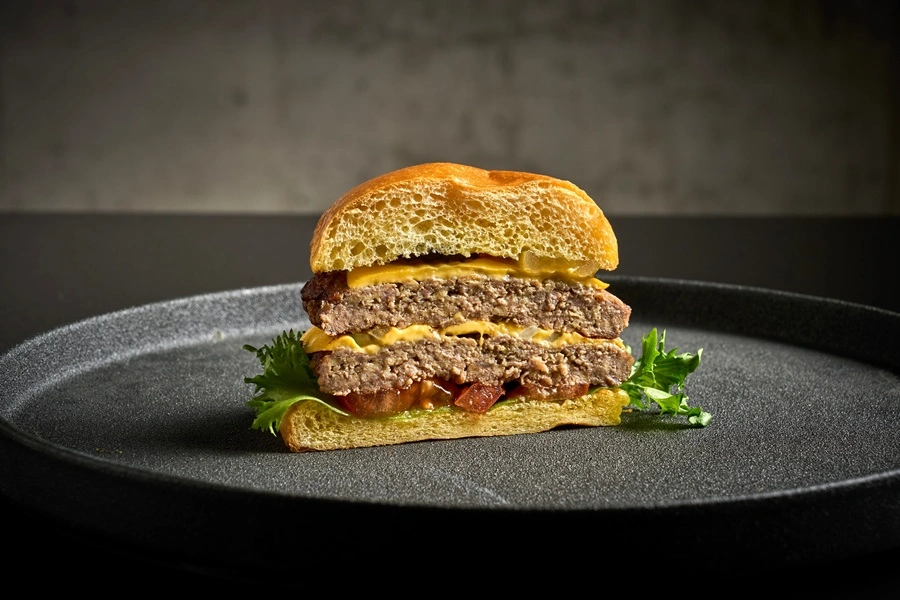 Vertis Textured Vegetable Proteins’ pale yellow color can help burger manufacturers integrate it naturally into meat and plant-based matrices (Image credit: dsm-firmenich).In 2023, scientists at the University of Leeds, UK, created tiny gel-like particles from plant proteins and water to mimic the sensation of fat and juiciness when eaten.
dsm-firmenich overcomes the juiciness challenge with its Vertis TVP P55m and Vertis TVP P65m ingredients, which combine high protein content with hydration and water-binding performance, helping manufacturers maintain structure and juiciness in plant-based meat products.
Their “pale yellow color” integrates naturally into both meat and plant-based matrices, dsm-firmenich says.
Meanwhile, the ModulaSense technology acts as a “precision masker,” targeting off-notes at a “molecular level” to significantly reduce bitterness and earthy flavors, Iacoviello notes.
“It can be integrated directly into the extrusion process, reducing the need for additional masking systems later on,” he says.
Targeting plant-based taste demands
The TVPs respond to the evolving demands of the plant-based industry, which is now maturing beyond a niche dietary preference, according to dsm-firmenich. Taste remains a strong driver for purchase decisions, with nearly 46% of US plant-based meat buyers not making repeat purchases due to taste dissatisfaction.
Nearly nine in ten consumers prioritize taste while choosing plant-based products, says dsm-firmenich, adding that among those dissatisfied with current meat alternatives, 71% say taste still needs improvement.
“Vertis TVPs are designed to deliver a naturally clean, neutral flavor profile from the start. It reduces bitterness and unwanted notes during production to give manufacturers a better base for great-tasting products,” explains Iacoviello.
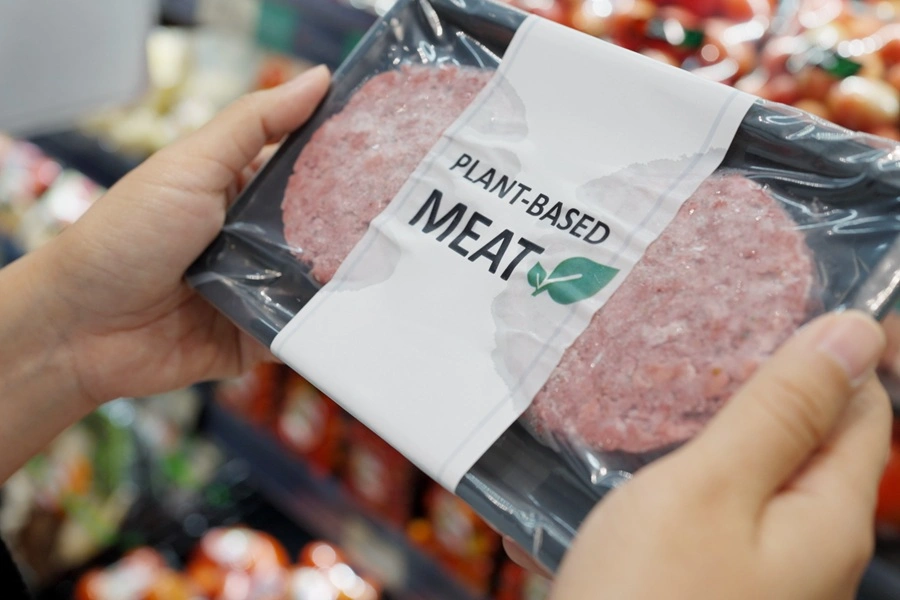 dsm-firmenich data indicates that nearly 71% of consumers say meat alternative tastes still need improvement.
dsm-firmenich combines its in-house expertise in pea protein and flavor innovation at its production site in Tau, Norway, to offer a “fully integrated approach to product development.”
This EU-based production uses pea protein free from major allergens and includes documented carbon footprint data, allowing manufacturers to integrate sustainability metrics into their clean label product development strategies.
Expanding protein concepts
The innovations build on ModulaSense’s integration with Vertis CanolaPro in high-protein beverage and bar formats to expand into TVPs, signaling the next step in scaling the precision flavor modulation platform across the Vertis portfolio.
“The future of plant-based innovation depends on closing the gap between expectation and experience. By uniting advanced protein texturization with precision flavor modulation, we’re helping manufacturers deliver on that expectation, starting with a cleaner, consistent, and more neutral base ingredient that supports both great taste and formulation efficiency,” says Iacoviello.


Upcoming webinars

2027 Food Safety Risks for Quality & Compliance Leaders
FoodChain ID

Formulating for function: Developing benefit-led beverages with natural colours, botanicals, and flavours
Givaudan Sense Colour
Let's reveal the grain potential: Innovate
Meurens Natural