



How F&B ingredient suppliers are navigating the MAHA reformulation challenge

Key takeaways
- MAHA accelerates demand for natural colors, cleaner labels, lower sugar, and protein- and fiber-fortified products.
- Reformulation is technically complex because manufacturers must preserve taste, texture, safety, shelf life, and affordability.
- Suppliers see the strongest opportunities in natural-color systems, food-derived preservation, and nutrient-dense products that still deliver consumer enjoyment.
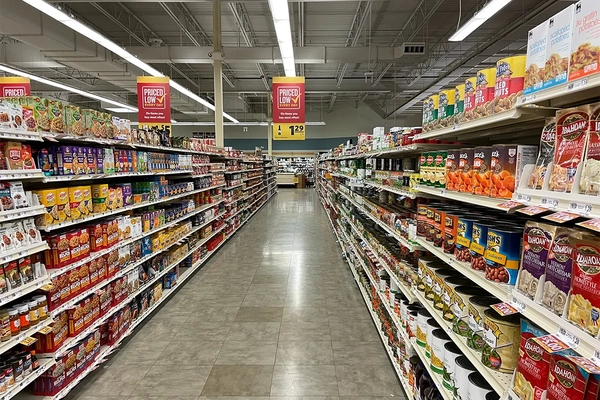
The Make America Healthy Again (MAHA) movement has turned ingredient scrutiny into an increasingly concrete product development challenge for the US F&B industry.
At IFT FIRST 2026 in Chicago, US (Jul 12–15), suppliers described growing customer demand for natural colors, recognizable ingredients, lower sugar, protein and fiber fortification, and the removal of additives that consumers perceive as overly chemical.
The momentum is not being driven by policy alone. Innova Market Insights reports that 37% of US consumers say they avoid artificial food colorings, additives, and preservatives. Innova also reports that color ingredients under scrutiny, including petroleum-based dyes and titanium dioxide, appear in almost half of US F&B launches that use color ingredients.

Clean label has become a mainstream innovation platform. Innova reported in March 2025 that 30% of global F&B launches over the previous year carried a clean label claim, while “no additives or preservatives” appeared on 14%.
Color reformulation becomes first pressure point
For manufacturers, removing an ingredient is only the opening step. The harder task is rebuilding color, taste, texture, stability, food safety, shelf life, and affordability without disappointing consumers.
“The biggest thing right now is the switch from synthetic to natural colors,” Kristy Ellenson, marketing lead for Döhler North America, tells Food Ingredients First.
Ellenson says customers find natural blues and greens particularly difficult because available solutions may not remain stable across different pH conditions, processing environments, applications, and shelf life requirements.
Döhler showcased San-Ei Blue, a gardenia-derived color developed for beverage applications, in Chicago. The company is working to extend the solution into bakery, culinary, and confectionery products.
The technical issue is compounded by consumer perception. A naturally sourced color can still appear artificial when it is unusually bright. Ellenson says suppliers and brands will need to explain sources clearly, helping shoppers connect colors with fruit, vegetable, or botanical origins rather than petroleum-derived dyes.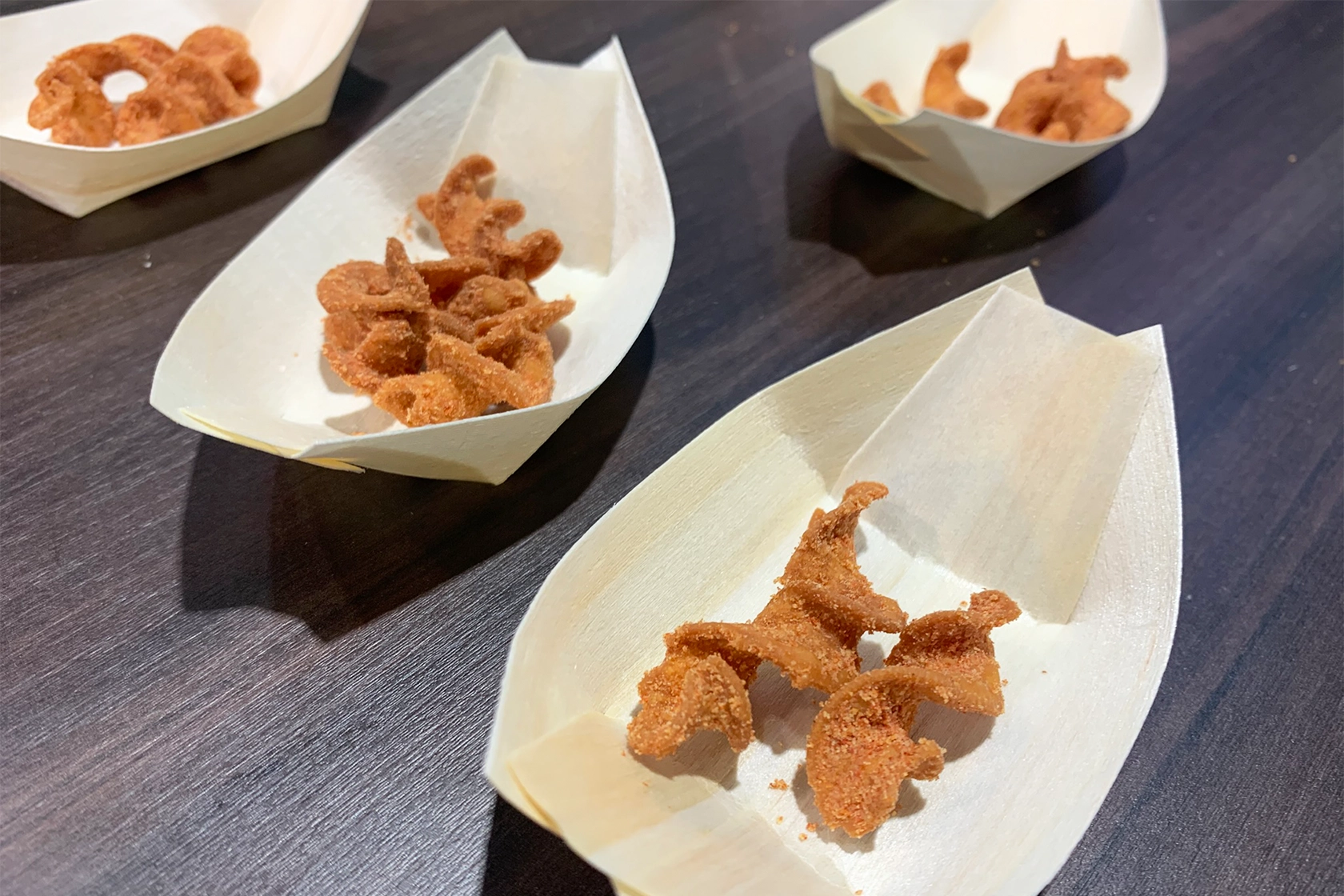 Ingredion’s fortified pasta snack combines added protein and fiber with a crunchy texture designed to support repeat purchase.
That transparency matters because 54% of US consumers say they read labels before purchasing food, while 37% routinely scan ingredient lists to avoid unnatural ingredients, according to Innova. Color conversion, therefore, is not simply a behind-the-scenes technical exercise. It is also a packaging and communications challenge.
For product developers, a successful conversion must protect the visual identity consumers already recognize. A duller candy, beverage, or frosting may technically meet a natural color brief, but it can still lose on the shelf if the new appearance signals weaker flavor or reduced indulgence.
Replacing chemistry without losing function
The same tension applies beyond color. Brian Metzger, vice president for North America at Prosur, says manufacturers are seeking alternatives to preservatives and functional additives, including BHA, BHT, TBHQ, sodium lactate, sodium nitrite, and sodium erythorbate.
Prosur describes its approach as “protecting food with food.” The company extracts functional antioxidant compounds, including polyphenols and flavonoids, from food sources such as citrus fruits and rosemary, then uses those components to help protect other foods.
“Around 2000, we started doing R&D to develop food ingredients that are made from food. In Spain, which is where our company is based, there are a lot of citrus fruits. The foods, like lemons and limes, protect themselves using antioxidants called polyphenols and flavonoids, and you can use those same components in these fruits to protect other foods as well,” Metzger says.
Yet clean label substitution cannot be treated as a simple one-for-one replacement. Metzger points to nitrite as an example. In processed meat, nitrite contributes to color, preservation, shelf life, and food safety. Removing it without introducing another nitrite source requires challenge testing and third-party validation to demonstrate that the reformulated system can still control relevant pathogens.
Phosphate replacement presents another formulation puzzle. Phosphates help meat retain marinade and moisture, supporting yield, tenderness, and juiciness. Metzger says Prosur has developed natural systems intended to preserve those attributes, along with the umami profile consumers expect.
These examples underline a central MAHA era risk — a shorter ingredient list is commercially valuable only when the final product remains safe, stable, appealing, and scalable.
Better-for-you still needs repeat purchase
Positive nutrition is emerging alongside additive removal. At IFT FIRST 2026, Ingredion showcased concepts spanning protein and fiber fortification, no-added-sugar beverages, clean label texture systems, and cost reduction.
“Food has to taste good, otherwise consumers will not come back,” Leaslie Carr, senior director of texture and healthful solutions and customer innovation at Ingredion, tells Food Ingredients First.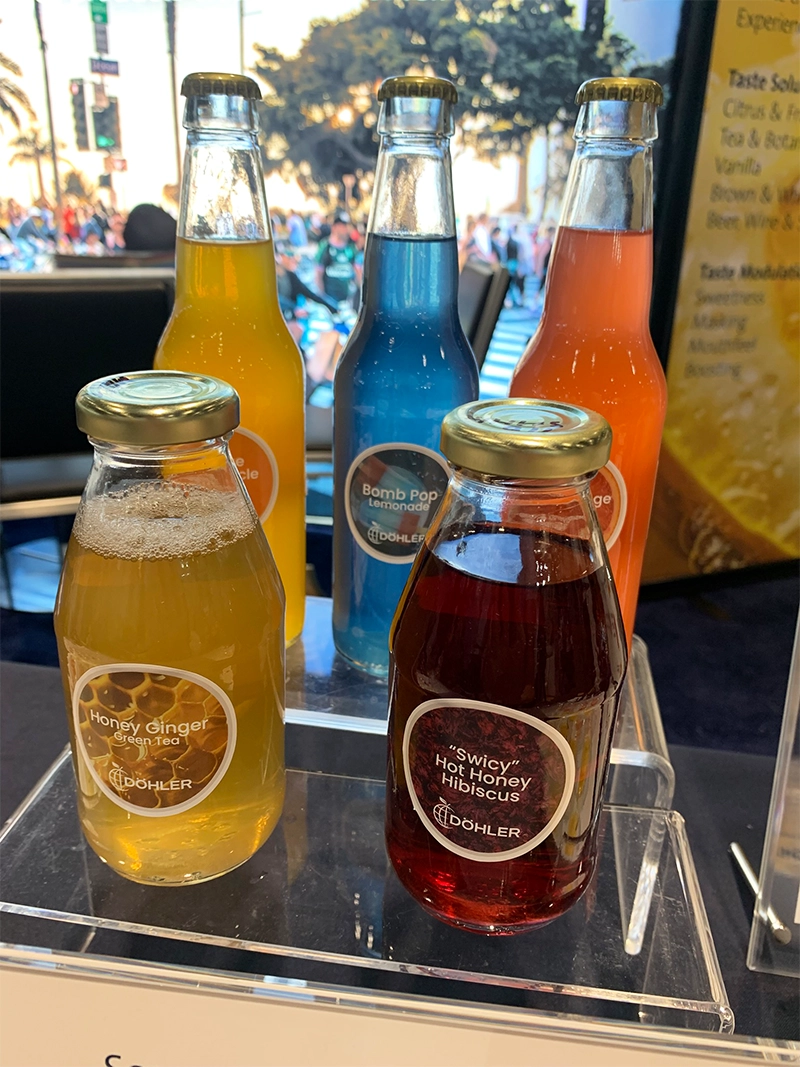 Döhler’s gardenia-derived blue highlights the challenge of replacing synthetic colors without sacrificing brightness or shelf stability.
That principle becomes more difficult as nutrient density rises. Protein and fiber compete for water, affect viscosity and mouthfeel, and must fit within a limited serving size. Ingredion’s prototypes included a crunchy pasta snack fortified with protein and fiber, a no-added-sugar yogurt using a tapioca-based texturizer, and a smoothie formulated with 50% less sugar.
The combination of nutrition and value is important because the MAHA opportunity cannot be confined to premium products. Reformulations that substantially increase costs may struggle to reach price-sensitive consumers, limiting the accessibility of MAHA-aligned products.
Protein remains a powerful platform. Innova says 54% of consumers in the US and Canada are actively incorporating more protein into their diets, while 57% of consumers globally seek protein when choosing snacks. Fiber is also gaining attention as consumers seek satiety, digestive support, and greater nutritional density, including in products aimed at people using GLP-1 medications.
“We are seeing an increased interest in fiber,” Carr says. “The GLP-1 consumer understands that fiber makes you feel full, and that fiber is good for your digestion. There is interest in adding more fiber to foods to be able to make a better-for-you claim. It complements the protein, because consumers are looking for overall nutrition density and a balanced approach, and they want to see labels that are more complete.”
For brands, the opportunity is not merely to add more protein or fiber. It is to choose the right ingredient for the application, preserve sensory quality, and make the benefit understandable at a glance.
From ingredient swap to system redesign
MAHA is placing a spotlight on ingredients, but the industry response will increasingly involve whole-product redesign. Color affects flavor expectations. Preservatives influence safety and shelf life. Sugar contributes sweetness, body, and cost. Protein and fiber can change texture, processing behavior, and stability.
This makes supplier and customer co-creation more important. The formulation brief must account for target claims, processing equipment, packaging, shelf life, cost in use, regulatory status, and consumer expectations from the outset.
The direction of travel is clear. One in four consumers globally says they are eliminating processed foods from their diets, Innova reports. However, consumers are unlikely to accept products that frame health as a trade-off against enjoyment.
The strongest MAHA-aligned innovations will therefore do more than remove an unpopular ingredient. They will translate cleaner labels and positive nutrition into products that still look familiar, taste satisfying, perform reliably, and remain affordable.