



IFT FIRST 2026 review: GLP-1 ripple effect reshapes functional food innovation

Key takeaways
- GLP-1 use accelerates wider demand for satiety, nutrient density, sustained energy, and digestive support.
- Current, former, and prospective GLP-1 users have distinct nutritional and sensory preferences.
- Suppliers combine protein, fiber, texture, and sweetening systems to serve medication users and mainstream consumers.
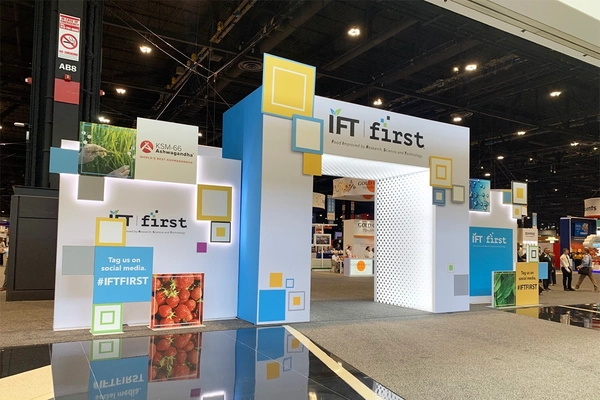
The influence of GLP-1 medications extends far beyond the products marketed to users. IFT FIRST 2026 in Chicago, US, last week, suggested a more consequential story: how GLP-1 weight management drugs are accelerating established demands for nutrient density, satiety, sustained energy, and digestive support in everyday F&B.
Rather than creating one uniform “GLP-1 consumer,” the trend is fragmenting the market into different nutritional and sensory needs. GLP-1 medications are incentivizing product developers to become more precise about the nutritional outcomes of their F&B solutions.
At the same time, behaviors associated with medication users are spreading into the wider population. This is reinforcing demand for foods that work harder in smaller portions and communicate a clearer purpose.

GLP-1 is a signal, not a silo
Emma Cahill, global marketing director for sweeteners, fibers, and GLP-1 at Tate & Lyle, said the industry should view GLP-1 as an accelerant of existing health and nutrition priorities.
“It’s an acceleration of existing trends. The ripple effect from GLP-1 populations is going to have a more material impact on the food industry than GLP-1 populations alone,” she told Food Ingredients First.
That knock on effect includes the education and behaviors that move from medication users into their households and social circles. Cahill argued that manufacturers should not stop their analysis at reduced calorie intake, smaller shopping baskets, or lower food volumes. The wider opportunity lies in understanding how demand for protein, fiber, satiety, and metabolic health is becoming normalized among consumers who have never taken the medications.
Product segmentation will also need to become considerably more sophisticated.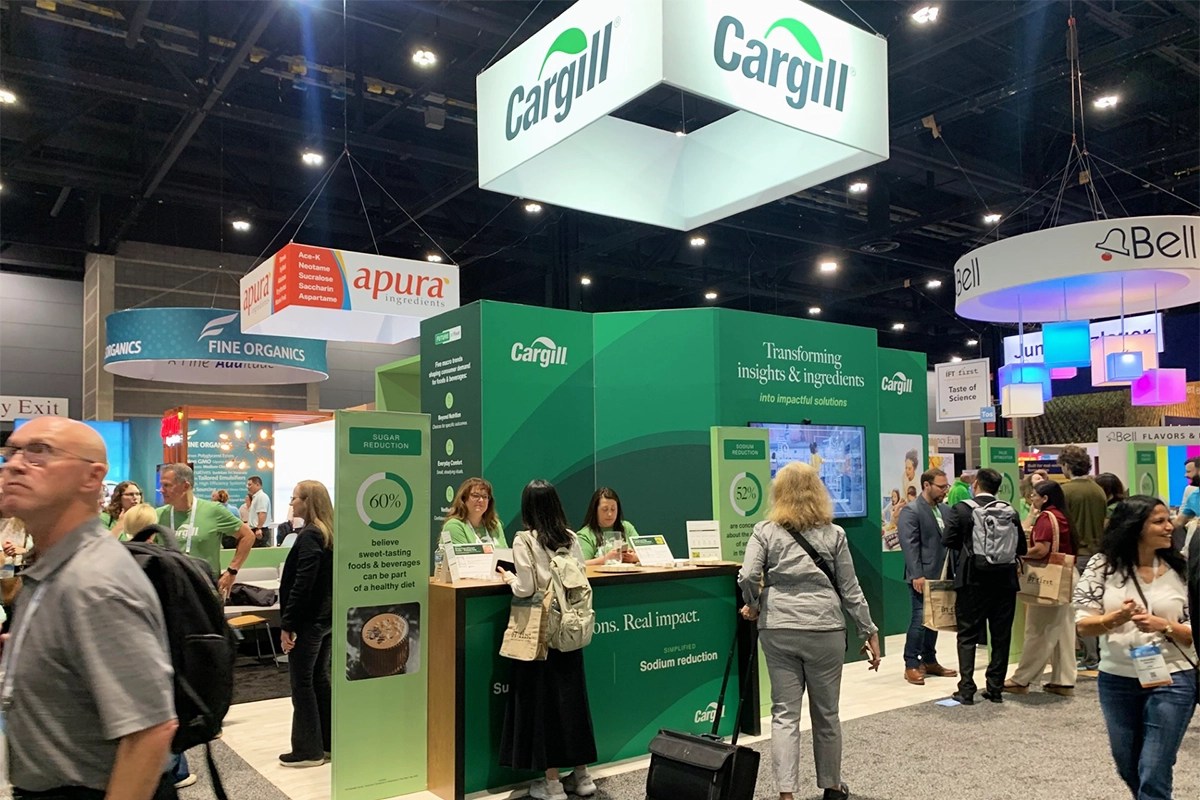 Cargill showcased protein-forward snack concepts, including a crunchy seed-and-nut bar and spicy pea-protein puffs, demonstrating how smaller portions can deliver more nutrition.
“Everyone’s GLP-1 journey is individual,” Cahill said. “So it’s not as simple as slapping a GLP-1-friendly label on a product.”
Tate & Lyle is examining current full-dose users, consumers who are microdosing, former users, and people who have never taken the medication but want to lose weight. The company is also mapping changes in calorie intake, habits, mouthfeel, texture, and flavor preferences over the course of medication use. Its GLP-1 formulation platform covers sweeteners, fibers, and fortification solutions.
The post-medication opportunity
Former GLP-1 users may represent one of the most important and underserved groups. “The outcome of our research in 2025 was that the greatest unmet need was for satiety support for former GLP-1 users,” Cahill said.
One research participant described the medication’s primary benefit as “turning off her food noise.” When that effect ends, former users may face the return of cravings and persistent thoughts about their next meal. F&B products cannot realistically replicate the appetite-suppressing effect of a prescription medication, Cahill explained.
“Our recommendation is not to try to make a claim that compares the role of food and beverages to a prescribed medication that is going to suppress your appetite,” she said.
Instead, developers can combine established tools, such as protein, fiber, glycemic management, and texture. Cahill highlighted the difference between eating an apple, apple sauce, and apple juice as an intuitive example of how structure and chewing can affect fullness. Certain fibers can also be selected for studied satiety effects rather than relying on a generic fiber claim.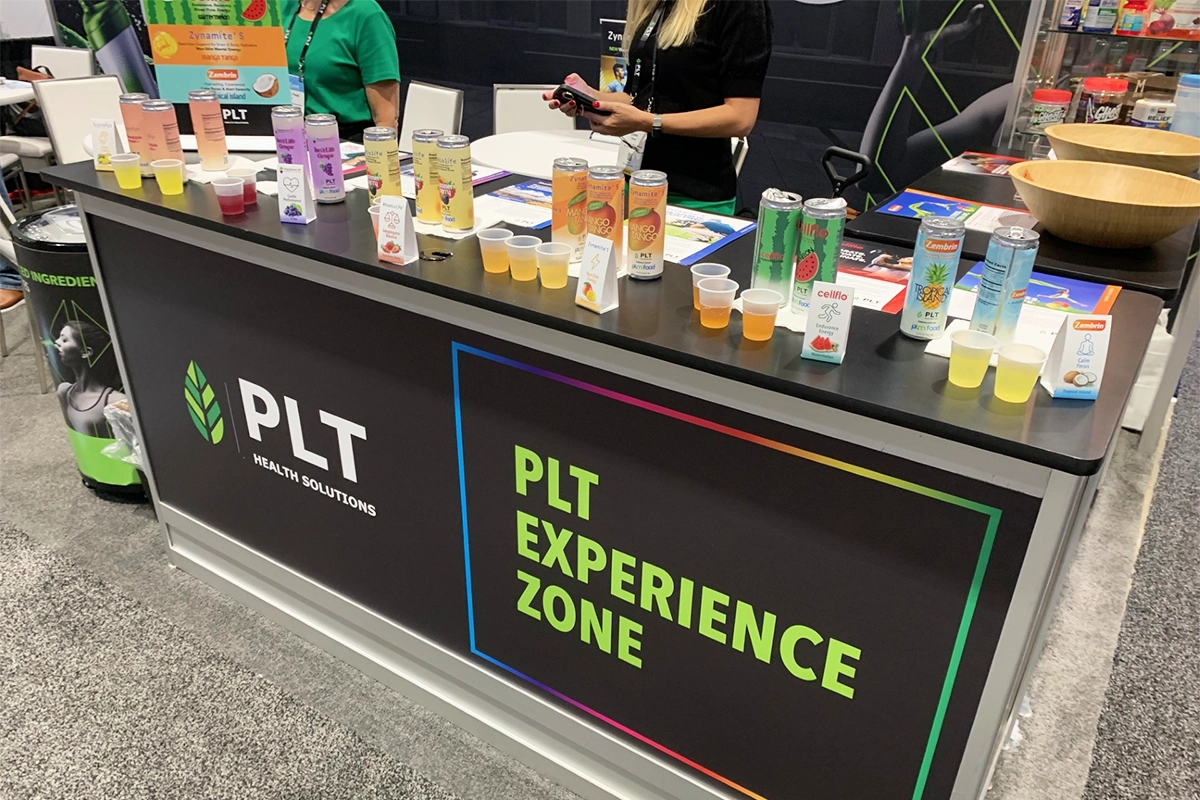 PLT Health Solutions presented beverage-ready ingredients, such as zümXR, Zynamite S, and cellflo6, to address stimulant, non-stimulant, and endurance energy needs.
Sensory design is another dividing line. In Tate & Lyle’s product testing, current medication users described one formulation as “too indulgent” and “like a dessert for me,” while former users said, “it’s not sweet enough.”
Cahill said the findings show that current and former GLP-1 users can have contrasting expectations around sweetness, richness, and texture.
From general health to specific outcomes
Cargill’s Future of Food platform points to a parallel change in consumer language. Keith Albright, senior consumer insights manager at Cargill, said nutrition is becoming less about whether a product is broadly healthy and more about what it helps the consumer to accomplish.
“The consumer is ready to have the products identify what it’s helping them do,” he told us. That creates an opening for more explicit positioning around energy, digestive comfort, or metabolic needs, but it also makes generic functional claims less compelling.
“There’s no doubt that GLP-1 is acting as an accelerator, but GLP-1 is just a manifestation of what we've been seeing for the past three years around nutrition,” Albright said.
Cargill is breaking broad platforms, such as gut health, into more specific outcomes, like digestive stability. Albright also pointed to metabolic balance and sustained energy as connected priorities, saying “this whole notion of sustained energy is a big one.”
PLT Health Solutions sees a similar diversification within the energy category. Steve Fink, vice president of marketing, said “there’s not a one-size-fits-all need for just energy for the sake of energy.”
Consumers may seek stimulant energy, non-stimulant mental energy, endurance, or adaptogenic support depending on the occasion. PLT showcased options, including zümXR Extended Release Caffeine, Zynamite S, and cellflo6, with the emphasis placed on matching different needs rather than treating caffeine as the category’s universal answer.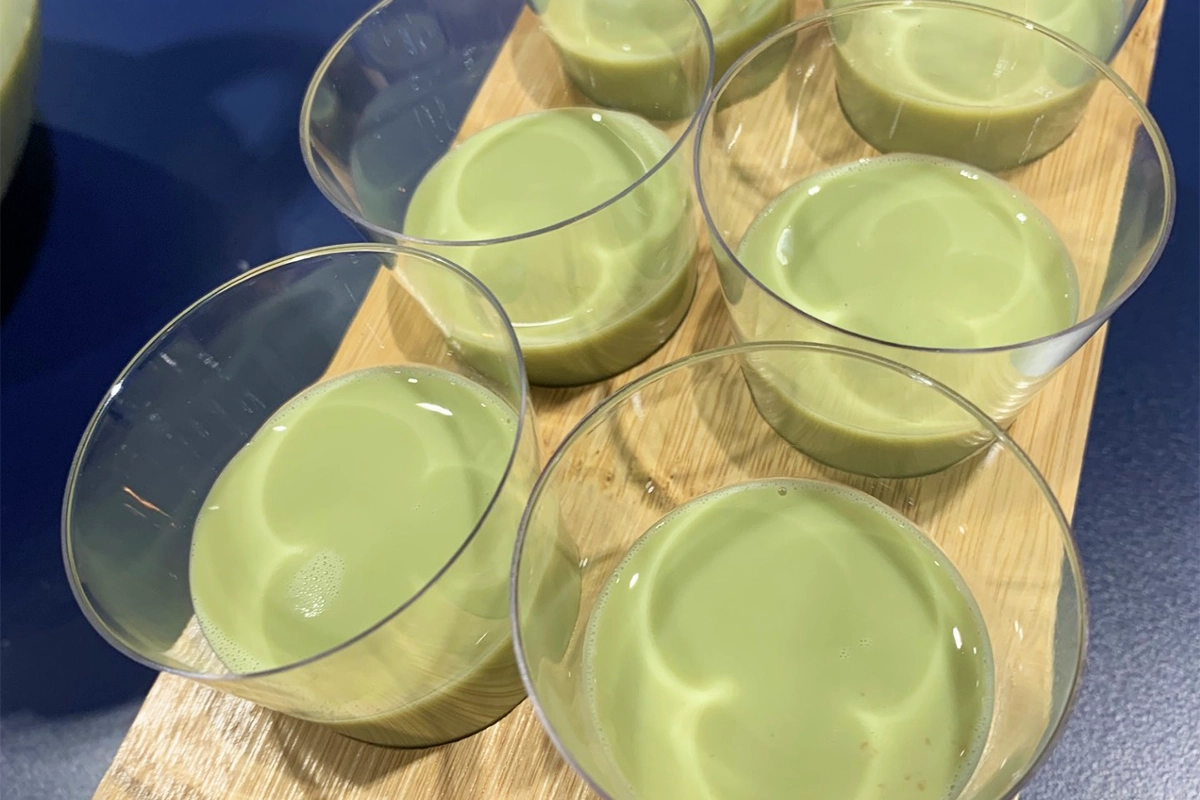 ICL Food Specialties displayed a high-protein matcha latte using stabilization systems designed to keep nutrient-dense formulations suspended and stable through processing.
Delivery format is also widening the addressable market. Fink said some consumers “have what we call capsule fatigue or pill fatigue,” creating demand for beverages, gummies, and ready-to-mix stick packs. Those formats, however, raise solubility, stability, taste, and mouthfeel challenges.
“You need to really do the work, put in the research, put in the commitment to get beverage stable, very mouthfeel pleasing ingredients that are also going to deliver that efficacious health benefit,” Fink said.
Nutrient density raises the technical stakes
The drive toward compact, nutrient-dense products creates a direct formulation consequence. ICL Food Specialties and Bartek Ingredients highlighted how smaller products carrying more protein and other nutrients can become difficult to stabilize.
Milad Moshfeghian, vice president of applications and innovation at Bartek Ingredients told Food Ingredients First there is “a significant overlap in the drive toward nutrient density and convenience in the GLP-1 and non-GLP-1 side.”
That overlap supports the argument that the sector should not isolate GLP-1 innovation. Products created around convenient nutrition, smaller portions, and higher nutrient density may address medication users, while also appealing to time-pressed consumers, active nutrition shoppers, and people pursuing weight management without medication.
However, concentrated systems place greater pressure on emulsification, texture, and shelf stability. Jorg Rendel, global segment lead for bakery and confectionery at ICL, said: “If you have very loaded systems with proteins, with ingredients, with nutrients, that is challenging for the formulators.”
Taste remains the commercial filter. Albright at Cargill summarized the issue directly: “Taste is always going to be the beginning and the end.”
The opportunity emerging from GLP-1 is therefore to identify the consumer’s precise need, formulate an appropriate experience, and deliver a product they will choose repeatedly.