

IFT FIRST 2026 review: Clean label reformulation moves beyond ingredient swaps

Key takeaways
- Removing additives requires manufacturers to preserve food safety, shelf life, taste, and processing performance.
- Suppliers are developing multifunctional systems for sugar, sodium, preservative, and flavor reformulation.
- AI-assisted formulation and improved ingredient formats can accelerate development and strengthen manufacturing efficiency.
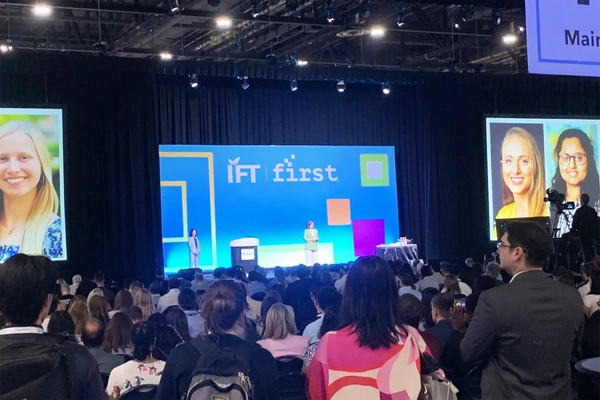
Clean label innovation at IFT FIRST 2026 in Chicago, US, last week, was widely framed as a systems problem rather than a simple exercise in removing undesirable ingredients.
Manufacturers face pressure to reduce synthetic preservatives, nitrites, phosphates, sodium, or sugar. But the replacement formulation must still control pathogens, survive processing, maintain shelf life, and deliver the expected taste and texture.
The definition of reformulation efficiency is also widening. Ingredient suppliers are combining preservation, flavor, nutrition, and texture functions, while digital tools are being used to narrow the initial formulation options.
In other cases, innovation is focused on ingredient handling and factory performance, allowing manufacturers to improve operations without changing the underlying formulation.

Removing additives without weakening protection
Prosur’s approach is summarized by the phrase “protecting food with food.” The company develops functional systems from food-derived materials, including citrus fruits and rosemary. Brian Metzger, vice president for North America at Prosur, tells us more.
“We’ve seen a lot of demand in getting rid of various chemical additives,” Metzger says.
However, removing a familiar additive is only the beginning of the technical process. Metzger uses nitrite replacement as an example because it supports color, shelf life, preservation, and food safety in processed meat.
“The big challenge is making sure you show the shelf life and food safety, and do the challenge studies and third-party studies needed at universities to show you can control the pathogens that nitrite would normally be controlling,” he says.
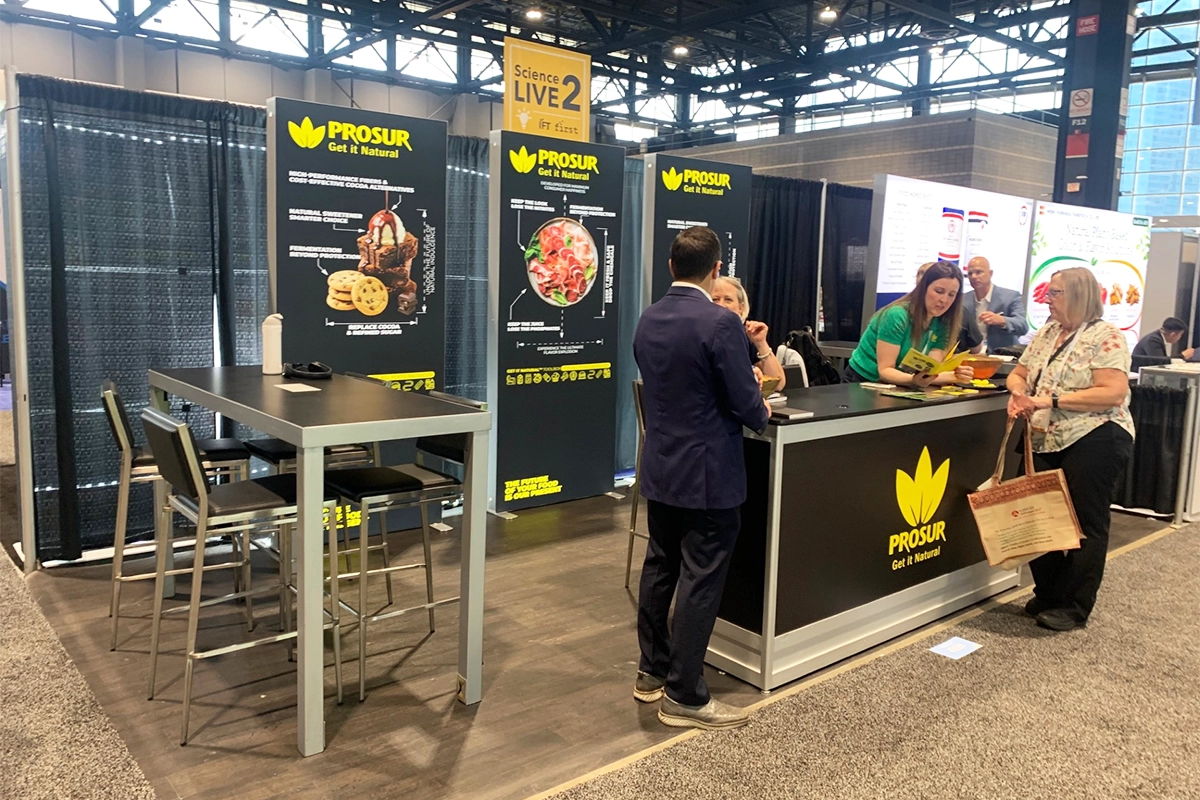 Prosur uses food-derived compounds from citrus and rosemary to support clean label preservation without compromising safety, shelf life, or taste.Prosur’s strategy is not to replace nitrite with another source of nitrite. The supplier instead draws on compounds naturally found in plant materials.
“The foods themselves, like the lemons and limes, protect themselves using antioxidants called polyphenols and flavonoids. And you can use those same components in these fruits to protect other food as well,” Metzger says.
The same whole-product logic applies to phosphate replacement. Phosphates can support yield, water retention, tenderness, and juiciness, meaning that a cleaner label is not commercially useful if the replacement produces a dry or less appealing product.
“You have to look at the taste, the shelf life, everything. It needs to taste great and look great as well,” Metzger adds.
From standalone ingredients to solution packages
Samyang Corporation is applying a systems approach to sugar reduction and fiber fortification. At IFT FIRST 2026, the company showcased Fibernova, its crystalline kestose ingredient, and highlighted its AI-powered 3S Solution.
Samyang defines 3S as Smart, Simple, and Successful. The tool recommends ingredient combinations and formulation ratios based on sugar-reduction targets, product requirements, and cost parameters.
“The main thing is not about the ingredient itself — it’s more about the package or solution we’re providing,” Doug Lim, vice president and head of the North America business at Samyang, tells Food Ingredients First.
That reflects a broader move away from asking what one hero ingredient can accomplish in isolation. Sugar affects sweetness, bulk, mouthfeel, and processing, so reducing it may require a combination of sweeteners, fibers, texture tools, and flavor modulation.
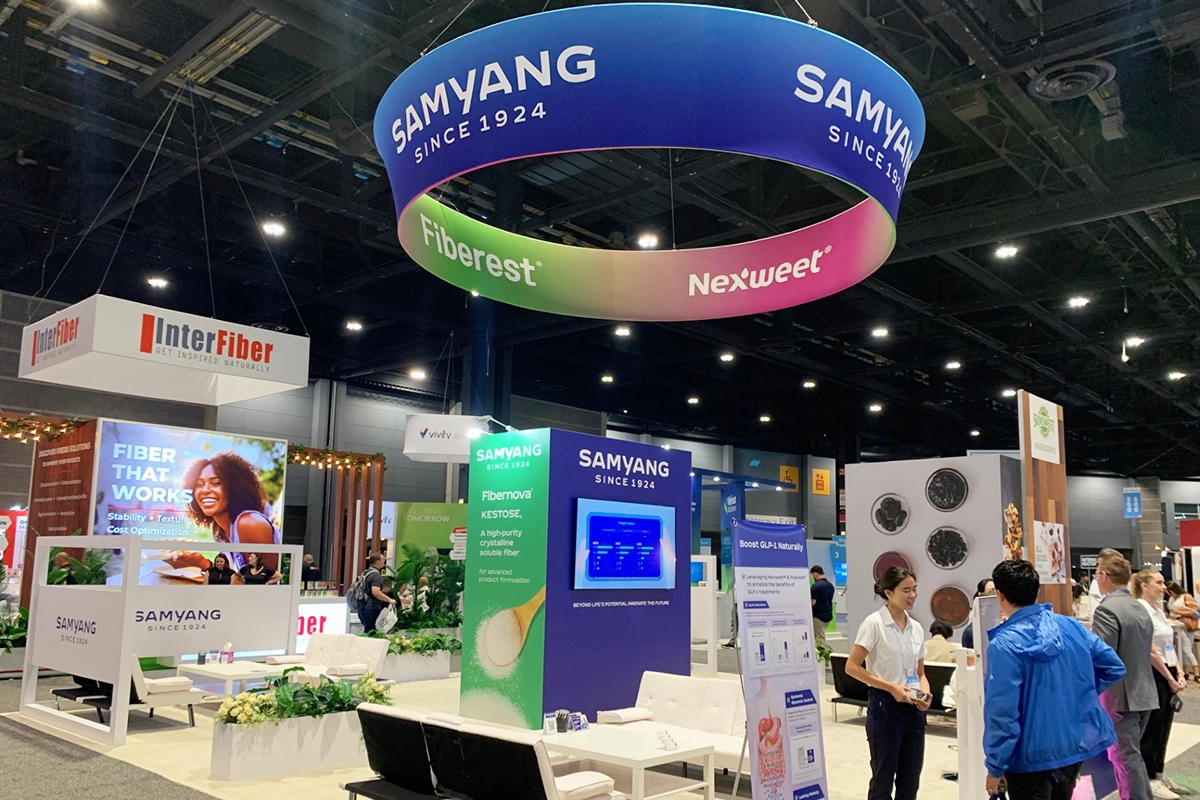 Samyang combines crystalline kestose with AI-assisted formulation tools to help manufacturers reduce sugar while maintaining texture, sweetness, and processing performance.Fibernova kestose adds another option because its crystalline form can support handling and dissolution while contributing fiber and partial sweetness. Samyang says the ingredient contains more than 99% fructooligosaccharides, provides approximately 30% of sugar’s sweetness, and contains about 1% sugar.
Samyang’s 3S platform uses accumulated formulation data to create an initial recommendation for customer discussion. The company was careful not to present the tool as an autonomous product developer.
“Obviously, AI is not a solution for everything,” Lim says.
It is instead intended to accelerate the starting point, after which developers refine the proposed formulation through application work and customer collaboration. That distinction is important as AI becomes more visible in ingredient development. Its immediate commercial role may be less about discovering a finished formulation independently and more about reducing the number of experiments needed to reach a viable prototype.
Fermentation supports flavor and sodium reduction
Daesang also positioned reformulation as a portfolio and application challenge. The company showcased Dsavory, a range of fermentation-derived natural flavors designed to build different stages of the savory experience.
The verified lineup includes Dsavory UH for upfront umami, Dsavory LH for deeper mid-to-late flavor, and Dsavory MH for roasted and meaty notes. The systems are intended for applications including sauces, instant noodles, snacks, processed meat, and plant-based alternatives.
Daesang highlighted the potential to reduce conventional flavor enhancers and expensive flavor components, while maintaining sensory intensity.
“By adding our ingredients, we can reduce the amount of conventional flavor enhancer,” says Angie Jang, technical marketing manager at Daesang.
The commercial value lies in using flavor creation to support several objectives simultaneously. Stronger umami and flavor continuity can assist sodium reduction, while a natural flavor declaration can help shorten or simplify the ingredient list. In some applications, the company says its systems can reduce reliance on dairy flavor powders, creating a cost optimization opportunity alongside clean label reformulation.
Daesang is also testing combinations of the UH, LH, and MH variants at different ratios for particular categories. This reinforces the shift away from universal substitution. The optimal solution depends on the timing and character of the flavor impact required in each food matrix.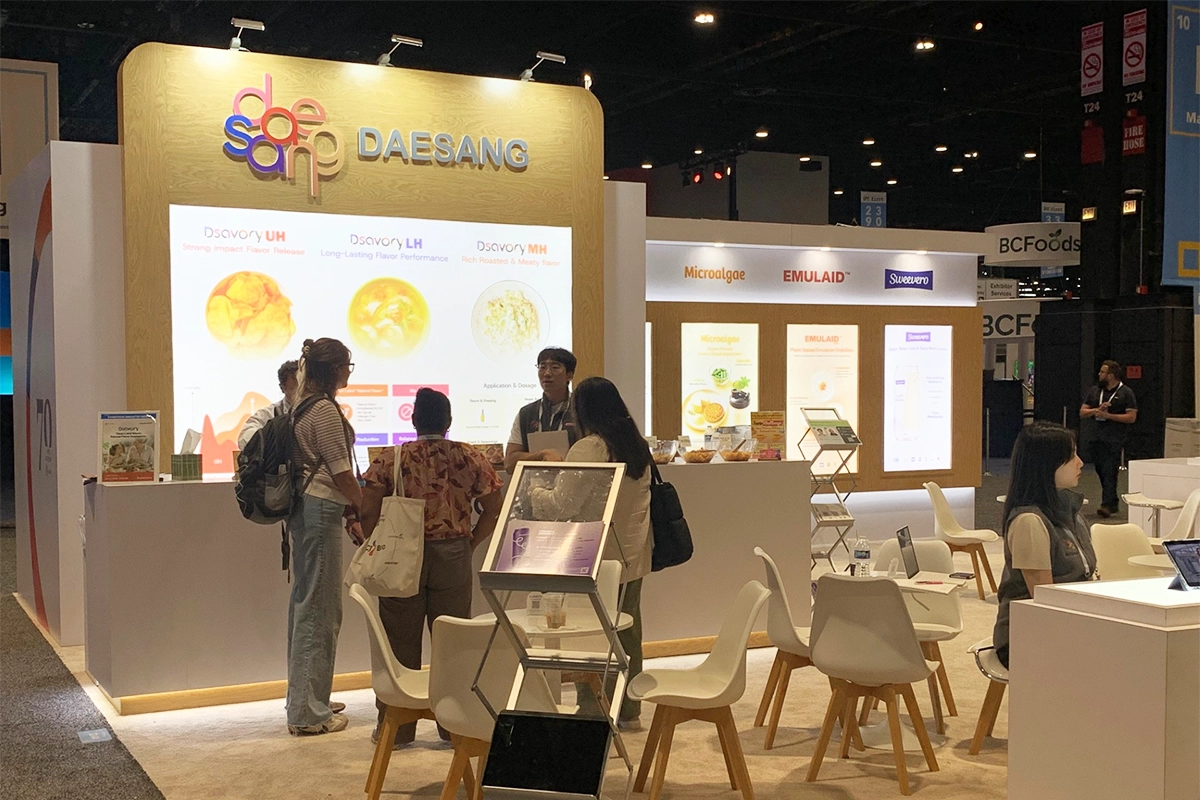 Daesang’s fermentation-derived flavor systems build layered umami and meaty notes, supporting sodium reduction and cleaner ingredient lists.
Factory performance enters the clean label equation
Galactic’s IFT FIRST 2026 launch demonstrated another dimension of reformulation — changing the physical format of an established ingredient rather than changing its active function.
The company introduced Galimax Flavor V-100 Pearls, a low-dust, free-flowing granulated vinegar preservation ingredient. It is designed to deliver the same active ingredient and concentration as conventional powdered vinegar, while reducing dust, caking, and handling difficulties. The pearls can be substituted at the same dosage without reformulation or revalidation, according to Galactic.
“It takes time and money to reformulate,” says Natalia Breuer, Galactic’s chief market and customer officer for North America.
For production teams, the benefit is operational. Fine powders can create airborne dust, product loss, equipment slowdowns, and caking during storage. Galactic says the pearl format dissolves faster and flows more consistently.
“The dosage is the same. How you use it in processing is the same. It’s just cleaner and more efficient,” Breuer explains.
The product also illustrates that clean label and antimicrobial performance do not have to be treated as competing goals. Galimax Flavor V-100 Pearls can appear as vinegar on US ingredient lists, while retaining the preservation function expected from powdered vinegar.
“We don’t see it as a sacrifice. They both work together,” Breuer says.
Across the show, the strongest clean label concepts were not based on removal alone. They addressed the consequences of removal: food safety validation, sensory rebuilding, processing efficiency, cost, stability, and consumer acceptance.
The emerging model is not a one-for-one swap, but a coordinated reformulation system that protects the product and the manufacturer’s business case.
We also looked at how GLP-1 weight management drugs are reshaping functional food innovation at IFT FIRST 2026.