



IFT FIRST 2026 review: Protein innovation moves beyond fortification

Key takeaways
- Protein enters mainstream foods as consumers prioritize nutritional benefits over vegan or plant-based positioning.
- Protein and fiber are converging around satiety, nutrition density, and GLP-1-related product development.
- Plant-, yeast-, and sweet-protein systems are taking on texturizing, egg reduction, and sugar reduction functions.
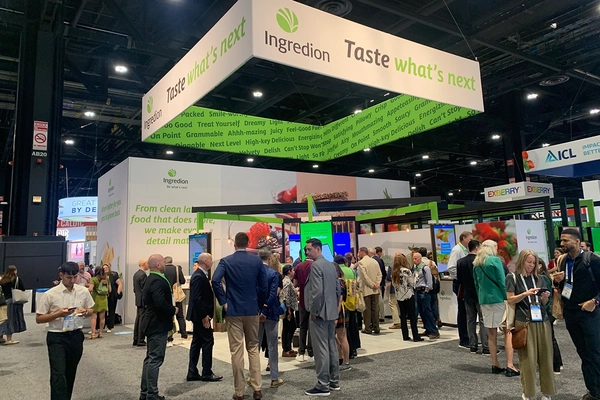
Protein remained one of the most visible themes at IFT FIRST 2026 in Chicago, US, last week, but the category’s direction has changed.
The competitive question is no longer limited to how many grams can be placed on the front of a package. Suppliers are increasingly focused on whether protein can enter mainstream foods without creating excessive viscosity, grittiness, off-notes, or a long list of supporting ingredients.
At the same time, protein is beginning to perform structural and sensory work. Plant- and yeast-based systems are being designed to replace eggs, gums, and other texturizers, while sweet proteins are opening another route to sugar reduction.
Hybrid formulations are also gaining momentum as developers move away from rigid animal-versus-plant positioning.

Protein becomes the benefit
Tyler Lorenzen, CEO of Puris, says protein is moving beyond its traditional association with sports nutrition, vegan foods, and specialized dietary products.
“It’s not vegan. It’s not vegetarian. It’s not dairy. It’s protein,” he tells Food Ingredients First. Consumers, he adds, “want the same foods that they love, but just be more protein fortified.”
That distinction is important for plant protein suppliers. The plant-based claim alone may no longer be sufficient to persuade mainstream shoppers, particularly when earlier products have established negative expectations around flavor and texture. For Lorenzen, repeat consumption — rather than trial driven by values or curiosity — is the test of successful innovation.
“We like to say taste is the on-ramp to healthy habits. So if it doesn’t taste good, it doesn’t matter,” he says. Puris pushes pea protein beyond basic fortification with H2-IZO, designed for higher protein inclusion.
Puris launched H2-IZO at the show, positioning the pea protein for high-inclusion applications in which conventional isolates can make a product heavy or chalky. The company describes it as a low-viscosity protein with a mouthfeel designed to move closer to the experience associated with whey.
Lorenzen explains that viscosity can alter the identity of a finished product. As protein levels rise in a beverage, formulators may compensate with gums, sweeteners, and other supporting ingredients, causing the product to drift from what consumers expect.
“If you can change the viscosity of the protein and reduce it, so you can add more protein, but it still feels like the product people are used to, that’s the taste that they’re looking for,” he says.
Ingredion echoed the need to match functionality to format. Leaslie Carr, senior director of texture and healthful solutions and customer innovation at the company, says brands must select “the right protein for the right application,” as a bar may require very different solubility, dispersion, and mouthfeel characteristics from a smoothie.
Protein and fiber converge
Ingredion’s showcase also demonstrated that protein development is increasingly connected to fiber and satiety. The company notes that requests for both nutrients are rising, but higher inclusion creates competition for water within a limited serving size. Formulators must therefore balance nutritional targets with taste and desirable texture, rather than treating fortification as an isolated calculation.
At IFT FIRST 2026, the company’s Miso Tomato Pie Pasta Crisp combined a pea-and-rice protein isolate with resistant starch and a clean label co-texturizer. The snack delivers 6 g of protein and 5 g of fiber per serving while maintaining crispness through shelf life.
A Savory Breakfast Biscuit took a similar approach to smaller eating occasions, using pea protein isolate and resistant starch to provide 8 g of protein and 3 g of fiber per serving with a moist, satisfying texture.
Ingredion does not view fiber as replacing protein. Carr says fiber demand is being accelerated by interest in fullness, digestion, and GLP-1-related eating patterns, while consumers increasingly seek “overall nutrition density and a balanced approach.”
The company characterizes GLP-1 as an acceleration of the established better-for-you market rather than a standalone trend.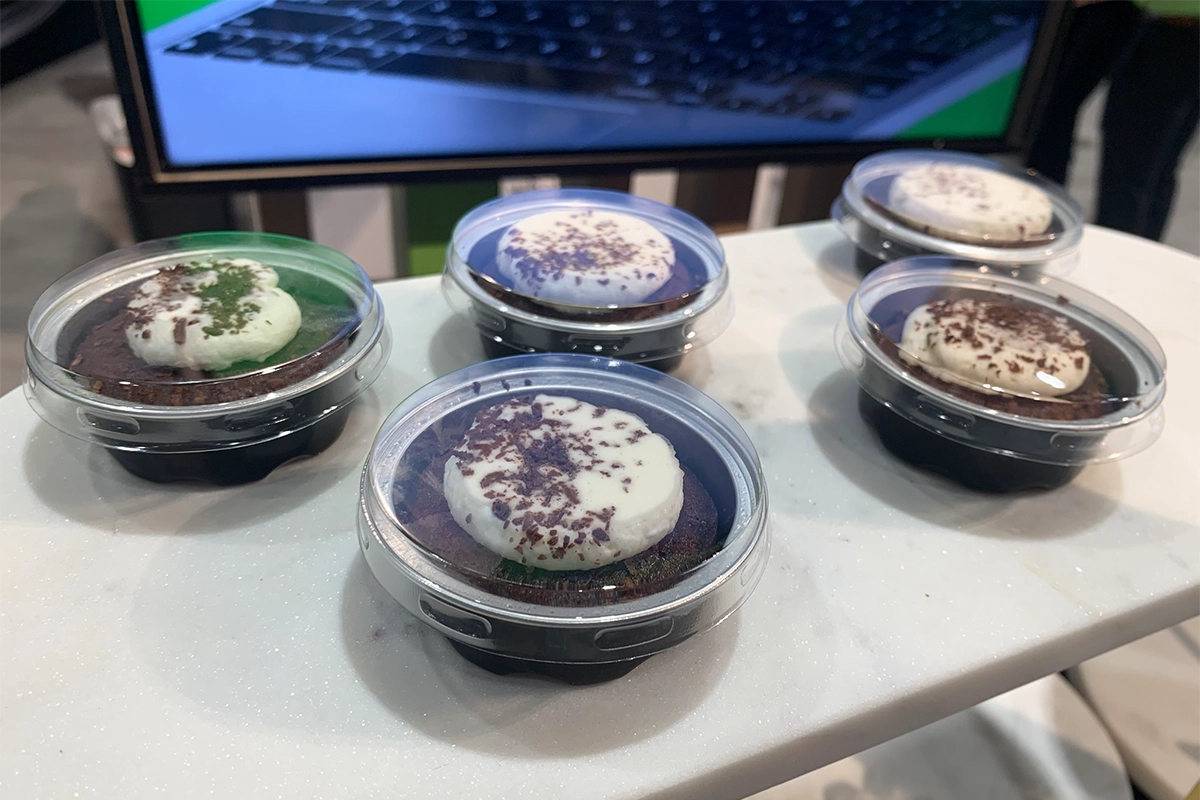 Ingredion brings protein and fiber together, balancing nutrition density, satiety, and texture in everyday foods.
Cleaner formulations depend on total-system performance
The sensory challenge is closely connected to clean label development. A protein that requires masking systems, stabilizers, or artificial sweeteners can undermine the better-for-you proposition that drove the fortification project.
Lorenzen at Puris says brands can end up “adding a bunch of other things” to make high-protein products work.
“If you can make a protein that doesn’t require those extra ingredients, then it makes the food formulator’s job so much easier, so it can be great tasting, highly nutritious, and clean label,” he explains.
This shifts more responsibility onto the protein ingredient itself. Solubility, water binding, emulsification, and viscosity are no longer secondary technical specifications. Instead, they determine how much protein can be added, what processing conditions can be used, and whether the ingredient list remains commercially acceptable.
Nancy Stachiw, R&D director at ICL Food Specialties, emphasizes the impact of processing on finished-product stability.
“Most protein is processed, and heat is the enemy of protein,” she says.
ICL showcased stabilization systems across beverage, bakery, meat, and alternative protein applications in Chicago. The company also presented a plant-based Italian-style meatball combining pea and rice protein, illustrating the shift from single-source formulations toward blends that address functionality and nutritional quality together.
Protein takes on new jobs
Meala FoodTech is treating protein as both nutrition and processing functionality. Its platform functionalizes plant proteins to provide texture while reducing dependence on eggs and hydrocolloids. Groundbaker, its pea protein-based egg replacement, has been developed for industrial bakery applications.
“We are innovating functional texturizing protein,” Hadar Ekhoiz Razmovich, CEO and co-founder of Meala, tells Food Ingredients First.
The concept challenges formulators to reconsider the practice of constructing texture from several narrowly functional ingredients. A protein that contributes to binding, gelation, emulsification, or foaming while increasing nutritional value may simplify formulations and reduce exposure to egg supply volatility.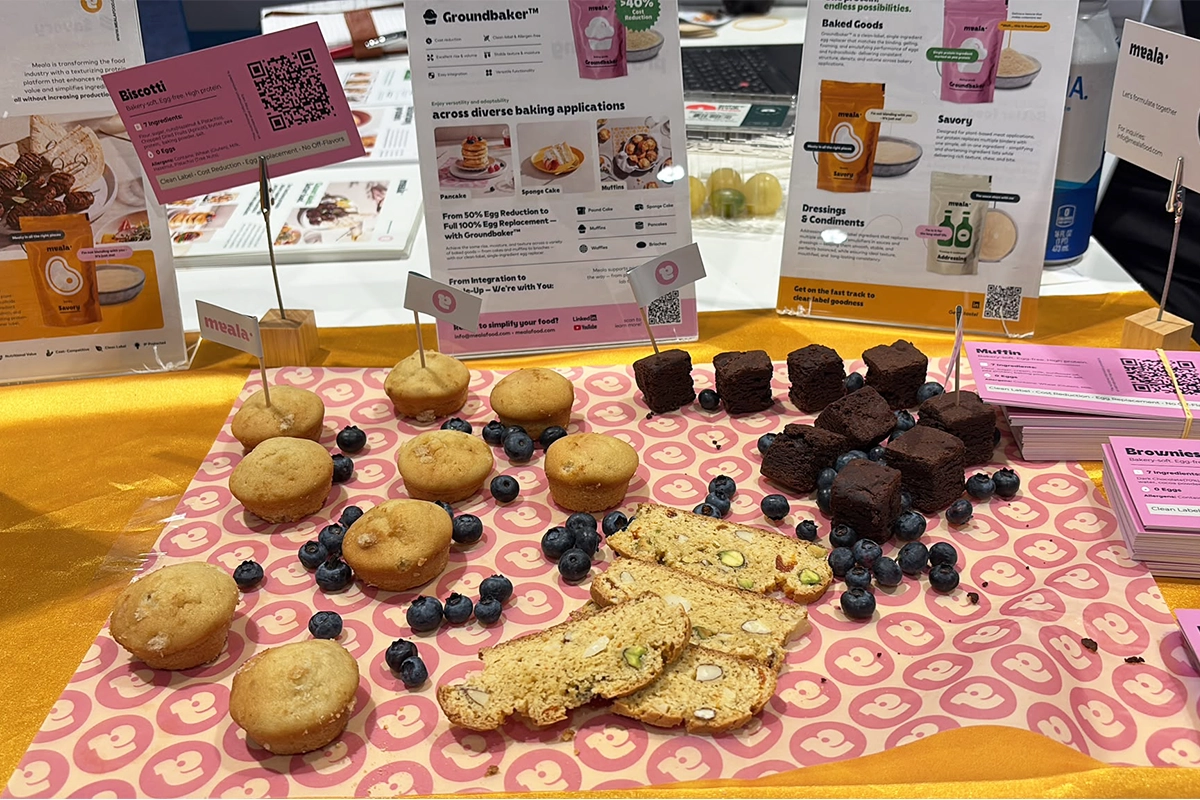 Meala FoodTech turns plant protein into a functional tool, using it to deliver texture and replace eggs in bakery.
Ingredion also showcased egg reduction as an affordability strategy. Its Hawaij Latte Pudding Cake used a customized bakery system designed to replace up to 65% of the whole egg, while maintaining an indulgent texture and sensory appeal. This supports the broader move toward hybrid solutions that reduce, rather than necessarily eliminate, animal ingredients.
Razmovich expects that approach to grow. “We will see a lot of hybrid products,” she says. “But we will still see eggs for sure.”
Biolev by Levapan presented another route using yeast-derived ingredients. Daniel Felipe Lopez Ramirez, marketing manager for biotech at Biolev, says the system combines protein, fiber, and carbohydrates to reproduce egg functionality in selected bakery and sauce applications.
However, he also identified a performance boundary. “The egg is good at incorporating air — our solution doesn’t build up to the same performance as an egg in this sense,” Ramirez says.
Applications dependent on egg-driven aeration may therefore require another approach or further development.
Ingredion’s Citrus Fig Mocktail broadens the definition of protein functionality again. It used a brazzein-based sweet protein solution with stevia to maintain sweetness without added sugar and address the lingering aftertaste associated with some reduced-sugar formulations. Here, protein was not a fortification claim but part of the sensory system.
No single source or technology is likely to solve every nutritional, structural, and sensory challenge. The next phase of protein development will be judged less by the prominence of the claim and more by how effectively the ingredient operates within the total formulation.
Protein is moving into more everyday occasions, but its expansion depends on becoming less noticeable sensorially and more valuable functionally.