
Codex adopts its first global baker’s yeast standard to align trade and quality requirements

Key takeaways
- Codex adopts its first global standard for baker’s yeast, covering product definitions, composition, additives, labeling, and testing.
- The standard could simplify sourcing, quality checks, and international trade, although national adoption will determine its practical impact.
- Angel Yeast helped initiate and develop the proposal alongside international Codex members, without owning the final standard.
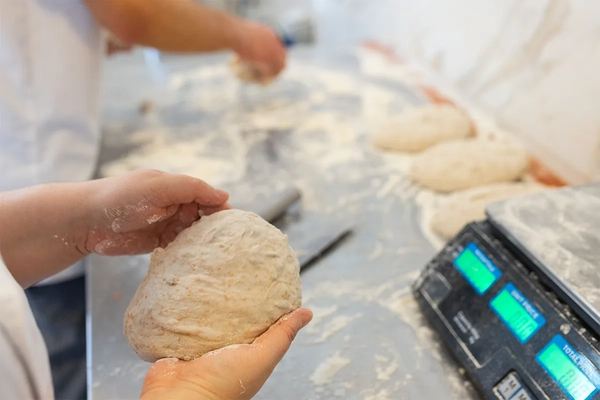
The Codex Alimentarius Commission, the UN food standards-setting body jointly run by the FAO and WHO, has adopted the first Codex standard dedicated to baker’s yeast.
The standard establishes common definitions and requirements covering product forms, composition, additives, labeling, storage, and analytical methods, with potential implications for regulatory alignment and international trade.
Common specifications across yeast formats
The framework applies to baker’s yeast used as a food ingredient in baked goods. It defines the ingredient as Saccharomyces cerevisiae produced from pure strains and used as a biological leavening agent to generate carbon dioxide and flavors in bakery applications.
It divides baker’s yeast into fresh and dry categories. Fresh yeast formats include block or compressed yeast, granulated or crumbled yeast, and liquid or cream yeast. Dry formats include active dry, instant dry, and semi-dry yeast.

The standard establishes moisture ranges of 60–75% for block, compressed, granulated, and crumbled yeast, and 71–86% for liquid and cream yeast. Active and instant dry yeast must contain 2–10% moisture, while semi-dry yeast has a range of 15–26%. It also provides a typical pH range of 3–7.5 for liquid and cream yeast.
However, the text does not establish a universal fermentation-activity or leavening-performance threshold, meaning manufacturers will still need application testing and supplier-specific performance criteria when qualifying yeast for particular processes.
Food additive provisions aligned
The standard also sets out which food additive classes may be used in fresh and dry yeast, with the provisions linked to the Codex General Standard for Food Additives.
For fresh yeast, the permitted functions include emulsifiers and certain acidity regulators, humectants, stabilizers, and thickeners. The dry yeast provisions cover antioxidants and emulsifiers, alongside certain humectants, packaging gases, stabilizers, and thickeners. Processing aids must comply with existing Codex guidance.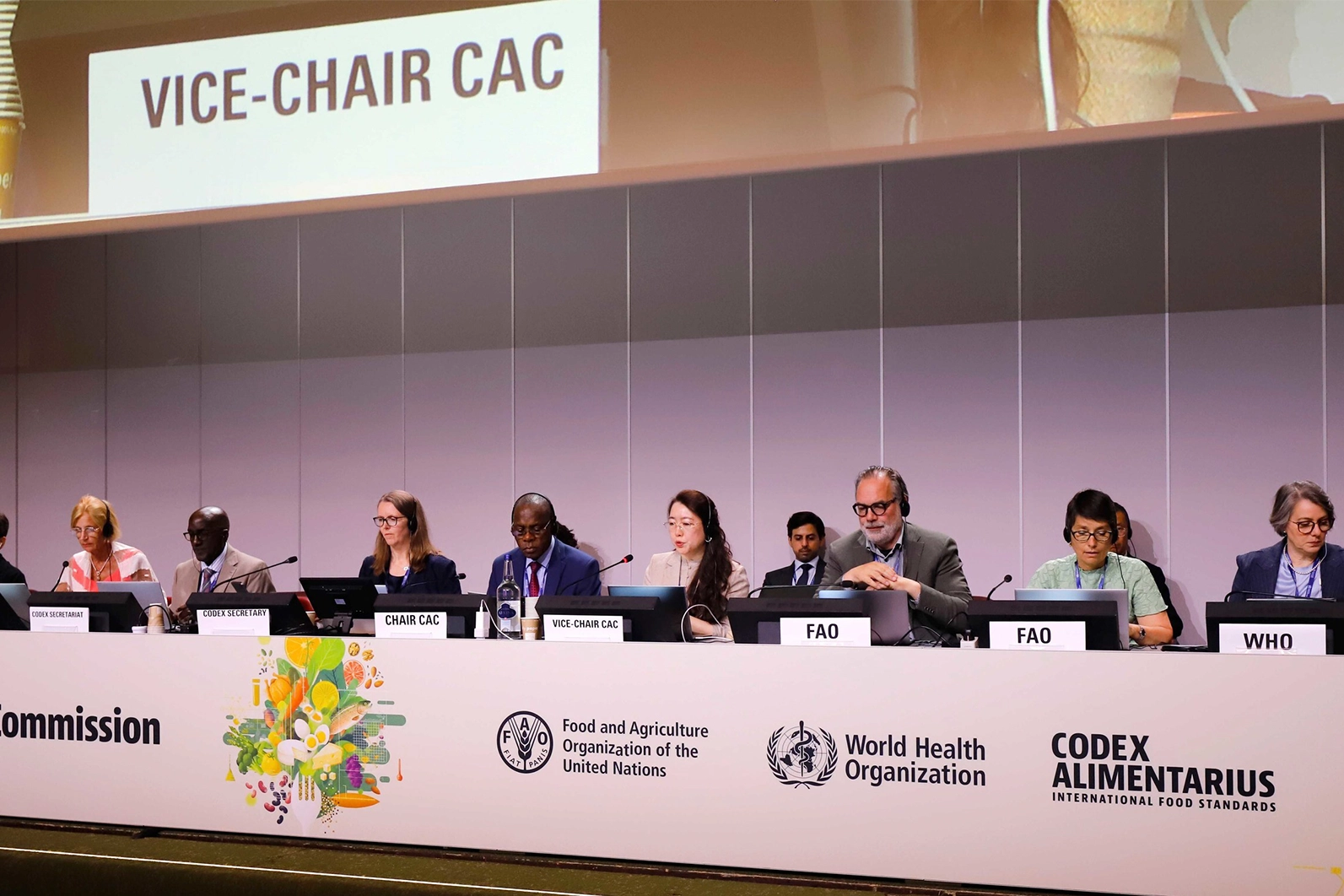 The standard was adopted during the commission’s 49th session, held in Geneva, Switzerland (July 6–10).
Products must comply with applicable Codex contaminant provisions and any microbiological criteria established under relevant Codex guidance. The standard recommends following the Codex General Principles of Food Hygiene and also sets packaging, storage, and labeling provisions. Fresh yeast must be stored under refrigerated conditions.
The framework also identifies standardized analytical methods for measuring moisture in fresh and dry yeast and pH in liquid and cream yeast, referencing AOAC and ISO methods. This approach could support greater consistency between suppliers, customers, and regulatory laboratories when verifying compliance.
Trade impact depends on national uptake
Codex standards are voluntary and do not automatically override national legislation. They must be incorporated into domestic laws or regulations to become directly enforceable. However, Codex texts are widely used as international reference points, and WTO agreements encourage members to harmonize national measures with relevant international standards.
For the yeast and bakery sectors, the standard could therefore serve as a common technical benchmark even before formal regulatory adoption. Suppliers may use it to structure specifications and certificates of analysis, while manufacturers could reference it in procurement, quality assurance, and cross-border sourcing programs.
Angel Yeast contributes to standard development
The initial proposal was jointly developed in 2021 by Angel Yeast and the China National Research Institute of Food and Fermentation Industries. It was approved as a new Codex work item in 2024, with China chairing the drafting process and France and Türkiye serving as co-chairs.
The electronic working group involved 25 Codex members and one observer and conducted two rounds of consultation before the text progressed through the committee process. This broader participation positioned the final framework as an intergovernmental industry standard rather than a specification belonging to an individual manufacturer.
Angel Yeast says it contributed technical and quality management expertise during the development process.
“We are proud to have contributed to the development of this standard under the framework of the Codex Alimentarius Commission,” says Deng Juanjuan, head of technology at Angel Yeast. “Its adoption will strengthen coordination and cooperation across the global baker’s yeast industry.”