

IFT FIRST 2026 preview: Clean label reformulation faces scale-up test


Key takeaways
- Clean label moves into a tougher, industrial-scale phase, where natural alternatives must prove they can match conventional solutions on performance, consistency, and scalability.
- Natural colors, additive elimination, and preservation systems shift beyond simple replacement, with suppliers highlighting solutions that support processing stability, food safety, and shelf life.
- Consumer skepticism raises expectations for transparency and proof, making trust, regulatory readiness and supply reliability central to clean label success.
Clean label innovation is entering a more demanding phase. Ahead of IFT FIRST 2026 in Chicago, US (Jul 12–15), ingredient suppliers say brands are moving beyond simple replacement claims and looking for natural, transparent solutions that can withstand the realities of commercial production.
That demand means natural colors must perform through heat, pH shifts, and storage. Preservation systems must protect food safety and shelf life. Additive elimination must not compromise taste, cost, or scalability. And clean label claims must be backed by credible proof, reliable performance, and practical supply chains.
For suppliers, the next wave of clean label will depend not only on removing artificial or unfamiliar ingredients, but also on proving that natural alternatives can deliver the same performance in real manufacturing conditions.

Natural color scale-up takes center stage
GNT says demand for its Exberry colors, made from non-GMO fruits, vegetables, and plants, has been increasing in the US and beyond, driven in part by evolving US FDA regulations around synthetic dyes.
But Alice Lee, technical marketing manager at GNT USA, says the commercial challenge is not simply finding a natural alternative to an artificial color. The bigger issue is helping brands scale products successfully.
“It’s not really about one specific color or raw material suddenly taking off,” Lee tells Food Ingredients First. “Instead, what we’re seeing is a continued focus on how to successfully commercialize and scale products with natural color.”
That challenge is both technical and operational. Beyond achieving the right shade in development, Lee says color must perform consistently through processing, whether exposed to heat, pH, or interactions with other ingredients. Handling and storage across different manufacturing and distribution environments are also key.
“This is where a lot of our work sits, supporting customers as they move from prototype into commercial production, ensuring those products can be produced reliably at scale,” Lee says.
At the same time, GNT sees natural color evolving from a reformulation tool into a product design lever.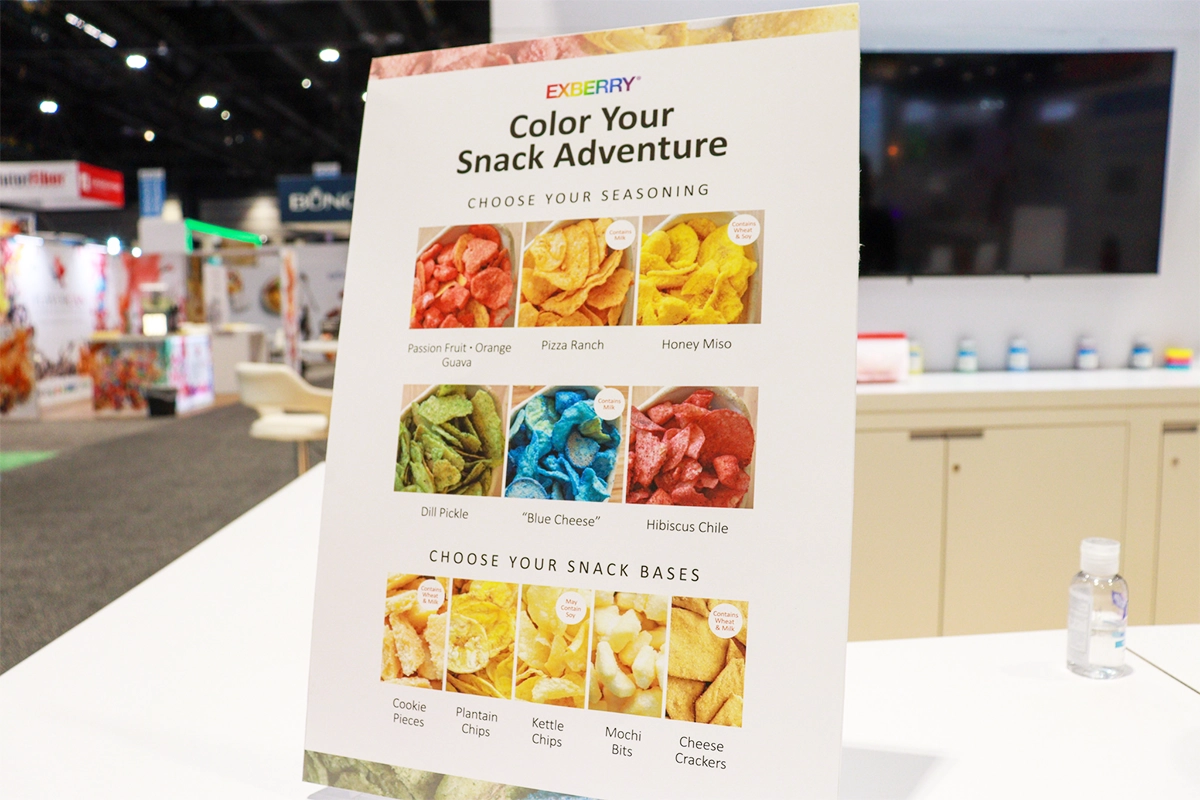 Natural colors move from replacement tools to scalable product design solutions (pictured: GNT Exberry colors).
“Over the past year, much of the focus has been on reformulating away from artificial colors, and that remains a priority,” Lee says. “Alongside that, there is a noticeable wave of new product innovation emerging.”
Brands are using natural colors more intentionally to build distinctive visual identities, create stronger contrast, and develop formats that feel more engaging to consumers.
GNT’s IFT FIRST concepts reflect this approach. A bright blue cheese-style dip paired with red buffalo-seasoned chips creates a strong visual contrast while staying within a familiar flavor territory. In another concept, golden yellow in aji amarillo hummus signals warmth and spice, helping make a globally inspired flavor feel more approachable.
“In both cases, color is helping shape the overall product experience, not just match an expected shade,” Lee says.
The emphasis, according to Lee, is on using color more intentionally — not just to create visual impact, but also to reinforce trust and deliver a product experience that feels distinctive, credible, and scalable.
Additive removal must preserve performance
For Prosur, clean label reformulation is being pushed by a widening gap between consumer expectations, regulatory pressure, and industrial realities.
“Consumers increasingly demand familiar ingredients and fewer additives, and regulators are stepping up their scrutiny,” says Brian Metzger, vice president, North America, at Prosur. “At the same time, manufacturers still need to focus on product performance, safety, scalability, and cost efficiency.”
Metzger argues that the industry does not need to choose between naturality, functionality, and scalability. Natural functional ingredients, fermentation, upcycled raw materials, and transparency are creating new opportunities to rethink formulation.
“The most successful solutions will be those that leverage consumer trust, regulatory readiness, food safety, and industrial performance as mutually reinforcing strengths,” he tells us. “The businesses that win will be those that can address all of these factors together.”
Prosur says the future belongs to products that deliver performance, safety, and nutrition without relying on “synthetic shortcuts.”
“The approach is simple: protecting food with food,” Metzger says.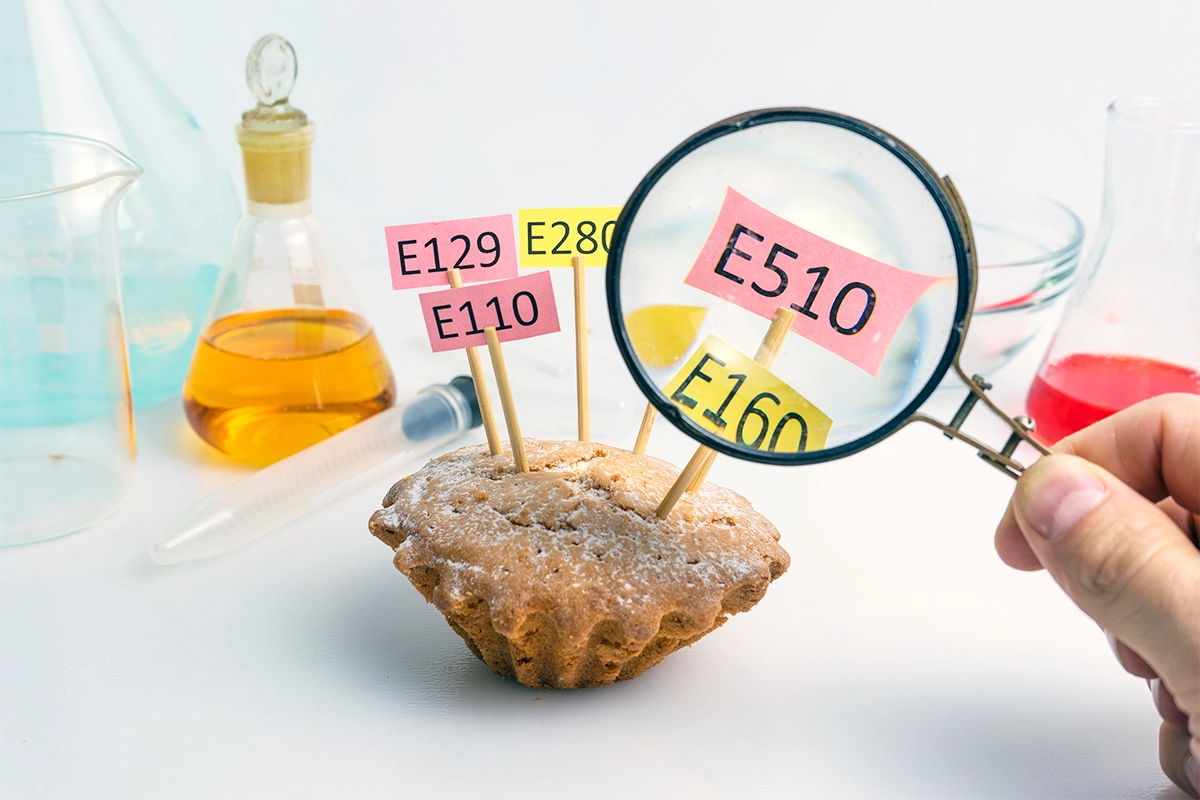 Additive elimination must balance clean label demands with safety, taste, and manufacturing realities.
The company helps manufacturers remove unwanted chemicals using food-based systems designed to improve taste, while meeting performance and regulatory requirements. Its approach combines upcycled ingredients, fermentation, food science, and natural synergies to create scalable solutions for real-world production.
At IFT FIRST, Prosur will highlight its Get It Natural Toolbox, which is designed to help manufacturers remove nitrites, phosphates, benzoates, BHA/BHT, and artificial sweeteners across F&B categories.
For the company, the toolbox represents a shift toward food-first systems, where additive elimination is not positioned as a compromise but as a route to cleaner formulations that still meet industrial standards.
Natural preservation balances performance and practicality
Galactic also sees transparency and naturalness becoming commercially important, but says food safety and operational performance remain central.
“Consumers are increasingly asking more questions about what is actually in their food and demanding transparency,” Katrien Lambeens, chief commercial officer at Galactic, tells Food Ingredients First.
Lambeens says brands are rethinking formulation, prioritizing clarity, and opting for greater transparency in ingredients and processing. However, they must also balance that demand with price sensitivity and evolving global regulations.
“In this shifting landscape, the ingredients that will transition from ‘interesting’ to essential are those that address both consumer expectations and operational realities, bringing together naturalness and transparency with performance and practicality,” she explains.
For Galactic, that thinking is reflected in its recent launch of Galimax Flavor V-100 Pearls, a clean label granulated vinegar preservation solution that combines antimicrobial action with improved handling and formulation performance.
The company positions the ingredient as a fermentation-derived solution that keeps food fresh, safe, and appealing for longer, while helping address persistent production-line challenges. Lambeens says the pearls are designed to respond to food manufacturers’ demand for safe, efficient, and effective preservative ingredients.
Lambeens says the antimicrobial solutions that gain traction will be those that understand preservation as a system rather than a single ingredient. Natural preservation systems gain traction by supporting shelf life, food safety, and operational performance.
“Solutions for food safety and shelf life extension are not plug-and-play additions,” she says. “Rather than relying on a simplified proposition, winning solutions will reflect the reality that deciding on the right preservation strategy is highly dependent on multiple variables.”
That nuance matters because clean label preservation remains a polarized topic. Lambeens says commercial success will depend partly on challenging the assumption that going natural is always prohibitively expensive.
“The cost of ‘going natural’ is not as prohibitive as many manufacturers assume, with the impact on total recipe cost often very limited,” she says.
Benefits, such as extended shelf life, can also reduce markdowns and widen distribution reach, giving natural preservation systems a broader commercial argument beyond label appeal.
Product cues help clean label earn trust
Clean label is also being shaped by rising consumer skepticism. Lee at GNT USA says shoppers are questioning how processed products are, whether ingredients feel artificial or overly complex, and whether claims are meaningful.
She says plant-based colors can help brands create visual cues that support trust, transparency, and authenticity, while making new concepts more engaging.
“Consumers are looking for products that meet their needs in a more real and meaningful way, whether that’s supporting health and well-being, offering clean and transparent ingredients, or creating new and engaging food experiences,” Lee says.
That value equation now includes discovery, culture, and multisensory appeal. Lee points to ube as an example of an ingredient whose violet-purple color has become part of its identity, signaling something global, exploratory, and culturally connected.
For suppliers heading to IFT FIRST 2026, the message is clear: clean label has matured. It is no longer enough to remove synthetic ingredients or simplify a label declaration. The ingredients that scale will be those that deliver trust on pack, performance in processing, and reliability through production and distribution.
As Metzger at Prosur frames it, the future of food may be “simply more natural food.” But for manufacturers, making that future work will require more science, not less.
Food Ingredients First will be reporting live from IFT FIRST 2026 in Chicago, US, next week.


Upcoming webinars

Oat-Standing Ingredients - Showcasing Irish Grain Through Innovation
Tirlán Ingredients

2027 Food Safety Risks for Quality & Compliance Leaders
FoodChain ID

Formulating for function: Developing benefit-led beverages with natural colours, botanicals, and flavours
Givaudan Sense Colour