



Fiber innovation accelerates as formulators tackle taste, texture and digestive tolerance

Key takeaways
- Functional F&B launches featuring inulin, oligofructose, or chicory root fiber has grown significantly in recent years.
- Fiber is moving into new applications, with particularly strong growth in sauces, seasonings, and snacks.
- Chicory root and acacia fiber suppliers are focusing on taste, texture, digestive tolerance, and performance throughout processing.

Fiber is showing up in more food and beverage products. Once closely associated with cereals, bakery products, and dedicated digestive health ranges, it is increasingly being formulated into snacks, beverages, dairy alternatives, and even sauces.
Innova Market Insights data indicates that functional F&B launches featuring one or more of the tracked ingredients — inulin, oligofructose, or chicory root fiber — grew at an 8% CAGR from July 2021 to June 2026. Cereals, bakery, and dairy led activity, but cooking sauces and seasonings recorded a 32% CAGR over the period, while snacks grew at 17%.
One example is UK brand YuBi’s Caramel Protein Bar, which lists chicory root fiber and gum acacia among its ingredients. The high-fiber bar provides 10 g of protein and contains 0.3 g of sugar.

The attraction of such ingredients goes beyond a fiber claim. Suppliers say they can also help product developers reduce sugar or fat and manage texture, while retaining fiber content through processing and shelf life.
Food Ingredients First speaks to Cosun Ingredients and Nexira about the growing roles of chicory root and acacia fibers, and the practical challenges that emerge when formulators add them at meaningful levels.
From nutrition claim to formulation tool
Laurens Delameilleure, business lead for fibers and prebiotics at Cosun, says interest is being driven by greater recognition of the gap between recommended and actual fiber intake.
“Consumer awareness of the link between gut health and overall well-being has increased significantly in recent years. At the same time, many consumers are realizing that they do not meet their recommended daily fiber intake, creating a growing demand for products that help bridge this fiber gap,” he tells us.
The demand is also spreading beyond foods specifically marketed for digestive health.
“Beyond dedicated health categories, we see growing interest from mainstream food and beverage brands seeking to incorporate chicory root fiber into products ranging from dairy and bakery to beverages and snacks,” Delameilleure says.
“This reflects a broader shift, where fiber is no longer viewed as a niche health ingredient but as an essential component of everyday nutrition.”
The shift is also visible in dairy. :ratio Pro-Fiber Vanilla Yogurt Cultured Dairy Snack combines soluble corn fiber with chicory root fiber, providing 10 g of fiber and 20 g of protein per 150 g cup, with no added sugar.
For formulators, chicory root fiber can earn its place in a recipe in several ways.
“One of the biggest advantages of chicory root fiber is its multifunctionality,” says Delameilleure. “While its prebiotic benefits often drive initial interest, formulators quickly discover its ability to improve both nutrition and product performance.”
That functionality is particularly useful when removing sugar, which affects far more than sweetness.
“In sugar-reduced applications, chicory root fiber can help replace sugar while contributing sweetness, bulk, and mouthfeel,” he explains. “This makes it easier to achieve meaningful sugar reductions without sacrificing consumer enjoyment.”
Certain chicory root fibers can also replicate some of the creaminess normally provided by fat. Delameilleure points to dairy alternatives, sauces, dressings, and bakery products as areas where this can help retain a more indulgent eating experience.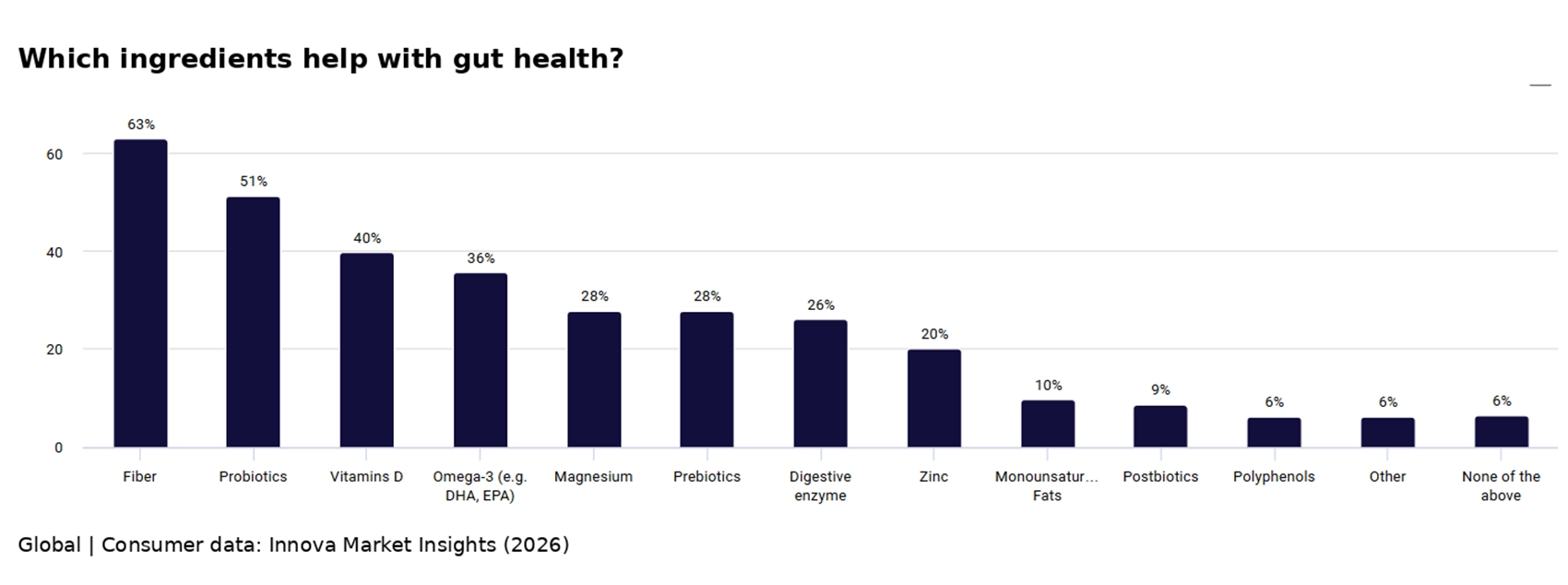
Fiber quality comes into focus
Nexira positions acacia fiber as complementary to established prebiotic fibers, such as chicory-root inulin. For Julie Imperato, marketing and communication manager at Nexira, product development is starting to move beyond a simple calculation of fiber grams.
“As the market matures, the conversation is increasingly moving from fiber quantity to fiber quality,” she tells us.
“It is not only about adding grams of fiber, but also about considering the diversity of microbiome effects, digestive tolerance at an effective dose, and the amount of fiber that is actually delivered after processing and throughout shelf life.”
Imperato highlights digestive tolerance as one of acacia fiber’s main points of difference.
“Its slow and progressive fermentation helps minimize the bloating and digestive discomfort that can occur with more rapidly fermented fibers, such as inulin or FOS, allowing meaningful levels of fiber enrichment,” she says.
The ingredient’s texture and formulation potential in dairy and plant-based products can also make it easier to use without noticeably changing the finished product.
“From a formulation perspective, acacia fiber has a neutral taste, low viscosity, and excellent solubility, with minimal impact on the sensory profile of the finished product,” Imperato explains.
“It is also highly resistant to heat and acidic conditions. This stability is particularly valuable in beverages and other processed foods, where some fibers can partially hydrolyze during processing or over shelf life, potentially reducing the fiber content ultimately delivered to consumers.”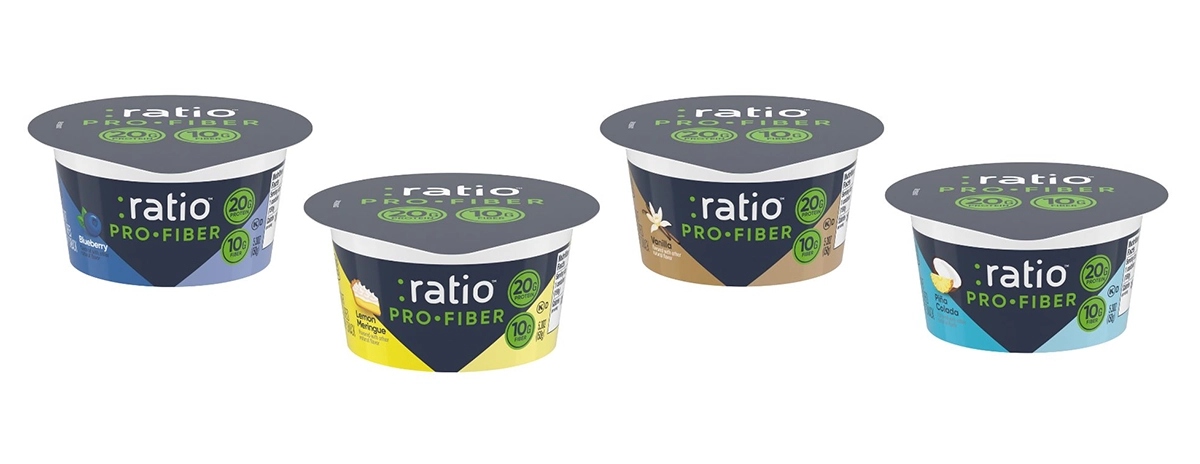 :ratio Pro-Fiber vanilla yogurt cultured dairy snack uses soluble corn fiber and chicory root fiber to support fiber enrichment in dairy applications.
Matching the fiber to the format
Digestive comfort is not only a consideration for acacia fiber. Delameilleure at Cosun says all high-fiber formulations require a balance between nutritional impact, sensory quality, and tolerance.
“Success starts with selecting the right type of chicory root fiber for the specific formulation,” he says.
“Different chain lengths and ingredient formats provide different functionalities, ranging from sweetness and sugar replacement to creaminess and texturizing effects. When chosen correctly, chicory root fiber can support fiber enrichment, while maintaining an enjoyable taste and texture profile.”
The amount used and how often the finished product is likely to be consumed also matter.
“As with any fermentable fiber, consumer tolerance depends on factors such as dosage, consumption frequency, and individual sensitivity,” Delameilleure adds. “A gradual approach to enriching your diet in fiber helps ensure a positive consumer experience, while still delivering meaningful fiber levels.”
Why blend fibers?
Rather than choosing one fiber to perform every role, manufacturers are also exploring multi-fiber combinations.
“We see strong potential in multi-fiber approaches,” says Imperato at Nexira. “Consumers naturally obtain different types of fibers from their diet, so combining fibers can help provide different substrates to the gut microbiota and support a broader range of microorganisms and fermentation profiles rather than relying on a single fiber source.”
Olipop applies this blended approach through two Olismart formulations. Its refrigerated 9 g fiber line combines cassava root fiber with chicory root and Jerusalem artichoke inulin, while its shelf-stable 6 g fiber line uses cassava root, acacia, and guar fibers.
Blends can also balance the technical limitations of individual ingredients. Nexira uses this approach in its inavea Baobab Acacia and inavea Carob Acacia combinations, which pair acacia with complementary plant fibers.
Ultimately, however, consumers are unlikely to accept a fiber-enriched product solely because of its nutritional credentials.
“The most successful products are those that deliver meaningful nutritional benefits without asking consumers to compromise on taste or enjoyment,” says Delameilleure.
“We see this as the future of fiber innovation: developing products that are nutritionally relevant, sensory appealing, and accessible to a broad consumer audience.”