



Fiber-forward F&B innovation targets the gut microbiome and beyond

Key takeaways
- Functional fibers are now linked to benefits for mental health, cardiac wellness, satiety, and even skin health, unlocking a wide range of benefits across food and beverage categories.
- Technology now focuses on creating “invisible fibers” that have minimal impact on taste, texture, and color, enabling manufacturers to enhance nutritional profiles without compromising on consumer experience.
- As awareness grows, personalized nutrition is evolving, with tailored fiber solutions targeting specific health needs like GLP-1 support and gut comfort.
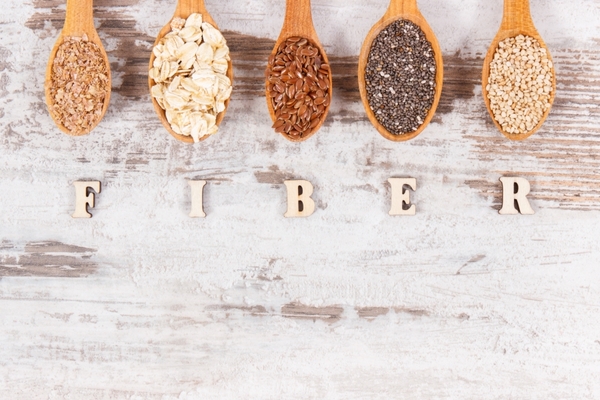
Consumer awareness of the links between fiber, digestive health, and overall well-being is continuing to grow thanks to a wave of research centered on the gut microbiome. With emerging benefits across mental health — including anxiety, sleep, and cognitive function — as well as cardiac and bone health, and more established benefits in weight management, satiety, and digestive health, consumer motivations to consume specific fibers are on the rise.
Food Ingredients First speaks with key players delivering fiber ingredients.
Vanessa Bailey, senior manager, Healthful Solutions Global Strategy & Innovation at Ingredion, tells us: “Evolving consumer needs are shaping innovations in fiber. This can involve targeting specific health benefits or adding a nutritional boost to foods and beverages that align with today’s lifestyles.”

“With digestive wellness now more mainstream, we’re focused on driving internal innovation and building external partnerships that connect fiber to new benefit areas or strengthen the evidence behind high-demand existing benefits. Scientific validation is crucial, and we adhere to a rigorous process to evaluate research. When gaps emerge, we work to uncover the best path forward to substantiate potential benefits.”
According to Bailey, advances in microbiome science are providing ingredient companies with a clearer understanding of how specific ingredients modulate the microbiome and how these effects may vary across different demographics. “This deeper understanding is opening doors for personalized nutrition by showing how an ingredient such as fiber can support targeted health needs in specific populations.”
Sara De Pelsmaeker, group health and well-being director at Puratos, says advances in fiber technology, like multi-fiber blends, prebiotic integration, and upcycled fiber sources, allow manufacturers to “create foods that deliver tangible health benefits, all while maintaining the tastes and textures consumers love.”
Fiber enrichment has also become a way to address a crucial nutritional gap, she underscores.
“The WHO has warned that insufficient fiber intake is a global health concern, and most people worldwide consume far less than the recommended levels. The impact goes beyond basic nutrition. Studies show that adequate fiber intake supports gut health, promotes satiety, and helps reduce the risk of chronic diseases, while supporting metabolic health.”
 Functional fiber innovations are transforming how the industry and consumers approach better-for-you products. This makes functional fiber particularly valuable across bakery and snack categories, including many plant-based foods, allowing brands to meet demand for products that are both healthy and enjoyable.
Hannah Ackermann, VP of marketing and nutrition affairs at Comet Bio, shares with us that innovations in functional fiber are enabling brands to tap into fast-emerging trends and meet today’s demand for better-for-you foods and beverages.
“While prebiotics are most associated with gut health, awareness of their broader benefits has expanded significantly. This is reflected in the rise of product launches featuring claims related to metabolic health, mood, and more.”
Fortifying with fiber
Papao Saisnith, platform innovation commercial director at Tate & Lyle, says that studies linking specific health benefits to individual fibers, as well as fibers in combination with other ingredients are driving opportunities for functional F&B to take health supplementation from the pharmacy to the pantry.
“We at Tate & Lyle are enjoying this additional interest in fiber, which hasn’t yet been solidified through recommendations on daily intake to reduce the risk of lifestyle diseases later in life.”
“Consumer perception of the expected taste and indulgence of high fiber and fiber-fortified products may act as an initial barrier to trial. There are opportunities for deliciously healthy innovation. Many consumers tell us they struggle to find better-for-you foods that meet their preferred taste and texture, and ultimately, they revert to old eating habits,” she says.
Saisnith believes a lack of category-specific expertise with fiber can be a resource-intensive barrier for formulators. “There are categories where the use of fiber may be emerging, and as a result, the depth of formulation expertise available around fiber selection, stability, tolerance, freezing point, solubility, etc., may not be as fully understood by the formulator as for a more established category or product line.
For example, fiber can add to the indulgent or creamy texture and perception of products like ice cream. Using the right fiber or combination of fibers for your application will make all the difference to the final taste and texture. The exact fiber solution that works in a bar may not work in a gummy or a beverage.
Opportunities in fiber value
Ackermann at Comet Bio notes that there are opportunities for category differentiation and expansion utilizing fiber ingredients. “By incorporating one — or even better, a blend — of complementary The GLP-1 era is reshaping consumption, with smaller portions, reduced sugar, high-protein needs, and comfort-oriented gut support. prebiotics, brands can deliver multifunctional benefits and increase product value. Some fibers can also support sugar reduction, and adding fiber to the Nutrition Facts Panel helps improve the net carb count.”
Recent fiber technology is all about creating an “invisible fiber” — minimizing viscosity, taste, odor, and color while maintaining a high fiber content and very low monomeric sugar levels, she comments.
“Suppliers are now differentiating their hero ingredients by offering SKUs with added functional benefits like light emulsification, gentle thickening or gelling, sugar or fat replacement, and in some cases even cocoa replacement.”
“Across the industry, the approach varies, but the theme remains consistent: small structural tweaks can create significant functional changes. Adjusting the chain length or branching can have a dramatic impact on solubility, mouthfeel, and sensory performance. The ability to precisely control these structural changes is what drives the latest advances,” shares Ackermann.
Fiber & the GLP-1 era
Healthy eating is now the primary driver behind reformulation in the F&B industry. Within this shift, fibers benefit from several converging megatrends: the persistent fiber gap (25–30 g/day recommended vs. ~15 g consumed), rising awareness of the microbiome and digestive health, and the emergence of GLP-1 users seeking balanced, nutrient-dense options.
Commenting on this, Julie Imperato, marketing and communication manager at Nexira, says that fibers are “increasingly used not only to fill the fiber gap, but also as a strategic tool to improve the overall nutritional profile of foods and beverages without changing familiar formats — supporting reduced sugar, better digestion, and more functional value per serving.”
“Consumers increasingly associate digestive wellness with weight and daily comfort. Acacia fiber aligns with these expectations due to its gentle fermentation profile, strong prebiotic effect at 10 g/day, occasional improvement in constipation, and high digestive tolerance, even in sensitive populations.”
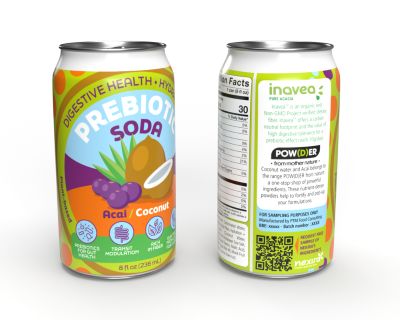 Nexira showcases a prebiotic soda concept that supports digestive health.In parallel, the GLP-1 era is reshaping consumption, with smaller portions, reduced sugar, high-protein needs, and comfort-oriented gut support, she notes. “This is where acacia fiber is particularly relevant — it’s FODMAP-friendly, promotes gradual fermentation, and is suitable even for individuals with IBS.”
Nexira’s Inavea and Fibregum are great for digestive support, she adds. “Nexira also offers natural solutions for weight management and appetite control with Carolean, a complex combining nopal and carob. Fibregum and Carolean are an excellent combination for a comprehensive solution, providing digestive support and appetite control.”
Looking ahead for fiber in the context of personalized nutrition, Imperato believes that fiber could become a foundation of personalized nutrition strategies due to its intrinsic link with the microbiome. “It’s like a hub, connected to immunity, energy, brain health, skin, weight, and more. As awareness deepens, tailored fiber solutions by need-state (digestion, GLP-1 support, emotional eating reduction, etc.) are a logical next step.”