
EU PPWR: What F&B companies need to know about the new packaging rules

Key takeaways
- PPWR changes how packaging is designed, documented, and recycled across the EU.
- Food and beverage companies face key deadlines from August 2026 onward.
- Early preparation is critical to balance compliance, circularity, and food safety.
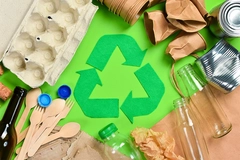
The EU’s Packaging and Packaging Waste Regulation (PPWR) marks the biggest change to packaging legislation in decades. While often described as a recyclability regulation, its impact reaches far beyond whether a package can be recycled. For food and beverage companies, PPWR could reshape how packaging is designed, documented, sourced, and managed across the entire value chain.
The regulation entered into force on February 11, 2025, and generally applies from August 12, 2026. It broadly replaces the Packaging and Packaging Waste Directive, although some provisions of the previous framework continue during transitional periods. The goal is to reduce packaging waste, improve circularity, and increase the use of recycled materials.
For the F&B industry, the regulation introduces new responsibilities around packaging materials, supplier information, compliance documentation, and future packaging design choices.

Regulation affecting the entire packaging lifecycle
PPWR applies to all packaging placed on the EU market, including flexible films and pouches, cartons, bottles, trays, cups, composite packaging, transport packaging, and foodservice packaging.
The regulation affects businesses throughout the supply chain, including brand owners, retailers, importers, packaging suppliers, converters, and distributors.
“PPWR is sometimes described primarily as a recyclability law. In reality, it is much broader,” Kevin Vyse, director of sustainability for Europe at ProAmpac, tells Food Ingredients First.
“It represents a fundamental shift in how packaging is designed, documented, and managed throughout its lifecycle, with the goal of reducing packaging waste, increasing circularity, and creating a more harmonized framework across the EU.”
For companies producing or supplying F&B products, the implications extend beyond finished packaging. Ingredient suppliers may increasingly need to understand how their customers’ packaging decisions affect regulatory compliance, particularly where packaging performance, shelf life, and food safety are closely linked.
Key PPWR dates to watch
The regulation will be introduced gradually, with several important milestones for F&B companies.
August 12, 2026: PPWR applies across the EU
Manufacturers, including many fillers and brand owners under the PPWR definition, must ensure that packaging placed on the market complies with the requirements. Before placing packaging on the market, they must complete the applicable conformity assessment, prepare technical documentation, and issue an EU declaration of conformity.
Suppliers must provide the information and documentation manufacturers need, while importers and distributors have separate verification duties.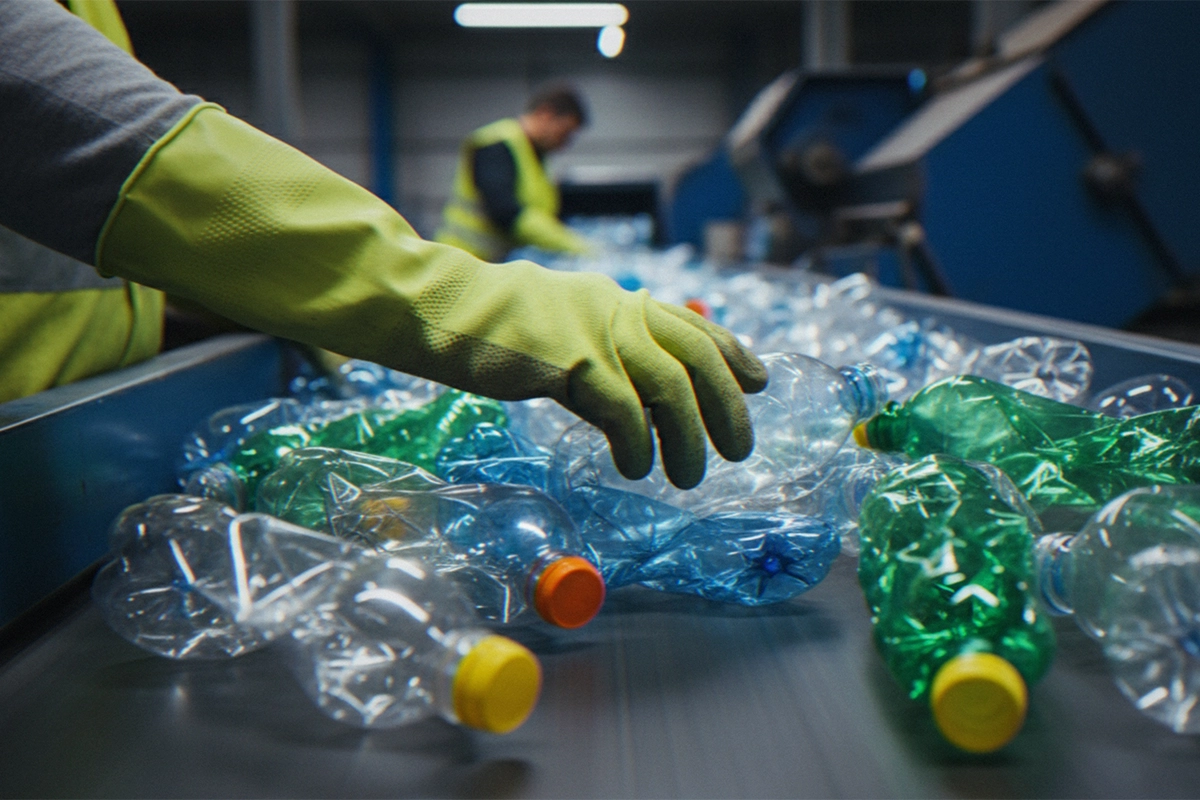 PPWR will require packaging to be recyclable at scale, not just technically recyclable.
Chemical compliance will be a particular focus. From this date, food-contact packaging containing per- and polyfluoroalkyl substances (PFAS) at or above PPWR limits cannot be placed on the EU market.
“From August 2026, manufacturers and other economic operators will need to demonstrate conformity with applicable PPWR requirements through appropriate technical documentation and supporting evidence,” Vyse explains. “This can include information on material composition, substances of concern, supplier declarations, and other data relevant to the specific packaging format.”
2028: Compostability and labeling requirements phase in
Specified formats, including permeable tea, coffee, and other beverage bags, soft after-use single-serve beverage units, and fruit and vegetable stickers, must meet applicable compostability requirements.
Harmonized packaging-composition labels apply from August 12, 2028, or 24 months after the relevant implementing act enters into force, whichever is later. The commission is also required to adopt design-for-recycling criteria by January 1, 2028.
2030: Packaging design requirements take effect
By 2030, packaging must meet defined recyclability criteria and achieve specified recyclability grades. Packaging must also be minimized in weight and volume while maintaining functionality.
Minimum recycled-content requirements for plastic packaging will apply, although obligations differ depending on the application. The targets are 30% for contact-sensitive packaging with PET as its major component, 10% for other contact-sensitive plastic packaging, 30% for single-use plastic beverage bottles, and 35% for other plastic packaging.
These percentages apply specifically to the plastic component of the packaging and must be met using material recovered from post-consumer plastic waste. Certain packaging is exempt, while detailed calculation and verification rules are established through secondary legislation.
2035: Recycling at scale becomes essential
PPWR raises the bar from packaging that is technically recyclable to packaging that is collected, sorted, and recycled through established systems at scale.
“Designing packaging for recyclability is only one part of creating a functioning circular system,” Vyse says. “By 2035, the emphasis on recyclability goes beyond packaging being theoretically recyclable. Packaging will increasingly need to demonstrate that it is collected, sorted, and recycled at scale through established infrastructure.”
2038: Higher recyclability performance levels
From 2038, packaging must achieve at least recyclability grade B, pushing companies toward continued improvements in packaging design and material choices.
Redesigning packaging without compromising food protection
For the F&B industry, PPWR creates a significant balancing act. Packaging must become more circular while continuing to protect food safety, maintain quality, and prevent waste.
This is particularly challenging for applications requiring strong oxygen, moisture, aroma, or grease barriers. Changing a packaging structure can affect product protection, shelf life, and manufacturing performance.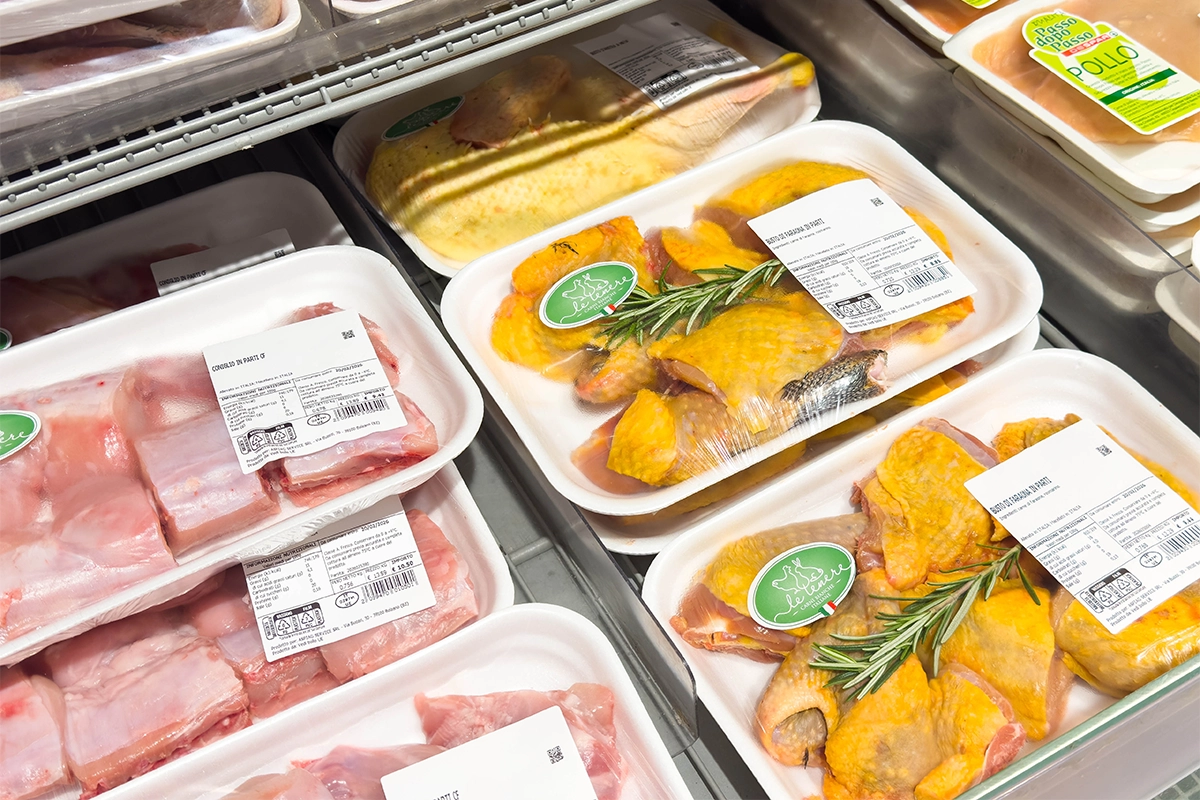 F&B companies must balance circularity goals with food safety and shelf life.
“Packaging is expected to deliver on multiple fronts,” Alison Meston, director of communications at The Food & Beverage Carton Alliance, tells us. “It must advance circularity objectives while continuing to protect food, preserve nutrition and quality, extend shelf life, support accessibility, and help prevent food waste.”
Reducing packaging material alone is not sufficient if it results in greater food loss. Companies will need to consider the full lifecycle impact of packaging choices, balancing material reduction with the need to preserve products effectively.
Recycled content, materials and supply challenges
Increasing recycled content will be a central objective of PPWR, but the transition will require significant investment and coordination across the packaging value chain.
Food-contact applications present additional challenges because recycled materials must meet strict safety requirements. Demand for high-quality recycled polymers is expected to increase, creating questions around availability, quality, and cost.
“Availability and economics will also be significant challenges,” Vyse says. “Demand for high-quality recycled polymers is expected to increase, while food-contact applications face additional regulatory and technical constraints on the materials permitted.”
Companies will therefore need to look beyond whether a compliant material exists and assess whether it is available at the required scale and can deliver the necessary performance.
Louisa Gühr, public affairs manager at Huhtamaki, says PPWR represents both a challenge and an opportunity.
“PPWR represents the most significant change to EU packaging legislation in decades,” she tells Food Ingredients First. “While it creates substantial implementation challenges, it also provides an opportunity to accelerate innovation, improve circularity, and help build a more resource-efficient packaging system across Europe.”
Preparing for PPWR compliance
F&B companies should begin preparing well before upcoming deadlines. Key actions include mapping packaging portfolios, identifying higher-risk materials and structures, engaging suppliers, and establishing the technical documentation needed to demonstrate compliance.
Companies should also assess how future design-for-recycling requirements and recycled-content targets may affect existing packaging formats.
“For the F&B sector specifically, early preparation is critical because packaging changes often require extensive validation to ensure food safety, functionality, and operational performance are maintained,” Gühr says.
“At Huhtamaki, we are closely following PPWR implementation and the related secondary legislation, and we work with our customers to help them understand what the changes mean in practice and identify packaging solutions that support compliance, circularity, and performance.”
Ultimately, PPWR is not only a packaging design challenge. It is also a data, supply chain, and risk management challenge. Companies must now verify compliance with the requirements already in force, while preparing for the labeling, recyclability, reuse, and recycled-content obligations that follow.
“The greatest environmental gains will come not only from better packaging design, but from enabling a system where materials are continuously collected, recycled, and kept in the economy at high value,” Gühr says.
For more detailed coverage of PPWR developments, regulatory updates, and packaging industry insights, visit our sister platform, Packaging Insights.


Upcoming webinars

2027 Food Safety Risks for Quality & Compliance Leaders
FoodChain ID

Formulating for function: Developing benefit-led beverages with natural colours, botanicals, and flavours
Givaudan Sense Colour
Let's reveal the grain potential: Innovate
Meurens Natural