

Dried doesn’t mean safe: New framework helps food makers rank pathogen risks

Key takeaways
- New framework helps food producers assess microbiological risks in dried fruits, vegetables, herbs, and spices.
- Low water activity limits microbial growth, but does not necessarily kill pathogens, especially in ready-to-eat applications.
- The framework can guide supplier specifications, decontamination decisions, and broader ingredient risk management.
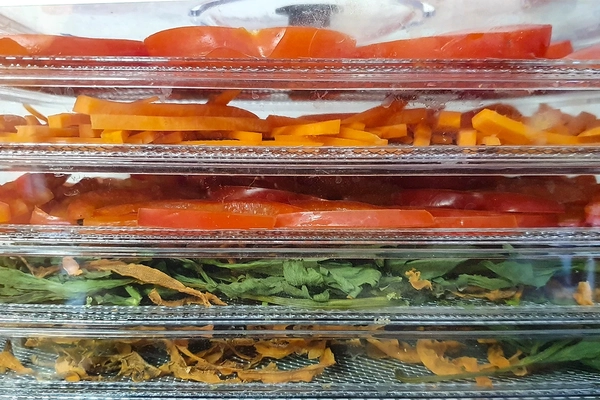
A new risk-based framework aims to help food manufacturers rank microbiological hazards in dried fruits, vegetables, herbs, and spices, challenging the assumption that low-moisture ingredients are inherently safe.
Published in Comprehensive Reviews in Food Science and Food Safety, the review notes that low water activity limits microbial growth, but does not necessarily eliminate pathogens. Bacterial pathogens can survive for extended periods in dried ingredients and may become a food safety concern depending on the organism involved, the way the ingredient is used, and how the finished product is handled.
The researchers developed a qualitative decision framework intended to help manufacturers and food service operators evaluate those risks across the supply chain, from production and harvest through processing, packaging, and use in finished foods.

From supplier specs to mitigation
Rather than assigning a universal risk score to individual ingredients, the framework considers multiple factors together, including outbreak history, pathogen prevalence and levels, pathogen virulence, product-specific information, and whether the ingredient receives a subsequent kill step.
That distinction is particularly important for ready-to-eat applications. A dried herb or vegetable added to a product that will not undergo further cooking may require a different level of control than the same ingredient used before a validated heat treatment.
ILSI Europe says the framework can support decisions ranging from setting supplier specifications to determining whether a decontamination step is warranted. The review also assesses conventional and emerging pathogen-reduction approaches for dried ingredients.
The authors stress that the framework is qualitative. It is designed to structure risk evaluation and communication, rather than function as a new regulatory requirement, validated diagnostic test, or quantitative scoring system.
Recent outbreak highlights low-moisture risk
The issue has had fresh real-world relevance in the US. An FDA investigation into a multistate Salmonella outbreak linked to recalled dietary supplements containing moringa leaf powder imported from India found 131 illnesses and 36 hospitalizations, with no deaths.
The case underscores why dried botanical ingredients can warrant close scrutiny even when their low water activity limits bacterial growth.
Industry and academic input
The review was produced by the Dried Ingredients Expert Group of ILSI Europe’s Microbiological Food Safety Task Force and was published online on August 19.
The task force funded the work, according to PubMed, while the authors declared no conflicts of interest. Contributors are affiliated with organizations including Wageningen University & Research, the University of California, Davis, Ghent University, Campden BRI, SODIAAL International, Cargill, and General Mills.
For ingredient manufacturers and food formulators, the practical takeaway is that “dry” should not be treated as shorthand for “safe.” Risk depends on the ingredient, the pathogen, its supply-chain history, and, crucially, what happens to it before consumption.