


California Natural Color expands natural color production amid US synthetic dye phaseout

Key takeaways
- California Natural Color has begun an expansion of its Fresno headquarters and production site, adding capacity for natural colors and grape seed extract.
- The company expects the new facility to be fully operational by the end of 2027.
- The US synthetic dye phaseout and retailer-led reformulation demands are pushing brands toward natural color alternatives.
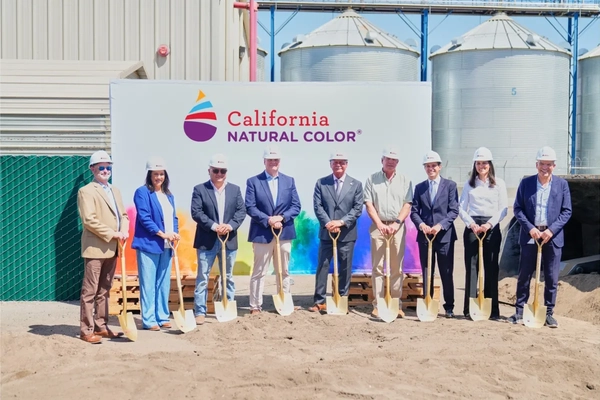
California Natural Color is expanding its headquarters and primary production facility in Fresno, California, US. Once complete, the company says the expanded space will increase its capacity, and allow it to scale production of both natural color products and grape seed extract.
The company says the expansion targets the growing demand from major brands and retailers to drop synthetic dyes. US regulation is moving the market toward natural colors, driven by Health Secretary Robert F. Kennedy Jr.’s campaign against artificial colors and dyes.

The move is a cornerstone of the US Department of Health and Human Services’ “Make America Healthy Again” movement. The initiative, which was launched in April 2025, targets the phase out of synthetic and petroleum-based dyes from the US food supply, with deadlines running through 2027 and 2028. A recent FDA policy shift now lets products colored with natural dyes carry a “no artificial colors” claim.
Bill McMorran, VP and general manager of California Natural Color, tells Food Ingredients First that this recent regulatory activity around the synthetic dye phaseout and rising retailer interest have pushed reformulation to the front of industry conversations.
“Brands are evaluating ingredient strategies to align with evolving consumer preference around transparency,” says McMorran. “Retailers and foodservice operators are also placing greater emphasis on ingredient review initiatives; this is encouraging manufacturers to assess long-term alternatives to synthetic colors and identify solutions that can support future product development goals.”
“The facility expansion is intended to help us meet this growing market demand. Construction is underway and we expect the facility to be fully operational in 2027.”
Formulating without dyes
Removing synthetic dyes adds complexity to the reformulation process. According to McMorran, formulators have to hit the vibrant shade they want, hold it stable, and then work out how it will behave during handling, storage, and transportation. California Natural Color says there is increased demand for natural solutions across F&B, bakery, and confectionery as brands reformulate.
Some of these challenges had ruled natural colors out of some formulations. However, recent advances have narrowed the synthetic-to-natural gap.
“Our crystal color technology was developed to help address many of these challenges,” he says. “Through this unique delivery format, manufacturers can benefit from greater formulation and operational flexibility compared to traditional liquid color systems.”
“The high color concentration, solubility, and shelf stability allow brands to work with natural colors in applications where efficiency, consistency, and supply chain considerations are increasingly important.”
Retail under pressure
As the policies move forward and the deadlines for removing synthetic and petroleum-based dyes loom, the demand for natural solutions is broadening. Retail is also feeling the pressure.
This year, US-based retailer Target moved to begin only stocking cereals made without certified synthetic colors. At the same time, producers Kraft Heinz and General Mills are set to finish their phaseouts of synthetic color additives by the end of 2027.
“We are seeing strong demand for natural colors across a wide range of food and beverage categories, including beverages, bakery, and confectionery, as brands continue to reformulate away from synthetic dyes,” McMorran explains. “The [facility] expansion is designed to support growing demand across our portfolio, including both natural color solutions and grape seed extract ingredients.”
“The additional capacity will provide increased flexibility to support evolving market needs and customer growth opportunities across multiple application areas,” he concludes.