




The year of fiber: How Danone turns surging demand into scalable product innovation

Key takeaways
- Strong consumer demand has pushed fiber from a niche nutrient to a core formulation priority for F&B manufacturers.
- Delivering meaningful fiber levels without compromising taste and texture requires advanced solutions, with companies shifting toward fiber blends and novel sources.
- Success hinges on balancing functionality, sensory performance, and scalable sourcing, with supply chains, sustainability, and consumer tolerance playing critical roles in product development.
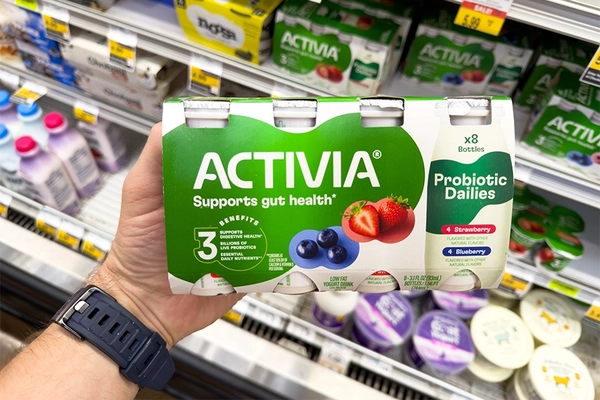
Fiber has moved from a nutrition afterthought to a formulation priority for F&B manufacturers, as Western consumers increasingly prioritize gut health to support their overall well-being. Food leaders like Danone view fiber as a long-term strategic ingredient, but success depends on balancing functionality, sensory performance, and scalable sourcing in fiber-enriched products.
Innova Market Insights ranks fiber as the second most popular functional ingredient for consumers in the US, behind protein. Around two in five say they are highly interested in fibers, signaling a strong baseline demand. Although WHO recommends a minimum of 25 g of fiber per day, most consumers in developed markets fall significantly short, highlighting a persistent “fiber gap.”

For manufacturers, however, meeting this demand is far from straightforward. Unlike many functional ingredients, fiber is not a simple add-in. Its behavior varies significantly depending on type, creating technical hurdles across product categories, Susan Zaripheh, chief research and innovation officer at Danone US and Canada, tells Food Ingredients First.
“Incorporating fiber into food formulations presents both a scientific and sensory challenge. Different types of fiber — like soluble and insoluble — can behave differently to impact viscosity, water binding, and texture. One of the biggest hurdles is delivering a good source of fiber (3 g or 10% of the daily value) without compromising taste and texture,” Zaripheh explains.
Fiber systems and ingredient innovation
Manufacturers are moving beyond single fiber ingredients toward more sophisticated combinations to address these challenges. Danone’s R&I teams are focused on fiber blends that can deliver functional performance, nutritional benefits, and sensory quality across its categories, from dairy-based yogurt to plant-based beverages.
At the same time, innovation is expanding the ingredient toolbox. Emerging areas of focus include prebiotic fibers, resistant starches, upcycled plant fibers, and diverse soluble and insoluble blends. Beyond functionality, these ingredients also support clean label positioning and sustainability goals, making them increasingly attractive in modern product development.
“Activia Fiber, with 3 g of fiber, and Oikos Protein Shakes, with 5 g of prebiotic fiber, reflect our ability to deliver products that meet growing consumer interest in fiber-backed nutrition. While 90% of our ingredients and packaging are US-sourced, we work closely with a network of ingredient partners to ensure consistent, high-quality supply to our fiber-fortified products,” says Zaripheh. Fiber is now the second most sought-after functional ingredient, yet most consumers still fall short of recommended intake levels — highlighting a persistent “fiber gap.”
“We’re also continuing to explore a variety of different fibers and fiber blends, including novel prebiotics, soluble and insoluble fibers, resistant starches, and upcycled plant fibers, which could help us unlock new functional and sustainability benefits.”
Gut health as the primary growth engine
Consumer demand for fiber is closely tied to the rise of gut health awareness, driven in part by advances in microbiome research. Fiber — particularly prebiotic fiber — is widely recognized as a way to support beneficial gut bacteria. As a result, fiber is being positioned as an important factor in reducing the risk of conditions, such as Type 2 Diabetes and cardiovascular disease.
“It’s also important to remember that different types of fiber can offer different health benefits,” Zaripheh continues. “Fiber has been shown to have benefits for gut health, metabolic health, heart health, and immune health. Prebiotic fiber specifically has been shown to nourish beneficial gut bacteria, which can then help provide additional gut health benefits. Together, all the different types of fiber help support the gut and offer benefits that extend well beyond digestion.”
The broader health halo is reshaping how companies position fiber in their portfolios. Rather than focusing solely on digestive benefits, brands are increasingly incorporating fiber into multi-benefit platforms. Danone, for example, is developing products that combine fiber with protein and micronutrients to deliver layered functionality.
“With one of the most nutrient-dense portfolios, Danone is uniquely positioned to meet this demand and actively leverage science to create biotic-enriched products that advance fiber and gut health. This is seen in products like Activia Fiber and Oikos Protein Shakes, which are designed to deliver multiple benefits combining prebiotic fiber, key vitamins, and complete protein,” says Zaripheh.
Danone posted full-year 2025 sales of €27.3 billion (~US$31.2 billion), up 4.5% on a like-for-like basis. Double-digit growth in its high-protein portfolio underpinned the French dairy giant’s performance.
Delivering on taste and tolerance
Despite strong demand, consumer acceptance still hinges on product experience. Historically, fiber-enriched products have faced challenges around texture, flavor, and digestibility. Advances in food science are helping to close that gap, but careful formulation remains essential.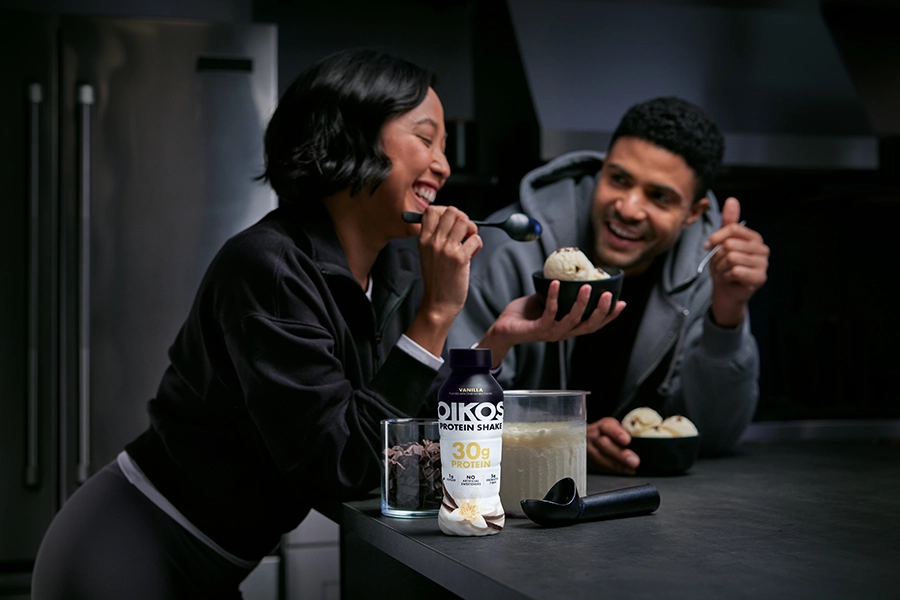 Manufacturers shift toward fiber blends and novel sources like prebiotics and resistant starches to balance functionality, taste, and texture in next-gen products.
“Our approach combines ingredient science and formulation with thorough testing of texture and consumer satisfaction. We carefully select fibers based on their solubility, nutritional benefits, and interaction with other ingredients,” Zaripheh tells us.
Equally important is managing dosage. While increasing fiber intake is beneficial, excessive amounts — particularly introduced too quickly — can lead to digestive discomfort. “We are careful not to add too much fiber into one product, as raising fiber intake too quickly, or without enough fluid to adapt, can cause digestive issues,” adds Zaripheh.
Danone’s approach highlights a key consideration for manufacturers: success depends not just on adding fiber, but on integrating it in a way that aligns with consumer tolerance and expectations.
Sourcing and supply as strategic levers
As fiber becomes more central to product development, sourcing is emerging as a critical factor. Ensuring a consistent supply of high-quality ingredients requires strong supplier relationships and a diversified sourcing strategy — particularly as demand for functional fibers grows.
“We work closely with trusted suppliers and continuously assess supply chain resilience, particularly as demand for functional fibers continues to grow,” Zaripheh explains.
Sourcing decisions also have wider implications. Factors, such as ingredient origin, processing methods, and sustainability credentials, can influence formulation choices, labeling, and cost structures. Most of Danone’s ingredients and packaging are sourced domestically in the US, while it maintains a network of global partners to support fiber innovation.
From trend to transformation
Fiber’s dramatic rise reflects more than a passing trend, signaling a broader shift in how the industry approaches nutrition, functionality, and product design.
On one side, there is clear and sustained consumer demand, driven by health awareness and a persistent intake gap. On the other, there are real technical and operational challenges — from formulation and sensory performance to sourcing and scalability.
For companies like Danone, the opportunity lies in bridging that gap. “Ultimately, success comes down to delivering products that meet nutritional expectations, while still providing a great-tasting product,” says Zaripheh.