



“Not a trade-off”: ADM and Corbion balance clean labels and functionality in plant-based foods


Key takeaways
- ADM and Corbion agree that clean labels and functionality are not a trade-off, though the two suppliers differ on how they address it.
- ADM builds functionality from fewer, more purposeful ingredients, leaning on soy and pea proteins, and recognizable whole foods such as beans and pulses.
- Corbion uses fermentation-derived ingredients that do technical jobs, including replacing salt, while remaining label-friendly.

The plant-based foods market is maturing, and consumers are increasingly demanding short, recognizable ingredient lists in their products, according to ADM and Corbion. Additionally, the companies point out that modern consumers want their analogs to match the protein, taste, and shelf life of the products those foods replace.
Corbion says its consumer research suggests that plant-based has entered a phase in which taste alone is no longer enough. Shoppers are scrutinizing ingredient lists, processing levels, and brand credibility.
At the same time, ADM reveals that its proprietary research shows that plant-forward consumers — the company’s term for flexitarians, vegetarians, and vegans — want all of that, along with higher protein content.
Food Ingredients First speaks with ADM and Corbion about how the companies are meeting these evolving functional and clean label demands.
Less on the label
John Powers, marketing director at ADM, says current demands mean that producers are innovating ways to get more out of less. Advances in food science, he says, let formulators build functionality from fewer, more purposeful ingredients, instead of long lists of additives.
“High-performing soy and pea proteins with clean taste profiles help reduce formulation complexity and the need for a long list of complementary ingredient solutions, while still delivering on nutrition and sensory expectations,” he says.
Powers says that whole foods do similar work, and notes that beans, pulses, ancient grains, and seeds are highly recognizable for shoppers. He adds that whole food ingredients support customers’ clean label targets.
He adds that ADM’s proprietary research shows that the appeal of whole food solutions is running high, with 73% of respondents calling beans tasty and more than 70% of plant-forward consumers viewing beans, pulses, and legumes as healthy and nutritious.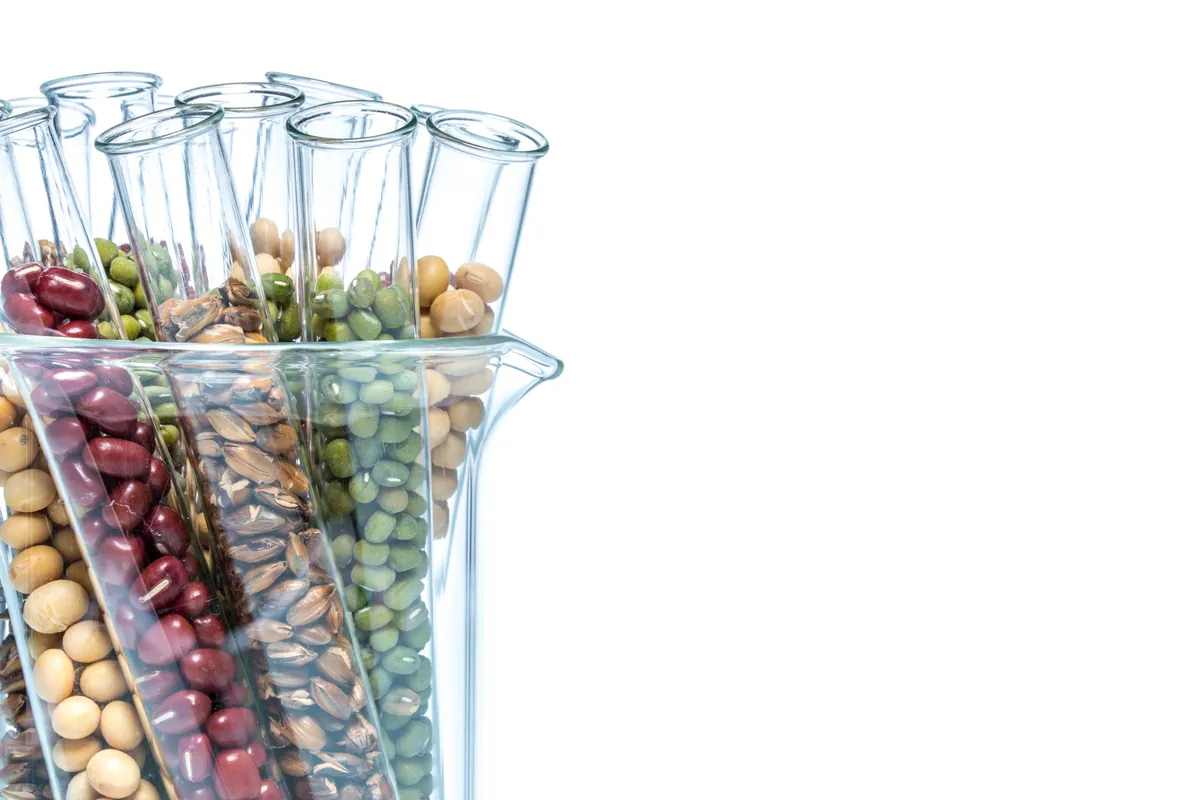 Powers at ADM says food science lets formulators build functionality from fewer, more purposeful ingredients.
Moreover, Powers says ingredient innovation is closing the gap and notes that ADM’s TasteSpark flavor modulation, labeled as natural flavor in many markets, manages off-notes and rebuilds mouthfeel in reduced-sugar and reduced-sodium formulations. Meanwhile, he says ADM’s Colors from Nature range provides recognizable colors from natural sources.
Fermentation over synthetics
Saffiera Karleen, business development manager at Corbion, says the aim is for every ingredient to earn its place with measurable functional value. She adds that companies should not look to shorten labels at the cost of safety or sensory quality.
“This is not a binary trade-off,” Karleen says. “Corbion’s fermentation-derived ingredients can deliver functional performance, preservation, flavor, and sodium reduction, while remaining label-friendly, since they originate from natural fermentation processes rather than synthetic additives.”
“A natural ingredient derived this way can perform the technical role of salt in taste, texture, and microbial stability, while still appearing on-label as a recognizable, consumer-friendly ingredient.”
Closing the protein gap
When addressing the nutritional gaps between plant and animal proteins, ADM leans on soy and builds outward with blends. Powers stresses that soy is a dependable, high-quality anchor for nutritionally complete formulations across a wide range of applications.
“Soy is a particularly strong foundation in this space,” Powers says. “It is one of the few non-animal proteins with a Protein Digestibility Corrected Amino Acid Score (PDCAAS) of 1.0, meaning it delivers all essential amino acids in optimal proportions.”
He also points out that newer protein sources are expanding the company’s toolkit. Powers states that pulses and quinoa are options for nutrition and functionality. He adds that blends ease shoppers toward alternative proteins without asking for a full dietary switch.
“By combining different plant proteins, or blending plant- and animal-derived proteins, formulators can leverage the strengths of each source to improve amino acid and nutritional profiles, texture, functionality, and optimize cost-in-use,” Powers says.
Sourcing under scrutiny
Corbion underscores that sourcing continues to be a growing issue for customers and consumers. Karleen says that sustainability claims should rest on measurable outcomes rather than positioning.
She ties the company’s work to three UN Sustainable Development Goals (SDGs) covering health, food waste, and climate. Furthermore, she says that Corbion’s fermentation technology helps the company lower its emissions more than formulating with synthetic ingredients. She also points to crops as another powerful tool for meeting UN SDGs.
“Legumes such as peas and lentils continue to show strong resilience and scalability, given their lower input requirements and suitability for more regenerative growing practices,” Karleen explains. Karleen at Corbion argues that fermentation-derived ingredients replace salt while keeping labels recognizable for shoppers.
Beyond meat and dairy
The companies also say that the plant-based market is expanding beyond dairy and meat alternatives and into everyday categories. Corbion sees room in plant-based snacks, bakery, and ready-to-eat meals, where Karleen says shoppers allow little compromise on taste, texture, or shelf life.
“The preservation and flavor expertise built across meat, dairy, and plant-based applications translates directly into these formats, helping manufacturers maintain freshness, food safety, and sensory quality as plant-based formulations move into new and more demanding product categories,” Karleen says.
ADM sees the same pull in snacks and bakery. Powers states that bars, pretzels, and bagels are increasingly being reworked with added plant-based protein and fiber.
“There is an ongoing shift toward functional indulgence, with 76% of consumers expressing interest in baked goods with higher protein content,” Powers concludes. “Protein continues to be a key driver in snack selection as well, reinforcing its role in everyday eating occasions.”