



ADM expands plant protein lineup as demand for diversified sources grows

Key takeaways
- ADM launches eight new soy- and pea-based plant protein ingredients across North America and Europe.
- The expansion reflects growing industry demand for diversified protein sources, as manufacturers seek greater functionality, formulation flexibility, and clean label appeal.
- Innova data indicates rising consumer interest in protein-rich foods and broader plant-based ingredient diversity beyond traditional meat alternatives.

ADM has introduced eight new soy- and pea-based protein ingredients across North America and Europe, as food manufacturers continue to expand beyond traditional animal protein formulations and seek more diversified plant-based options.
The launches include soy protein isolates, concentrates, textured proteins, and pea flour designed for applications ranging from dairy alternatives and beverages to hybrid meat products, bakery, and specialized nutrition.
The move reflects broader shifts in consumer and product development trends around protein consumption. ADM cites internal research showing that 66% of consumers globally say they are looking to increase their protein intake, while 86% believe it is healthier to obtain protein from various sources.

Recent data from Innova Market Insights indicates that protein demand continues to influence innovation across F&B categories. The market researcher reports that nearly 60% of global consumers are incorporating more protein into their diets. Meanwhile, plant-based innovation is increasingly shifting toward “protein diversity” and more recognizable plant ingredients.
Protein diversification shapes formulation strategies
According to Innova, pea protein has become the leading plant protein ingredient in F&B launches carrying plant-based or vegan claims, ahead of soy and wheat proteins. The research firm also highlights growing interest in alternative protein crops, such as fava bean, lentil, and sunflower protein, as manufacturers diversify ingredient systems and respond to clean label expectations.
ADM’s new portfolio reflects that diversification trend. Among the launches are two soy protein isolates targeting beverage and dairy alternative applications, developed for solubility, smooth texture, and lighter color profiles. Additional soy concentrates are aimed at processed meat, hybrid, and plant-based applications where texture, juiciness, and yield optimization remain key formulation priorities.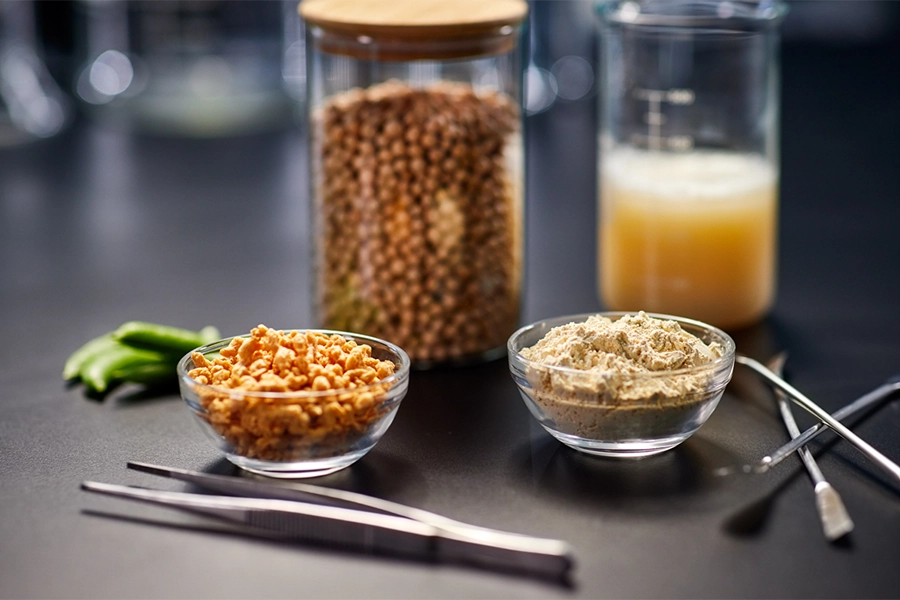 ADM’s expanded soy and pea portfolio reflects growing demand for diversified plant protein sources across dairy alternatives, hybrid meat, and functional nutrition applications (Image credit: ADM).
The company also introduced a pea flour ingredient positioned for bakery, cereal, batter, and breading applications. ADM says the ingredient offers neutral flavor and color characteristics, contains fiber, and does not require allergen labeling in certain markets.
In Europe, ADM expanded its soy protein offering with new Arcon-branded textured and concentrated proteins intended for meat alternatives, meat extension, and extrusion applications.
Plant-based innovation moves beyond meat alternatives
The broader plant-based sector continues to evolve beyond direct meat and dairy replacement concepts. Innova’s 2025 “Rethinking Plants” trend report notes that consumers are increasingly seeking plant-based foods built around whole plant ingredients and natural positioning rather than imitation products.
The research also found that concerns around artificiality and overprocessing are becoming increasingly significant purchase barriers in the category.
At the same time, manufacturers are continuing to invest in functional plant proteins that can support mainstream food formats beyond meat alternatives, including beverages, snacks, ready meals, and protein-fortified products.
“Consumers are seeking meals that deliver high protein and fiber content in compact formats, with an emphasis on satiety and digestive health,” John Powers, marketing director at ADM, recently told Food Ingredients First.
“Soy, in particular, is capturing consumer attention for additional functional and personalized lifestyle support. Our research shows 83% of global plant-forward consumers find soy protein to be a good source of plant-based protein for building and maintaining muscle, and 81% believe soy protein is a great option for reducing fat intake,” he added.
Innova data shows that Dairy remains the leading category for plant-based launches globally, followed by Meat Substitutes, Cereals, Ready Meals, and Snacks. The new ingredient launches highlight increasing industry focus on formulation flexibility, clean label positioning, and regionally sourced plant protein solutions (Image credit: ADM).
ADM invests in plant-based protein innovation
ADM’s ongoing investments in protein innovation are supported by regional production and R&D capabilities in the US, Netherlands, Serbia, and Brazil.
“By expanding our protein portfolio, we’re giving customers more precise, functional solutions that will perform across a wide range of applications,” says Tony Payne, senior director for Creation, Design, and Development ADM.
“This is about delivering choice, and giving consumers access to protein sources that are backed by decades of plant-based expertise and global innovation.”
“From our state-of-the-art, 36,000 square-foot protein solutions center in Decatur, Illinois (US) to our innovation center on the grounds of Wageningen University in the Netherlands, our SojaProtein facility in Serbia, and our Customer Creation & Innovation Center in Hortolândia, Brazil, our regionally sourced supply of plant proteins ensures that we can deliver consistent, high-performing solutions tailored to local market needs.”
The company, which introduced one of the first textured vegetable proteins in the 1960s, says current development efforts are focused on improving the functionality, taste, and nutritional performance of soy- and pea-based systems across multiple F&B applications.




Upcoming webinars

2027 Food Safety Risks for Quality & Compliance Leaders
FoodChain ID

Formulating for function: Developing benefit-led beverages with natural colours, botanicals, and flavours
Givaudan Sense Colour
Let's reveal the grain potential: Innovate
Meurens Natural