



Protein, fiber and lower-sugar systems reshape everyday foods at Fi Asia Indonesia 2026


Key takeaways
- Protein, fiber, and lower-sugar systems are moving into everyday foods and beverages.
- Mainstream fortification hinges on processing stability, texture, and familiar taste.
- Repeat purchases depend on balancing nutrition, convenience, and affordability.

The functional food story at Fi Asia Indonesia 2026 was less about another sports powder than about what people eat every day. Exhibitors showcased or discussed protein, fiber, vitamins, and lower-sugar systems in lattes, sodas, cupcakes, bars, creamers, yogurts, desserts, and confectionery.
It was a show-floor expression of the wider diversification of protein sources and applications, but our reporting also shows why mainstreaming is difficult. Functional ingredients must survive processing without undermining familiar taste, texture, or affordability.
Fortification meets the factory
Specialty ingredient distributor and formulator IMCD used familiar formats to make the point. Its booth featured a hojicha protein latte using dairy and non-dairy proteins, a fiber- and vitamin-fortified cream soda, microwaveable cupcakes in matcha-red bean and ube-vanilla varieties, and chicken katsu bites.
The nutrition claim is only the beginning, according to Jeremia Kevin, APAC technical manager for food and nutrition at IMCD. “When we add some fibers, vitamins, or protein, they will interact with the ingredient system,” he tells Food Ingredients First. “For example, in a dairy system, they could cause sedimentation and product instability.”
Those interactions can worsen during heat treatment and shelf life. IMCD therefore tests prototypes at its Indonesia UHT pilot plant and Thailand meat application facilities. “We support customers to expedite the development process by producing the prototype and concept in real manufacturing processing, but on a smaller scale,” Kevin says.
The facilities let developers test whether a promising bench concept remains stable under more representative conditions before committing to commercial production. That matters as functional nutrition moves toward protein milk, cookies, fortified soft drinks, and other repeat-purchase products.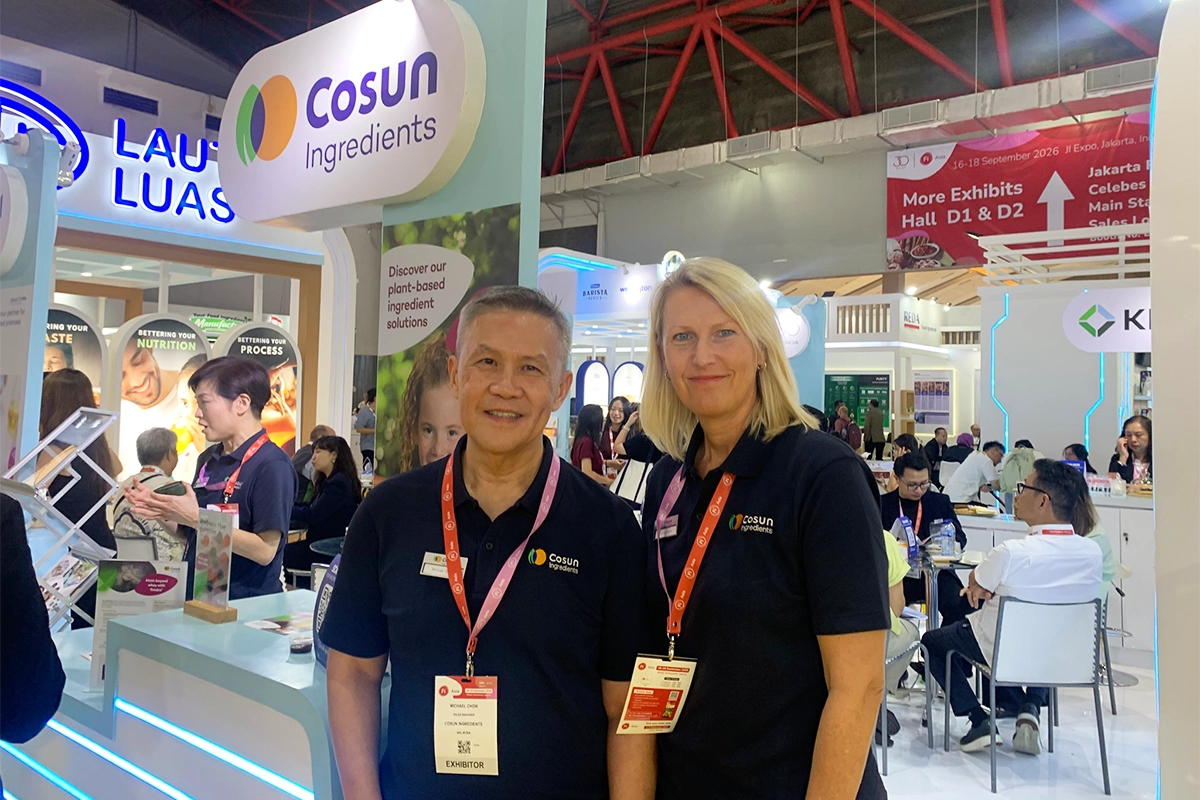 Michael Chow and Eszter Heijnen: Cosun Ingredients’ protein-and-fiber combinations support nutrition, texture, and local taste preferences.
Protein and fiber converge
Cosun Ingredients brought together Sensus chicory root fiber and Tendra fava bean protein. The Royal Cosun business supplies fibers and prebiotics, proteins, texturants, and plant-based solutions, and sees value in combining nutritional functions rather than treating each claim separately.
Michael Chow, sales manager for Asia at Cosun Ingredients, described Tendra’s role in beverages: “It has a very neutral taste. It’s non-beany. It’s also very soluble and maintains its viscosity, so it does not increase in viscosity in a higher concentration.”
Adding chicory root fiber brings another function and can address a familiar issue in protein-rich products. “Normally, you would like to combine protein with fiber because high protein levels can disturb your regularity,” Chow explains. “The fibers do help, and also it’s a prebiotic, so it helps improve gut health.”
“Texture in general, and also taste, is very important because consumers will repeatedly buy products if they taste good and the texture meets local preferences,” adds Eszter Heijnen, commercial lead at Cosun Ingredients.
Selected chicory fibers can also contribute sweetness and mouthfeel, supporting protein- and fiber-enriched beverages, dairy alternatives, bars, and powders. The approach followed our earlier reporting on Indonesia’s growing market for accessible biotics and halal-ready ingredients.
Dairy protein moves beyond the gym
Lactalis Ingredients, the dairy ingredients business of Lactalis Group, presented whey protein concentrate and rennet casein for protein enrichment, along with whey permeate and high-flowability whey powders. Its opportunity set now extends well beyond sports nutrition.
Elodie Robino, export commercial director for Africa, Asia, and the Middle East at Lactalis Ingredients, links the shift to health, active lifestyles, and convenience. “Consumers across Southeast Asia are becoming more focused on nutrition, immunity, weight management, and healthy aging,” she says. “This is increasing demand for high-quality protein, particularly dairy protein.”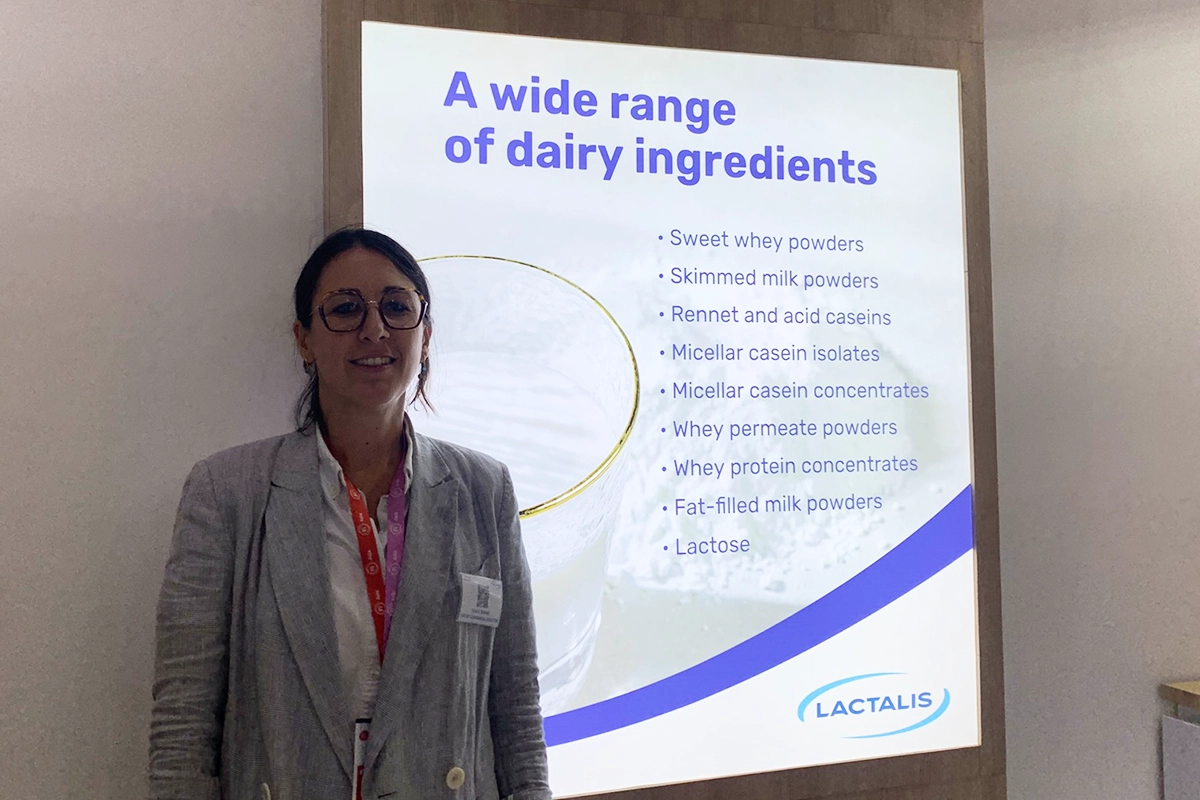 Elodie Robino: Lactalis Ingredients is taking dairy protein beyond sports nutrition and into everyday F&B formats.
“Dairy proteins are being incorporated into RTD protein drinks, yogurt and cultured dairy products, protein-enriched snacks, bakery products, and meal replacement beverages,” Robino notes. “The functional properties of emulsification, texture enhancement, and solubility make them attractive ingredients for product innovation.”
Affordability will keep some applications in a premium niche. Yet Robino says volatility is changing the customer’s question rather than automatically pushing buyers toward the lowest price.
“The impact of dairy cost volatility is, of course, pushing customers to become more selective rather than simply cheaper,” she says. “They are increasingly asking, ‘Can this protein help me create a better product, reduce formulation complexity, and command a higher selling price?’”
That calculation is gaining urgency amid a wider squeeze on whey protein supply and renewed interest in blends and alternatives.
Balancing health and sensory appeal
Lautan Natural Krimerindo (LNK), an Indonesian manufacturer of non-dairy creamers and other powdered and liquid ingredients, highlighted FiberCreme, including a zero-sugar version, and fully plant-based and hybrid dairy-plant formulations. It also showed a cold-soluble creamer intended to make preparation easier.
“Previously, creamers normally needed to dissolve in the warm water,” says Juwono Hartanto, chief commercial officer at the company. “But we innovate, we formulate, so this creamer can dissolve in room temperature water and also cold water.”
The technical convenience still has to land sensorially. “The plant-based market is growing, but consumers still want good taste,” Hartanto says. He explains that LNK uses both pure plant-based products and blended formulations when a familiar dairy profile is important.
Hartanto says the company tries to balance flavor and nutrition. “Taste has to be good,” he tells Food Ingredients First, “but also be a healthier choice for the consumer.”
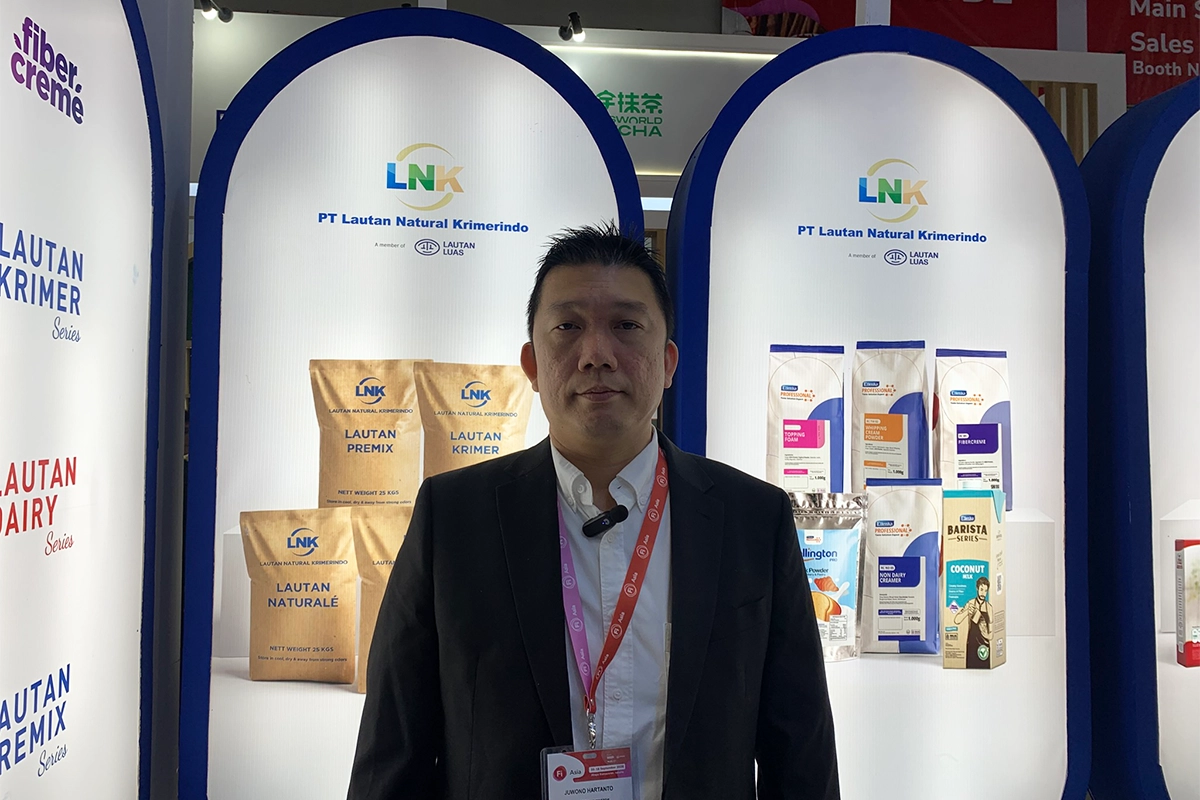 Juwono Hartanto: Lautan Natural Krimerindo balances healthier formulations with good taste and easier preparation.Delytose took the same sensory question into lower-sugar confectionery, dairy, ice cream, and bakery. The sweetener biotechnology company works with allulose, stevia, monk fruit, and sweet proteins, while recognizing that sugar’s bulk and mouthfeel also need replacing.
“You can see in Southeast Asia that sugar reduction is moving not just in beverages, but also to other categories,” says founder and CEO Jingkai Shen, citing confectionery, dairy, ice cream, and bakery.
“The new generation of consumers wants good taste and health,” he says. Delytose’s answer is a tailored system rather than a fixed replacement, with the blend adjusted for the required mouthfeel and cost.
For Shen, the commercial challenge is now three-dimensional: “Nowadays, it is very important to balance taste, naturalness, and cost.”
A benefit people will buy again
The exhibits showed how far protein and fiber can travel.
The harder task is making the benefit feel native to the food or drink. A functional product becomes mainstream only when shoppers want to buy it again, not merely when the label gives them a reason to try it once.