



Function over restriction: How protein and fiber are reshaping healthy beverage innovation

Key takeaways
- Protein and fiber converge as core functional ingredients, driving the next wave of healthy beverage innovation beyond basic nutrition.
- The category shifts from a restrictive “cut-back” mindset toward proactive, function-led consumption focused on satiety, gut health, and wellness.
- Personalization and multi-functional formulations emerge, with beverages increasingly designed to deliver targeted health benefits in a single format.

Consumers are redefining “healthy” beverages from a focus on restriction to one of nutritional optimization. While sugar reduction remains a baseline expectation, the category is shifting toward delivering functional, targeted benefits — from gut health and energy to mental well-being, alongside clean label, natural formulations, and enhanced protein.
Innova Market Insights identifies “Beverages with Purpose” as a top F&B trend for 2026, driven by growing consumer demand for health-conscious drinks. This shift is accelerating interest in functional beverages, with protein and biotic benefits leading innovation in healthier beverage development.
Food Ingredients First speaks to several key players in the healthy beverages space to examine the trends driving their innovation and research pipelines, and just how important functionality has become as consumers now expect their beverages to actively deliver targeted health outcomes — not just refreshment.

Meaningful beverages, intentional drinking
Consumers are redefining healthy beverages in a much more holistic and proactive way. They seek drinks that deliver specific and tangible outcomes. Health is no longer only about cutting out negatives, such as sugar or calories, rather adding positive benefits, according to Vanessa Barelli, senior beverage application scientist at Sensient Flavors & Extracts Europe.
“Consumers are more aware, informed and intentional, particularly younger generations, who actively read labels and make purpose-driven choices. Low- or no-sugar remains important, but functional benefits are one of the strongest purchase drivers, with consumers looking for drinks that support energy and focus, immunity, gut health, or relaxation and stress management,” she tells us.
“Clean label credentials and short ingredient lists also matter greatly, as products with few, recognizable ingredients are seen as healthier and more trustworthy, while artificial additives are increasingly avoided.”
“Naturalness is also central to health perception, whether through plant-based ingredients, organic or minimally processed products, or the absence of artificial colours and flavors. There is growing interest in alcohol-free and low-alcohol options, especially among younger consumers seeking healthier lifestyles.”
Gut health: “Fibermaxxing”
Sophie-Géraldine Delanöé, market segment leader for Beverages at Roquette, says functional benefits linked to gut health, satiety, and overall well-being are gaining the most traction.
Prebiotic positioning, in particular, is moving into the mainstream following the viral “fibermaxxing” trend, whereby individuals try more mindfully to boost their daily fiber intake.
 Gut health, satiety, and overall well-being are some of the leading trends driving functional and healthy beverage innovation.“Translating these benefits into differentiated products comes down to how effectively they are delivered without compromising the drinking experience. It’s not enough simply to add more fiber or protein — they need to integrate seamlessly into the formulation, maintaining taste, texture, and visual appeal,” Delanöé says.
“Fiber certainly plays a central role here, but not all fibers perform the same way. Stability through processing conditions like heat and changing pH, as well as over shelf life, is critical to ensuring the claimed benefits are actually delivered. If fiber degrades or impacts texture negatively, it can undermine both product quality and consumer trust. That’s why ingredient selection and process compatibility are key factors for innovation.”
Roquette’s Nutriose soluble fibers portfolio is one example of innovation suited to healthy beverages. Featuring an off-white color and a bland taste, these ingredients dissolve easily, do not increase viscosity, and remain stable through heat and a wide range of pH levels.
Barelli adds that ingredients such as probiotics, prebiotics, fiber, and fermented cultures are appearing in yogurt drinks, kefir, kombucha, fermented teas, functional juices, and shots.
“Immunity support remains highly relevant as well, though it has shifted more toward daily maintenance. Common ingredients include vitamin C, vitamin D, zinc, and botanicals, such as ginger and turmeric, used in functional juices, smoothies, wellness shots and fortified waters,” she says.
Growing awareness about gut health
Maud Roeters, senior director for strategy, marketing, and innovation beverages, Taste, Texture, and Health, at dsm-firmenich, notes that alongside protein enhancements, high-fiber trends are also increasingly shaping beverage development.
“When it comes to gut health, there is a growing awareness among consumers that gut health underpins multiple benefits, from immunity — where around 70% of immune cells reside in the gut — to mental well-being via the gut-brain axis. Functional beverages are increasingly expected to incorporate vitamins and minerals, such as vitamins A, D, E, and zinc, which support gut barrier function and overall microbiome health, further enhancing their perceived efficacy,” she says.
Roeters notes that gut health is one area which is seeing growth across generations. While older consumers are motivated by digestive comfort and preventative health, the younger population is increasingly engaging with gut health through its links to immunity and mental well-being, according to dsm-firmenich consumer research.
“Globally, 61% of consumers are worried about digestion and gut health, and 41% are actively addressing it through diet and nutrition, making beverages a highly relevant and convenient solution. This broad relevance is helping gut health move from a niche concern to a mainstream driver of category growth,” she says.
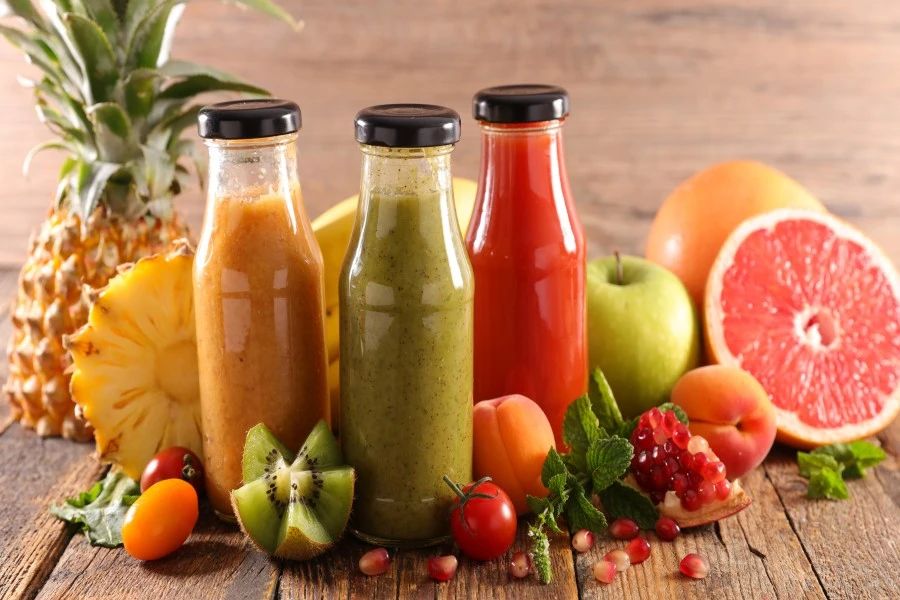 Alongside protein enhancements, high-fiber and naturalness trends are also increasingly shaping beverage development.
Sugar reduction and fiber
Delanöé at Roquette flags that sugar reduction remains a central focus in healthy beverage formulation, even though the health beverages space has moved beyond a “reduction” mentality.
“The challenge is that sugar plays multiple roles in a formulation, so simply taking it out isn’t enough — consumers still expect the same sweetness, mouthfeel, and overall enjoyment. This is why reformulation priorities have shifted toward recreating a full sensory experience in beverages,” she says.
“Manufacturers are looking more closely at how ingredients interact to deliver mouthfeel, flavor, and stability in protein-powered drinks and reduced-sugar applications. As such, fiber is playing an increasingly important role in our portfolio, supporting sugar reduction while also helping to “fill the fiber gap” that’s common across many western countries, bringing additional health benefits such as digestive support or improved satiety.”
“This aligns with a broader consumer mindset, where value-added ingredients resonate more strongly than messages focused on reduction alone.”
Overcoming sugar reduction challenges
Kirsten Jacke, senior product manager at Hydrosol, explains that reducing sugar content is a challenge because sugar, like fat, has many beneficial properties from a technological standpoint. Both ingredients act as flavor carriers and give products body, texture, and a pleasant mouthfeel.
“To ensure optimal taste and a pleasant texture even with reduced sugar content, we have developed our Stabiprime MFD range. This allows for the production of a wide variety of different milk beverages. The stabilizing system prevents sedimentation even in the most challenging applications. It also keeps cocoa particles optimally suspended,” she explains.
“This allows manufacturers to easily produce high-quality milk beverages for children and adults while meeting the requirements for modern sugar- and fat-reduced products — either enriched with vitamins and minerals or marketed as high-protein drinks.”
Protein trends in drinks
Across the healthy beverages category, protein has become a core pillar of formulation strategy as demand grows for performance-driven and health-focused drinks that support satiety, muscle recovery, and daily nutrition.
The protein trend is particularly evident in dairy-based beverages, where milk is being positioned as a natural protein carrier.
“High protein content remains a key factor. In this context, milk beverages and milk alternatives are very popular among consumers. Protein claims on packaging directly appeal to target audiences, thanks to the natural protein content of these products. The fortification of milk drinks and milk alternatives with vitamins, minerals, and probiotics in fermented products makes them particularly nutrient-rich options,” Jacke says.
“Our sister company SternVitamin is our partner for micronutrients, which allows us to offer integrated concepts from a single source. Our high-protein functional system forms the technological base. It provides balanced macronutrients and stable sensory performance. On this foundation, micronutrient premixes can be modularly integrated depending on the target positioning.” Functional beverages are evolving toward personalized, multi-benefit nutrition that supports daily health beyond hydration, as consumers demand more from their drinks.
“This makes it possible to develop different SKUs from one robust base, for example, for weight management, sports performance, digestive support, or mental well-being, without compromising taste, texture, or process stability. The platform approach ensures scalability, while allowing flexibility for different markets and consumer needs.”
The future of functionality in beverages
Functionality is set to remain the defining force in healthy beverages, with protein and fiber anchoring demand for products that deliver tangible nutritional benefits beyond basic hydration.
Looking ahead, the category is likely to move further toward personalized and condition-led nutrition, where beverages are tailored to specific goals, such as gut health, energy, or metabolic support.
Greater ingredient convergence is also anticipated, as protein, fiber, and emerging bioactives are combined to deliver multi-functional benefits in a single format.
Ultimately, the healthy beverages category is evolving into a more integrated part of daily health management, where beverages play an active role in supporting long-term well-being rather than serving a purely refreshment function.