



Natural preservation: How the shift from shelf life to freshness unlocks value in F&B


Key takeaways
- Industry shifts focus from extending shelf life to protecting freshness, with multi-hurdle preservation systems replacing simple ingredient swaps.
- Digital shelf life modeling and rapid microbial diagnostics set to reshape natural preservation strategies over the next three to five years.
- Waste reduction emerges as a key commercial driver, with suppliers reporting significant reductions in product waste through targeted preservation systems.

The conversation around natural preservation is shifting — from simply extending shelf life to actively protecting freshness. It’s a distinction with significant commercial implications in a global food system where waste costs more than US$1 trillion annually, according to the United Nations’ Food Waste Index Report 2024.
“The future of preservation is not about replacement alone, but choice and balance, with a focus on freshness as a holistic outcome — taste, texture, and food safety,” Bert De Vegt, VP Food Protection & Preservation at Kerry, tells Food Ingredients First. “This is particularly relevant for chilled meats and bakery, where freshness perception is tightly linked to brand trust.”
According to the Innova Trends Survey 2025, freshness ranks among the top three indicators of food quality, with 52% of consumers identifying it as a key criterion.
“The biggest opportunity lies in positioning shelf life as a strategic lever for both sustainability and profitability,” says Saffiera Karleen, business development manager at Corbion. “Predictable shelf life extension supports food safety, enables longer and more flexible distribution, and plays a critical role in reducing food waste.”
From substitution to systems
Achieving this shift means moving beyond simple ingredient swaps. The era of replacing synthetic preservatives with natural alternatives on a one-to-one basis is giving way to integrated multi-hurdle strategies tailored to specific spoilage risks.
“Natural preservation today is increasingly designed as a multi-hurdle system rather than a single ingredient replacement,” Karleen says. “In practice, this means combining fermentation-derived organic acids for microbial control with complementary tools, such as plant-based extracts and antioxidants that protect product quality over time.”
In protein-rich applications — particularly meat and alternative proteins — oxidation management is critical to maintaining color, flavor, and texture alongside microbial control. Notably, the remaining performance gap versus synthetics has narrowed considerably. “The gap is less about efficacy and more about cost-in-use.”
“Synthetic preservatives tend to tolerate greater formulation and process variability supported by competitive pricing, while natural systems require more precise targeting of pH, processing conditions, and distribution.”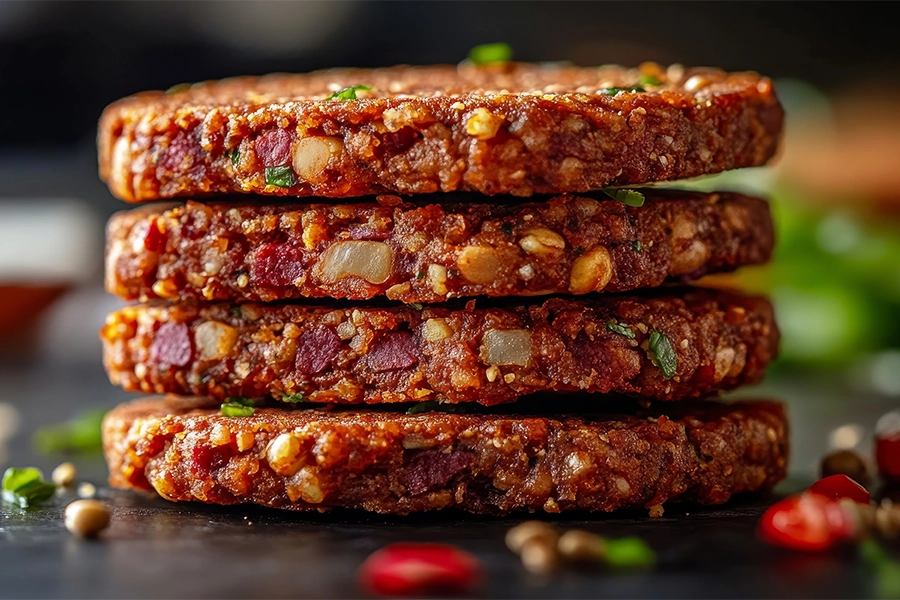 Natural preservation is evolving from shelf life extension to freshness protection, with multi-hurdle systems, digital tools, and waste reduction driving new value in F&B manufacturing.
Kerry’s De Vegt describes a similar approach. “In meat, bakery, prepared meals, and beyond, this typically combines label-friendly organic acid systems and fermentation-derived ingredients,” he says. “These systems are tailored to the product’s specific spoilage risks to maintain taste, texture, and food safety over shelf life.”
For Galactic, the integration extends to flavor delivery. “A key innovation we have focused on is combining the natural process of fermentation with a herbal infusion to create a solution that brings pleasant flavor together with a high-quality impact on foods,” says Katrien Lambeens, the company’s CCO.
By offering solutions in both liquid and powder formats, she adds, manufacturers can integrate preservation more smoothly into existing production lines.
Digital tools sharpen the approach
Digital shelf life modeling and predictive microbiology technologies will likely reshape natural preservation in the coming three to five years, De Vegt says — not by replacing biological approaches but by enabling their more precise application.
“The biggest disruption will come from marrying innovative preservation systems with digital freshness modeling,” he says. “This will allow manufacturers to target preservation more precisely, avoiding over-formulation while maintaining safety and sensory quality.”
Karleen agrees that digital tools will be central. “When supported by robust datasets and validated assumptions, AI-enabled tools allow manufacturers to move away from worst-case formulation toward more precise, risk-based preservation strategies,” she says. Corbion’s R&D efforts focus on improving the real-world relevance of predictive models that reflect actual processing and supply chain conditions.
Galactic sees advances in microbial diagnostics as equally transformative. “Extremely fast microbial identification and genetic testing will allow us to understand the dominant spoilage organisms or pathogens in a matter of hours, not days,” Lambeens says. “This means we can tailor preservation strategies with far greater accuracy.”
Overcoming taste barriers
Despite progress on efficacy, taste impact remains the primary obstacle to broader adoption of natural preservation systems. Innova’s Top Ten Trends for 2025 emphasizes that formulators “must not lose sight of the number one aspect consumers will not compromise on — the sensory experience.”
“Taste impact remains the primary barrier to adoption, as preservation is ultimately experienced through flavor, texture, and overall eating quality,” De Vegt acknowledges. Kerry’s approach leverages its combined taste and nutrition capabilities to optimize sensory performance alongside microbiological efficacy.
Corbion points to advances in oxidation management — including plant-based antioxidants — as helping protect sensory quality in meat and plant-based products. “However, trade-offs remain for products with very neutral flavor profiles or limited formulation flexibility,” Karleen notes. “Natural systems still require greater formulation discipline.”
For Lambeens at Galactic, the trade-off equation extends beyond taste. “There will always be choices to make on labeling, taste, and cost-in-use,” she says. “Natural processes resulting in clean label solutions are highly efficient, yet they typically carry a higher production cost than synthetic processes.” As freshness becomes a key quality and sustainability metric, ingredient suppliers and manufacturers are rethinking natural preservation strategies to balance safety, sensory performance, and cost-in-use.
Navigating regional complexity
Regional regulatory differences continue to complicate the global harmonization of preservation strategies. In the EU, increased scrutiny around additives and labeling is driving innovation toward ingredient-led, label-friendly systems, while US and Asia-Pacific markets require flexibility for diverse local interpretations.
“Regulatory frameworks play a major role in shaping innovation timelines,” Karleen observes. She notes that the EU distinguishes between “clean label” as a marketing concept and “clear label” as a regulatory expectation — meaning transparency and compliance matter more than simply removing ingredients. “Tighter scrutiny may delay initial uptake, but it tends to accelerate long-term adoption by encouraging more robust, science-based preservation strategies.”
Lambeens adds that culinary preferences compound the challenge. “Regulatory and supply chain requirements add a second layer of complexity that can hinder a ‘one-formula-for-all’ strategy,” she says. “Ingredient suppliers should ensure they stay close to food manufacturers and support them with solutions that can be modular and adaptive.”
De Vegt notes that these differences, while adding complexity to global launches, “also encourage more robust, future-proof solutions.”
Quantifying the commercial case
The commercial case for natural shelf life extension increasingly rests on waste reduction. Karleen cites collaborative projects where Corbion helped customers reduce product waste by around 10%, translating to several million euros in annual savings for large-scale manufacturers while simultaneously improving supply chain efficiency and sustainability performance.
“Through tools like Kerry’s Food Waste Estimator, we can help customers quantify how improvements in freshness can reduce food waste and unlock commercial value,” De Vegt adds.
Nearly one in two consumers globally purchased more fresh, unprocessed foods over the past year, according to Innova research — underscoring that the demand side is already aligned with this direction.
For Lambeens, the imperative is clear: “Ensuring food safety while keeping food consumable for a longer time is where ingredient suppliers should focus.”




Upcoming webinars

Oat-Standing Ingredients - Showcasing Irish Grain Through Innovation
Tirlán Ingredients

2027 Food Safety Risks for Quality & Compliance Leaders
FoodChain ID

Formulating for function: Developing benefit-led beverages with natural colours, botanicals, and flavours
Givaudan Sense Colour