

The post-synthetic shift: How US regulation is rewriting the food color playbook

Key takeaways
- Natural color innovation accelerates, as companies scale production and invest heavily in R&D and supply chains to replace synthetic dyes.
- New US regulations are a major driver, forcing reformulation and reshaping product development pipelines.
- Strong consumer demand for “natural” and clean label products reinforces this shift, turning compliance into a competitive opportunity.

Innovation in the natural color space continues to gather momentum against a backdrop of tightening regulation and shifts away from artificial ingredients. Companies are preparing supply chains and R&D pipelines, not just for compliance, but to meet growing consumer demands for real food with minimal processing.
In one of the latest investment moves, Sensient Food Colors, a division of Sensient Technologies, is scaling up natural color production to fuel the transition in the US away from synthetic dyes.
The company’s major expansion at its largest natural color plant in St. Louis, Missouri, demonstrates how regulatory pressure, backed by heightened consumer interest in natural colors, is translating directly into capital investment across the supply chain. Natural colors enhance the visual attractiveness of products and are often associated with health, taste, and quality, says the company.

Sensient says it expects to spend up to US$250 million in the coming years to expand its natural color manufacturing capacity and supply chain.
“Sensient has taken a defining role in accelerating the industry’s transition to natural color solutions. We are reinforcing our leadership position by making significant investments in capacity and infrastructure to facilitate natural color conversion in the US. This marks a pivotal milestone in our mission to better serve customers and lead this industry-wide change,” says Sensient Colors president Steve Morris.
Consumer preference for “naturalness”
This investment reflects more than regulatory compliance — it is being driven by strong consumer preference for naturalness, as highlighted by research from Innova Market Insights on color trends, which shows that consumers value “naturalness” highly, with one in four considering it as an important factor in food consumption at home. In purchasing nutritious food, “naturalness” is the third preference, after price, and taste, and texture, according to the market researcher.
The absence of artificial ingredients or flavors is leading clean label demands. The top three active limiting ingredients are sugar, fat/oil, and sodium. Natural food trends reveal that consumers demand healthier and more wholesome products, avoiding artificial ingredients and colors, Innova says.
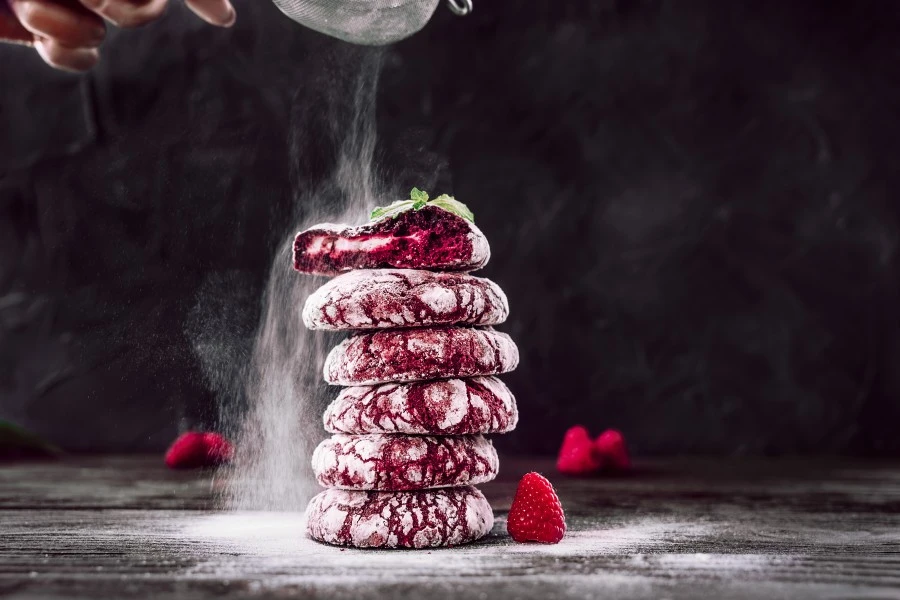 Strong consumer demand for natural, clean label foods is driving a preference for healthier, more wholesome products that avoid artificial ingredients and colors.
Regulation drives product innovation pipelines
In contrast to the EU, where much of the regulatory heavy lifting on food colors has already taken place, the US is still in the midst of its transition away from synthetic dyes.
One of the most notable moves in European color reform was the 2022 ban on titanium dioxide, following a European Food Safety Authority assessment and rising health concerns. A few years on, the TiO₂ ban is fully embedded. It has reshaped formulations and driven long-term reformulation strategies, and remains firmly in place despite legal challenges.
Many global manufacturers have already reformulated to meet EU standards, positioning the region as a de facto benchmark for natural color adoption and shaping innovation pipelines well beyond its borders.
Meanwhile, US policy is catching up. Tightened regulation is actively steering the market toward natural colors driven by US Health Secretary Robert F. Kennedy Jr and his campaign to crackdown on artificial colors and dyes in the US food system — something which has become a cornerstone of the “Make America Healthy Again” movement.
A national initiative, initially launched in April 2025, targets a phase‑out of petroleum‑based synthetic dyes from the US food supply and sets deadlines through 2027–28 for full reformulation for most synthetic dyes.
Target has just a few weeks left to hit a target to remove certified synthetic colors from certain products, while Campbell’s has pledged to no longer produce any food or beverages with synthetic colors by the second half of the 2026 fiscal year.
General Mills is eliminating certified color additives from all US cereals by this summer, while Kraft Heinz will remove all traces of synthetic dyes with Food, Drug, and Cosmetic colors from its US portfolio by the end of 2027.
Labeling rules tweaked
The initial announcement in the US on eliminating petroleum-based synthetic dyes was widely welcomed. However, in a recent move, the FDA revised its labeling rules on food dyes to allow producers using “natural” food dyes to use the “no artificial colors” claim, drawing some criticism.
In February, the agency said products may be labeled as containing “no artificial colors” if they are free of petroleum-based dyes, even when they include color additives obtained “from natural sources.”
But critics say label changes are a retreat from the FDA’s original pledges to ban artificial dyes from food, and are a dilution of safety messages.
“This latest retreat on synthetic food dye regulations is another broken promise from Secretary Kennedy and President Donald Trump. They pledged outright bans on dangerous food chemical additives to their ‘Make America Healthy Again’ base. Instead, states are doing the hard work to protect families, while Kennedy settles for handshake deals with Big Food and chemical companies — agreements with no real accountability and no guarantee they’ll be honored,” says Environmental Working Group’s president and co-founder Ken Cook.
The Center for Science in the Public Interest has also criticized the changes to food labeling, while Dr. Michael Hansen, a senior staff scientist at Consumer Reports, says: “On the surface, it may sound like a good plan. But the policy will make it even more challenging for people to understand what’s in their food. It’s really just giving the industry another way to confuse consumers.”
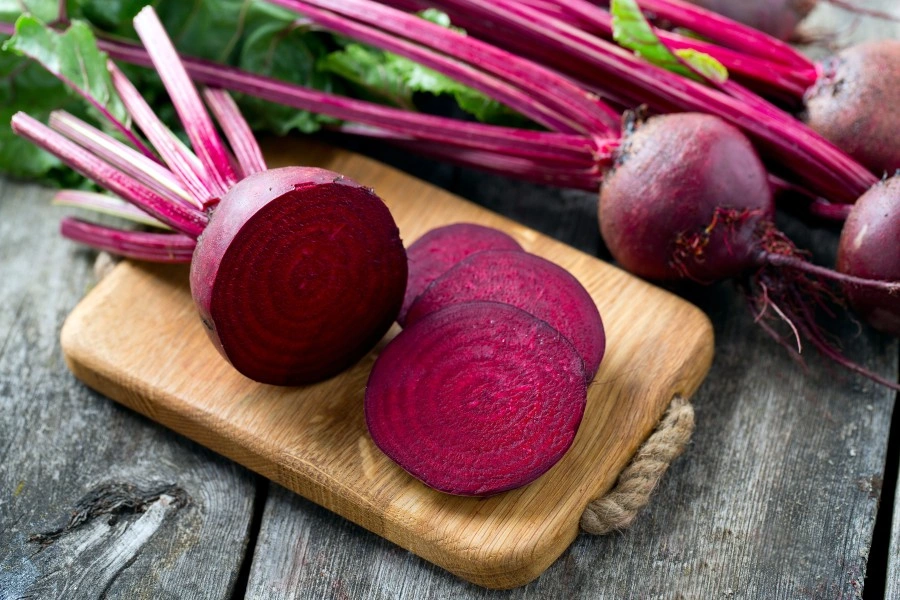 Natural beetroot provides a vibrant red hue to foods and beverages, serving as a clean label alternative to synthetic colorants.
Beetroot and spirulina color delays
Also in February, the FDA issued final orders approving beetroot red and expanding use of spirulina extract as food colorants — though implementation has been temporarily delayed due to industry objections. That delay is to allow the FDA time to evaluate objections and requests for hearings submitted by industry stakeholders, but it shows that even as regulators push natural alternatives, approval pipelines remain a bottleneck.
There also continues to be ongoing scrutiny of titanium dioxide in the US and other markets, where it is still used as a whitening ingredient for F&B. The ingredient is banned in the EU.
2026 milestones for natural colors
Other large ingredient players are scaling and building their portfolios of natural color solutions.
Givaudan Sense Colour — which made a move in natural colors in 2021 when it acquired US-based DDW, The Color House — recently gained FDA approval for Everzure Galdieria, a natural color additive made from Galdieria sulphuraria, and developed in collaboration with French biotech company Fermentalg.
This novel blue is fermented and extracted from microalgae using patented processes, which results in a phycocyanin-rich natural blue color, similar to spirulina, with complete traceability and low-pH stability that broadens the scope of application and use beyond where spirulina can be used.
dsm-firmenich responds to the shift toward natural colors with the launch of Vibelly Color Solutions, a carotenoid‑based portfolio that delivers vibrant, nature‑derived hues for beverages, bakery, dairy, and confectionery. The company flags how this supports its sustainability goals, but is directly driven by regulatory transitions.
Earlier this year, Oterra released its 2030 Sustainability Strategy, which sets out ambitious targets to reduce the company’s impact while keeping pace with the growing demand for colors sourced from natural ingredients.
Racing toward consumer-friendly colors
With 2026 marking the first year of visible reformulation and FDA guidance rolling out, the US natural color market is entering a critical growth phase, as companies and brands align R&D, supply chain, and labeling strategies now to be best positioned to capture the post-synthetic opportunity.
Beyond compliance, the race for vibrant, stable, and consumer-friendly natural colors is set to redefine F&B NPD, and what unfolds could set the pace for cleaning up the color space and seeing more natural color alternatives come onto the market as a result.


Upcoming webinars

2027 Food Safety Risks for Quality & Compliance Leaders
FoodChain ID

Formulating for function: Developing benefit-led beverages with natural colours, botanicals, and flavours
Givaudan Sense Colour

Let's reveal the grain potential: Innovate
Meurens Natural