

Behind the scenes at Cargill’s Dutch cocoa operations as manufacturers face supply volatility


Key takeaways
- Cargill highlights the Netherlands as a key cocoa processing hub, linking bean arrival, processing, and storage in and around Amsterdam.
- The company says its Dutch network helps protect cocoa quality, delivery reliability, and application performance for B2B manufacturers.
- Cargill points to farmer resilience, yield improvement, and origin diversification as critical to avoiding future cocoa supply shocks.
Cargill is positioning the Netherlands as a critical cocoa processing hub within its global supply chain, as heightened volatility and reliance on West African origins increase the need for resilient sourcing.
Food Ingredients First takes you inside Cargill’s Dutch cocoa supply network to examine how the agribusiness giant is responding to cocoa supply and farming challenges after several years of price swings across the sector.
Cargill showed us three locations, following the cocoa’s journey from bean arrival (Port of Amsterdam) to processing (Wormer) to Green Valley Logistics (Amsterdam), where around 30,000 pallets of cocoa powder are stored for shipment to B2B manufacturers.
For F&B companies, the network highlights how cocoa sourcing, processing, and storage are being handled to protect ingredient quality, delivery reliability, and application performance.
How cocoa beans enter Cargill’s Dutch cocoa network
At the Port of Amsterdam, cocoa beans sourced from West Africa and Latin America enter Cargill’s Dutch cocoa network. Total bean storage capacity at the warehouse is about 75,000 metric tons, with automatic cranes lifting about 8,000 kg at once. This is followed by checking, storing, and processing preparation.
Emiel van Dijk, senior VP and managing director, Cocoa & Chocolate, Europe and West Africa, says he expects the cocoa and chocolate industry’s reliance on West Africa to continue, but notes that diversification is developing in Latin America, specifically Ecuador, Peru, and potentially Brazil. “Also in Asia, Indonesia can potentially grow its production,” he says.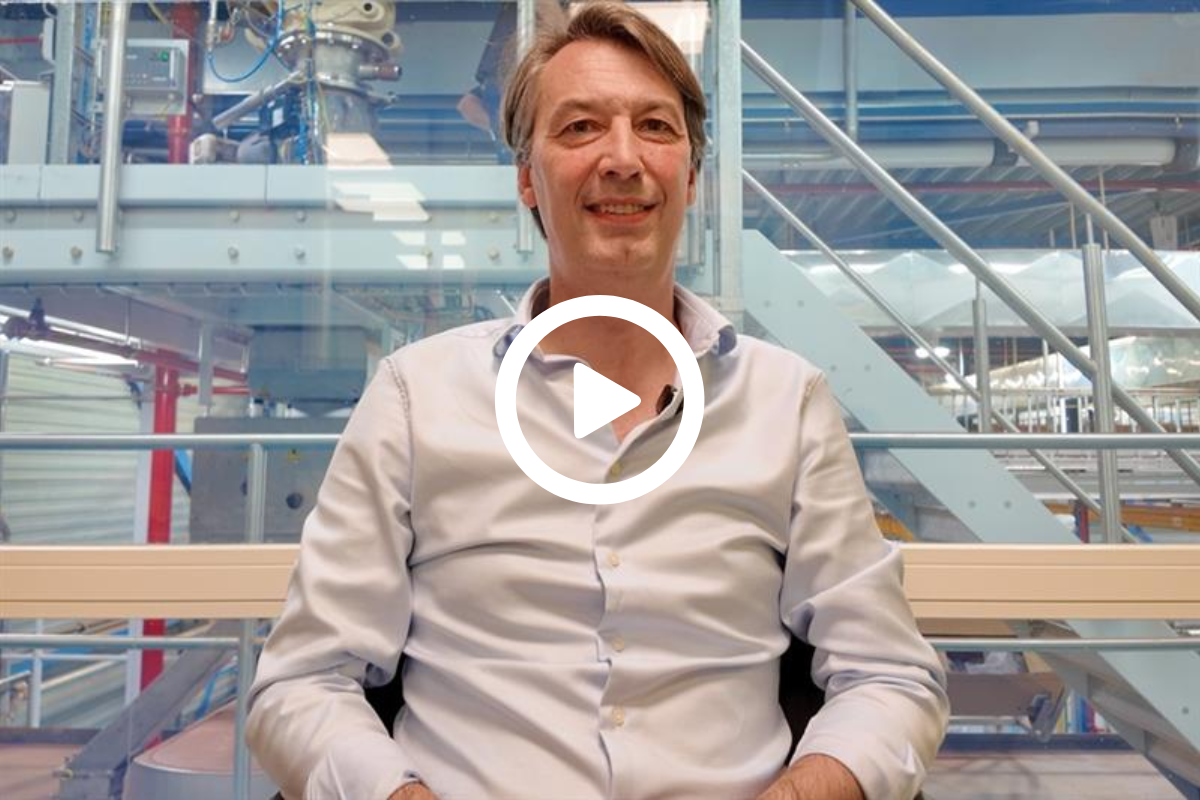 Emiel van Dijk at Cargill spoke to us about the importance of farmer resilience and the Netherlands in the global cocoa supply chain.
Michiel van der Bom, product line director, Cocoa & Chocolate, also refers to Côte d’Ivoire and Ghana as dominant cocoa-producing origins, while Ecuador is catching up. He links origin to flavor — “Latin American cocoa liquors can be more fruity, while different origins, roasting styles, and blends affect the final cocoa taste profile.”
Supporting cocoa sustainability
The Port of Amsterdam site also connects to Cargill’s lower-emissions transport network. An electric “e-pusher” helps move cocoa barges by inland waterway from the site to Cargill’s cocoa factory in Zaandam, saving energy and emissions.
Cargill’s Dutch locations also use solar panels, while cocoa bean shells are repurposed as a byproduct.
“We are also fully circular in the sense that, from a cocoa bean, the shell is basically a byproduct. We use it in the biomass boiler of our sunflower refinery, reducing energy consumption and emissions tremendously,” says van Dijk.
Turning cocoa liquor into functional F&B ingredients
At the Wormer site in the northwest of Amsterdam, Cargill presses cocoa liquor (produced at the company’s Zaandam site) into butter and cake at pressures of up to 500 bar, while preparing cocoa ingredients for B2B F&B applications.
This cake is then milled into cocoa powder, followed by alkalization to change the color and performance of cocoa powder — “from red to almost black,” says van der Bom. Watch Michiel van der Bom talk to us about the the cocoa journey from bean to shelf, the rise of hybrid solutions, and cocoa price volatility.
Anne-Floor Vet, cocoa plant manager at the facility, explains that this cocoa powder can be sent to customers for products such as chocolate milk, ice cream, and sprinkles. “Or we send it to our cocoa or chocolate factories within Cargill for further processing as compounds.”
“Cocoa butter is one of the main ingredients for chocolate, so the majority goes to our chocolate factories,” she says.
At the processing stage, van der Bom explains that Cargill can influence the final product’s flavor, color, and texture.
“We can do a lot in processing. At our bean warehouse, we are able to segregate the different beans, so we can really control what we bring into the factory and which kind of blends.”
“It’s very important how we store the beans and transport them to maintain control of the quality of those beans. But then, in our process, roasting is a very important step in defining what kind of flavor profile we generate.”
He adds that though there are limits, the company’s processing operations “can go very far in correcting the specifications and making sure that we come out with a good product.”
Automation in cocoa powder storage and dispatch
Green Valley Logistics in Amsterdam is the final stop in Cargill’s Dutch cocoa supply network, focused on storage and logistics for finished cocoa powder. The facility, which opened in 2025, is highly automated with robotized forklifts.
“When a truck is unloaded, the pallets are placed automatically onto the shop floor. A robotized forklift then picks up each pallet and stores it automatically, without manual intervention. The same process happens in reverse when we take pallets out of storage and load them back into trucks,” van Dijk explains.
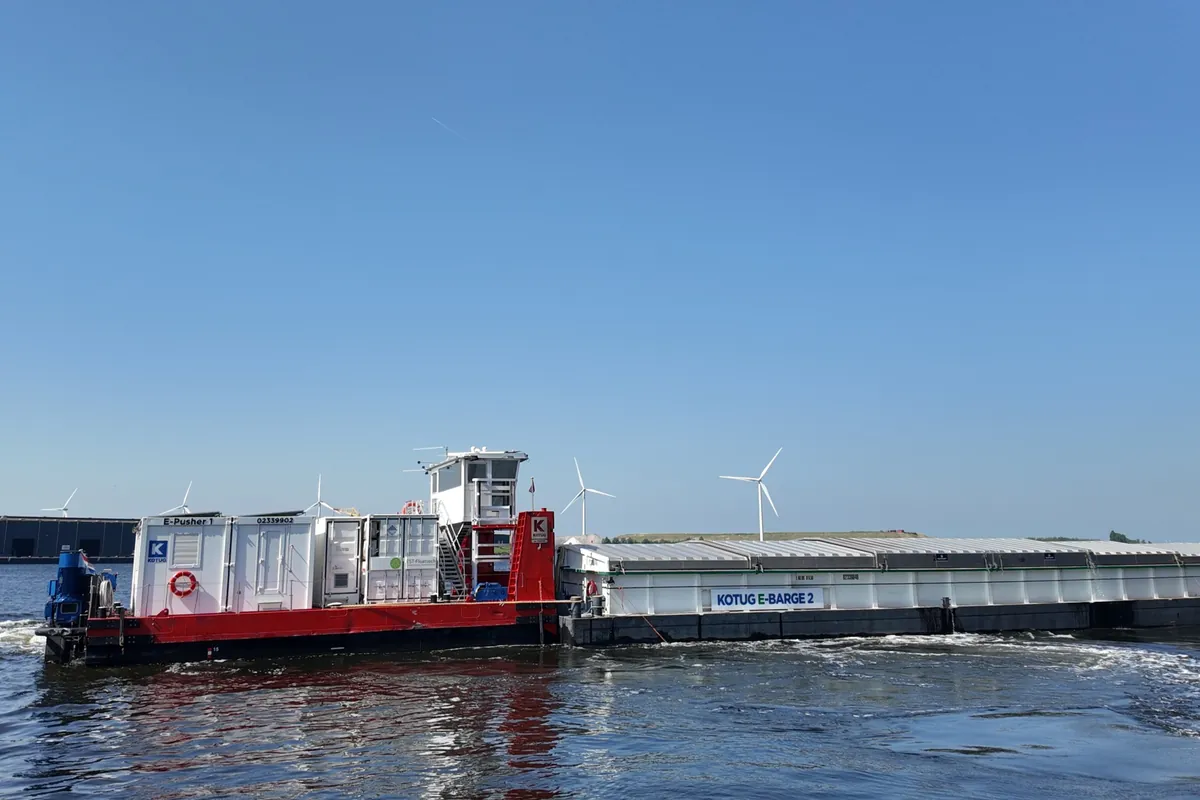 An electric e-pusher forms part of the cocoa transport route from bean storage to processing.
“This provides an advantage from a cost perspective, but also because the robots can work 24/7 as they do not need breaks, so the operation continues efficiently. Overall, it is a highly automated and very efficient location, serving as the final stop in our cocoa value chain in the greater Amsterdam area.”
This efficiency is important at a time when the cocoa industry navigates sector unpredictability. Van Dijk says that despite seeing “significant disruption” in cocoa supply, Cargill has continued to deliver to all its customers throughout this period.
“We have strong relationships with our suppliers, and we secured and stored cocoa beans in time to protect our customers’ supply.”
Cocoa price volatility drives reformulation
Beyond Cargill’s Dutch processing network, wider cocoa market volatility is pushing manufacturers to consider cost, supply, and sustainability pressures more closely.
World Bank and International Cocoa Organization figures point to a highly volatile cocoa market. Prices more than doubled between 2023 and 2024, while the sector moved from a 492,000-metric ton global deficit in 2023/24 to a 48,000-metric ton surplus in 2024/25.
Van der Bom says price remains a key consideration for F&B manufacturers, alongside novelty and innovation.
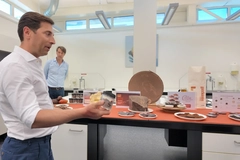
“Price is always important to our customers, and ultimately also for the end consumer, so that will always remain an important factor for our products. Customers are looking for novelty — tracking market trends and exploring ways to be remarkable on the retail shelves,” he says.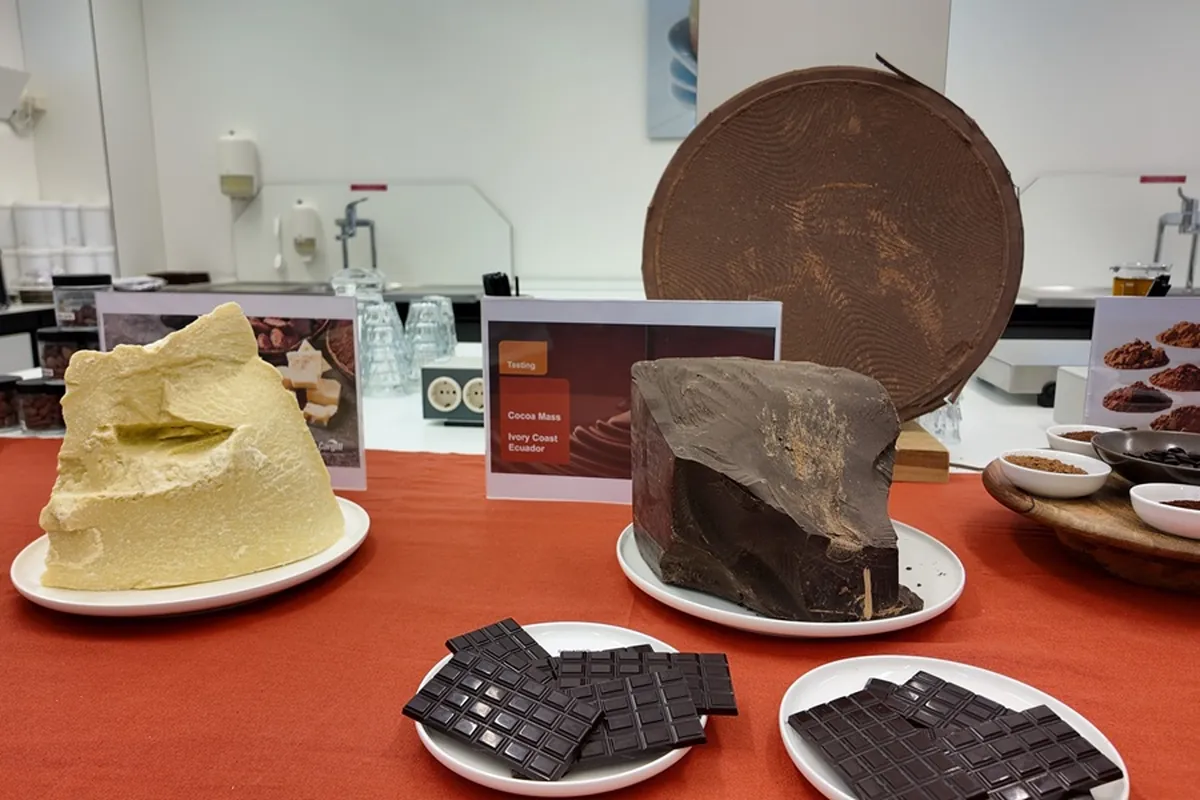 Cocoa butter and cake samples were shown as intermediate products at Cargill’s cocoa processing site at Wormer.
Price is also important for consumers who want climate-friendly products. According to Innova Market Insights, one in three consumers is willing to pay more for chocolate with verified sustainability claims. However, price sensitivity emerges as the top F&B aspect most impacted by climate change.
Cocoa price volatility and reformulation pressures have also led to substitute innovations, such as Cargill’s grapeseed and sunflower-based NextCoa. Van Dijk frames these cocoa alternatives as “complementary rather than replacements” for conventional cocoa.
For Cargill, the longer-term focus remains on farmer resilience, yield improvement, and diversification of cocoa origins.
Weather risks and farmer resilience
Weather patterns are another factor shaping cocoa quality and supply risk. Van der Bom says seasonal events can have a direct impact on crop quality, while storage conditions at origin can also affect bean quality.
He notes that El Niño is being closely watched by the market, although its impact is “not necessarily immediate across every cocoa-producing region in Africa.”
“It tends to have a stronger effect in Latin America, which also has a major crop, particularly in Ecuador. So it is certainly an influence, but the overall impact remains to be seen.”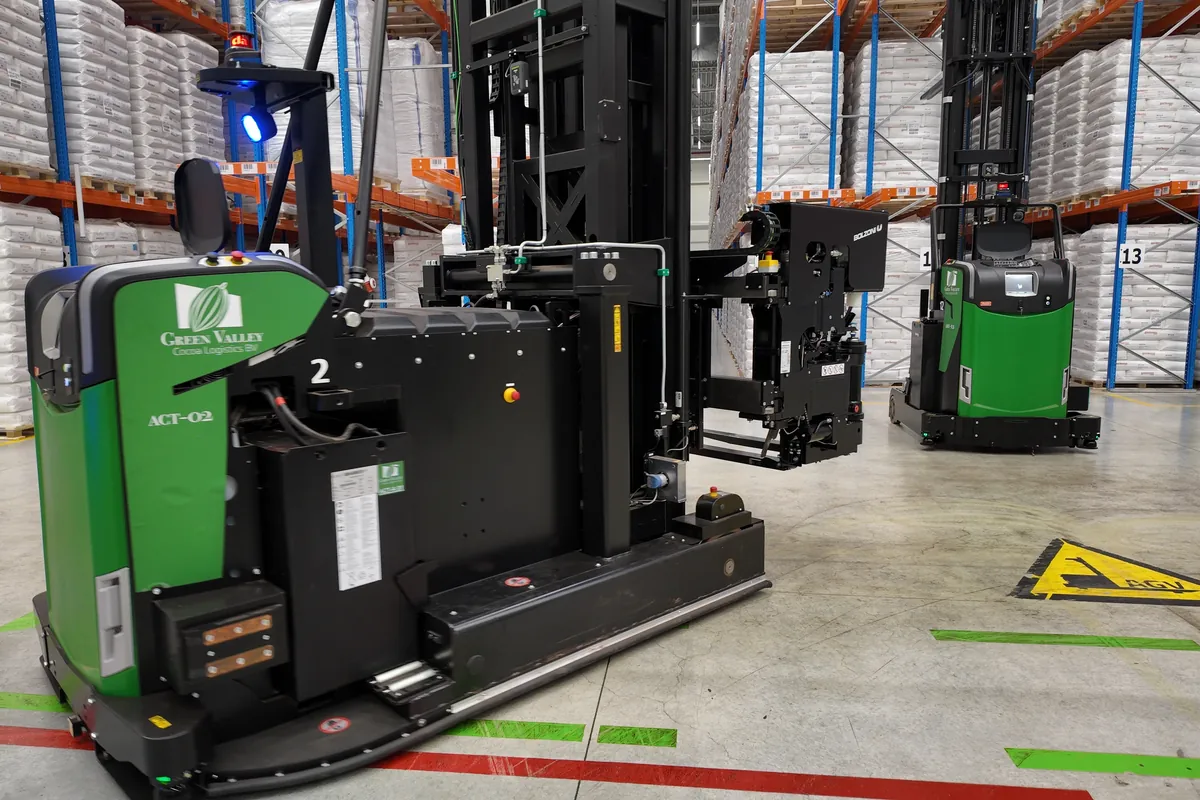 Cargill uses robotized forklifts to place and retrieve cocoa powder pallets at Greenvalley Logistics.
How the cocoa industry can avoid future supply shocks
Looking ahead, van Dijk emphasizes the need to focus on farmer resilience to avoid future supply shocks. He says companies should focus their efforts on improving farmer resilience in West Africa, “where one structural challenge has been the yield per hectare of a farmer.”
“There are multiple programs in which we work on improving that yield. That is a big challenge for Cargill and for the industry.”
“The supply disruption was also linked to the swollen shoot disease, which is present in Côte d’Ivoire and Ghana specifically. We need to come together and solve that as an industry.”
Van Dijk says creating farmer resilience and improving yield are the key challenges that Cargill and the wider cocoa sector should focus on.



Upcoming webinars

Oat-Standing Ingredients - Showcasing Irish Grain Through Innovation
Tirlán Ingredients

2027 Food Safety Risks for Quality & Compliance Leaders
FoodChain ID

Formulating for function: Developing benefit-led beverages with natural colours, botanicals, and flavours
Givaudan Sense Colour