

Spotlight on emulsifiers: Consumer demand for clean label reshapes food formulation landscape


Key takeaways
- No clean label emulsifier works as a direct one-for-one replacement.
- Ultra-processed foods scrutiny is pushing brands toward shorter ingredient lists.
- Cargill, Fiberstar, and Ingredion spotlight cleaner emulsifiers, multifunctional fibers, and full system redesigns.
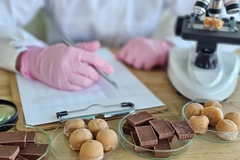
The raw materials behind emulsifiers are becoming increasingly expensive. At the same time, industry experts say consumers are seeking cleaner label alternatives and ingredients. As some brands choose to reformulate away from their least “label-friendly” emulsifiers, Cargill, Fiberstar, and Ingredion are taking different routes.
The result is that the emulsifier, a category most shoppers never think about, has become a reformulation battleground.
Cargill is moving toward a cleaner emulsifier for bakery, pointing toward market swings across eggs, cocoa, and fats, while shoppers continue to expect indulgent texture, taste, and convenience. Fiberstar is moving toward a single multifunctional ingredient, and Ingredion is reworking the entire emulsification system.
Ingredion frames the challenge as bigger than ingredient substitution. Clean label emulsification, the company argues, requires rethinking the system around the emulsifier, including stability through shelf life, advanced functionality, natural color systems replacing synthetic ones, and reduced reliance on weighting agents.
The industry largely agrees that the “least label-friendly” emulsifiers have to go. Where it splits is on the fix. As scrutiny of ultra-processed foods (UPFs) builds, the stakes of that choice are rising.
Food Ingredients First sits down with ingredient suppliers, Ingredion, Fiberstar, and Cargill, to discuss the latest emulsifier innovations and advancements.
Clean label forward
Both Cargill and Fiberstar agree that a synthetic emulsifier cannot be pulled out and replaced one for one, because they do several jobs at once. Cargill’s Rajiv Mehta, director of business development for Food EMEA, notes that traditional emulsifiers can contribute aeration, dough strength, shelf life, machinability, and texture, so replacing them is rarely a straight swap. Fiberstar’s Citri-Fi citrus fiber binds oil up to eight times its own weight, collapsing multiple label line items into one ingredient.
Fiberstar’s chief science officer, Dr. Brock Lundberg, reaches the same conclusion from a chemistry standpoint, noting that the synthetic versions work only in narrow conditions, and matching them often takes several ingredients or a whole system rather than one substitute.
With no drop-in solution readily available, the question for suppliers and producers becomes which route to take. Fiberstar stresses that the backlash against UPFs will be a defining force of the coming years. These are foods deconstructed from their natural state and rebuilt with additives to hold structure and shelf stability.
Jennifer Stephens, Fiberstar’s VP of marketing, expects developers will be driven toward shorter ingredient lists, as the removal of suspect additives helps create the perception of less processing; a logic she says is already playing out in cosmetics, personal care, and packaging.
Cargill and Ingredion frame the future differently. Mehta at Cargill points to a convergence of ingredient familiarity, affordability pressure, and better nutritional profiles. At the same time, Jay Bunte, the senior director, global product portfolio for corn and clean label texture solutions at Ingredion, says the future will be shaped by more sustainable solutions, higher-performing systems, and evolving consumer expectations.
Lecithin beyond bakery
In bakery applications, Cargill’s strategy is not to remove emulsifiers, but to replace the least recognizable varieties with lecithin, a more familiar declaration that performs the same work. When choosing one that is better-labeled, lost functionalities can be rebuilt with proteins, fibers, starches, and enzymes.
“Cargill has demonstrated that lecithin can serve as a fully functional alternative to mono- and diglycerides in selected applications, helping improve dough handling, volume, and freshness while supporting more familiar ingredient lists,” Mehta explains.
The company has used de-oiled lecithin to replace E471 in products, such as brioche and pound cake. It has also paired lecithin with enzymes to replace diacetyl tartaric acid esters of mono- and diglycerides, also known as E472e, in whole meal bread while holding volume and texture.
The company also states that similar systems support handling and freshness in pizza dough and sweet baked goods.
The same logic extends beyond bread. As cocoa prices have lurched, lecithin has become a lever for stretching one of confectionery’s most expensive inputs.
“Beyond bakery, lecithin continues to play an increasingly strategic role in chocolate and confectionery,” Mehta reveals. “It helps optimize viscosity, improve flow behavior, and support more efficient cocoa butter usage, which has become especially relevant in a period of cocoa market volatility.”
More than a swap
Ingredion approaches clean label emulsification less as a substitution than as a problem its systemic food solutions solve.
“Clean label emulsification is often viewed as a simple ingredient swap, but in reality it requires rethinking the entire system, an area where Ingredion brings distinct expertise,” Bunte highlights.  Jay Bunte at Ingredion says clean label emulsification is not a simple swap; it requires rethinking across the whole formulation.
“In beverages, for example, success depends on maintaining stability throughout shelf life while enabling advanced functionality, such as stabilizing natural color systems in place of synthetic alternatives and reducing reliance on weighting agents. This is where our applications and technical expertise make a difference, translating ingredient innovation into solutions that perform reliably at scale.”
According to Bunte, Ingredion’s answer takes the form of upgraded natural emulsifiers, which are finetuned to be more effective.
“With solutions like the Q Naturale quillaja based emulsifier and Ticaloid Acacia MAX, we help customers stabilize higher oil loads more effectively, supporting label friendly formulations, improving performance and efficiency, and enabling more sustainable product design aligned with evolving consumer expectations,” he says.
“Ultimately, the goal is not simply to replace what’s been removed, but to deliver systems that are higher performing, more resilient, and more cost-effective overall.”
Removing the E-numbers
Fiberstar spotlights its upcycled ingredient, Citri-Fi citrus fiber, which it says does several jobs at once and collapses multiple label line items into one. For instance, the company states that in plant-based beverages, the fiber improves suspension and creates a creamy mouthfeel.
Lundberg spotlights this as consolidation, not elimination. The citrus fiber functions as an emulsifier that holds fats and oils in solution and minimizes separation over shelf life, which provides emulsion stability.
“By using the new citrus fiber products, all remaining gums and emulsifiers in the system can be replaced, and citrus fiber can be used as the sole ingredient to help maintain emulsification, a creamy mouthfeel, and long-term stability,” Lundberg notes.
The ingredient’s efficiency claim rests on capacity. Fiberstar states that many emulsifiers stabilize fat and oil at roughly one to one, whereas Citri-Fi binds oil up to eight times its own weight, which Lundberg says means far lower usage rates and a fat-like mouthfeel.
He credits the mechanism to hydrophobic proteins and esterified pectins that are native to the fiber. It can help create a full-body mouthfeel in almond, oat, or coconut milks without other stabilizers, and thicken without the slipperiness of many soluble thickeners.
Lundberg adds that the fiber, which is declared as citrus fiber, dried citrus pulp, or citrus flour, is non-GMO, allergen-free, gluten-free, carries no E-number, and adds dietary fiber.
Perfecting plant-based juiciness
Cargill and Fiberstar note that plant-based meat and dairy applications expose the limits of any emulsifier system. Cargill points out that removing egg strips out aeration, stabilization, and texture, which can make emulsification alone insufficient. The suppliers solve the juiciness problem in meat alternatives through different mechanisms: Cargill holds water; Fiberstar holds oil.
“In meat alternatives, Cargill has developed lecithins that provide juiciness to the bite of the product by retaining 10% more water and optimizing the overall cost of formulation,” Mehta states.
Fiberstar uses citrus fiber’s oil-binding capacity to let formulators transition toward liquid oils that are lower in saturated fat.  Cargill highlights that lecithin can replace “least label-friendly” emulsifiers in bakery while rebuilding lost functions with proteins, fibers, and enzymes.
“When Citri-Fi citrus fiber is used, more liquid-based oils can be used that are lower in saturated fat while still maintaining the pleasant eating experience,” Lundberg adds.
Beyond meat, Cargill extends the approach through its Infuse by Cargill service model, which combines lecithin with proteins, starches, and fibers for plant-based muffins, sponge cakes, and other sweet baked goods. In dairy alternatives, lecithin supports emulsion stability and a creamier mouthfeel, with broader texturizer systems handling separation and viscosity.
Withstanding acidic formulations
Fiberstar also highlights how low-pH systems for carbonated soft drinks, sports drinks, and other acidic beverages break down many emulsifiers. The company states that few clean label options hold up under those conditions. However, it says it built a line specifically for them.
“Fiberstar recently launched a new line of citrus fibers, Citri-Fi Pro, that have been developed to target prolonged stability and improved emulsification properties even under these acidic conditions,” Lundberg says.
According to Fiberstar, the fiber performs under extreme temperature and pH, even in alcohol. Moreover, Lundberg says it can be used directly in alcoholic drinks or in a flavored emulsion destined for one. With citrus fiber serving as the primary ingredient, the emulsion holds, creating clouds, flavor, and mouthfeel.
All three suppliers see the future in systems-level food solutions rather than standalone ingredients. Though the companies differ on the route, all agree that the future of emulsifiers will be built around whole formulation and not solely on an additive in isolation.