



Industrial insect farming faces sustainability scrutiny as industry pushes back


Key takeaways
- A Stockholm Environment Institute report questions whether industrial insect farming in high-income, temperate countries delivers on its sustainability promise.
- The International Platform of Insects for Food and Feed rejects the findings, arguing the report relies on outdated data and overlooks commercial-scale improvements.
- The debate centers on insect protein’s real environmental impact, what it replaces, concerns around animal welfare, and market viability.
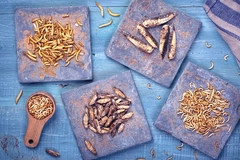
Industrial insect farming in high-income, temperate countries — often framed as a sustainability solution — is falling short of its environmental promise, a new report from the Stockholm Environment Institute (SEI) finds. The criticism is particularly pointed where insect protein is used in animal feed, aquaculture, or pet food rather than replacing meat.
While SEI says the report reflects the best independent evidence available, the International Platform of Insects for Food and Feed (IPIFF) argues it “misrepresents” the sector by relying on outdated data.
Food Ingredients First speaks with SEI and IPIFF to explore both sides of the debate over insect farming’s sustainability claims.
Industry questions SEI’s insect farming evidence base
Steven Barbosa, IPIFF secretary-general, says the organization “firmly contests” the report’s overarching conclusion that insect farming’s environmental credentials are far less clear-cut than assumed.

The findings rely on “outdated, early-stage, pilot-scale data,” which does not reflect the current environmental performance of commercial-scale facilities, he says.
“The insect sector has made substantial investments in recent years to optimize processes, integrate renewable energy, and improve efficiency, leading to a rapid and measurable reduction in environmental impact,” Barbosa stresses.
However, Cleo Verkuijl, senior scientist at SEI, maintains that the report relies on the most recent scientific publications.
 Steven Barbosa: Varied environmental performance in insect farming reflects a dynamic, innovative sector rather than a weakness.“Its comparative figures include the most recent independent assessment available: the 2024 life-cycle assessment conducted by Ricardo for the UK Department for Environment, Food and Rural Affairs (Defra), which was subject to independent expert review and assessed black soldier fly meal against Brazilian soybean meal and Scottish blue whiting fishmeal on a per-kg-of-protein basis.”
Pointing to the limited independent, transparent, and industrial-scale Life Cycle Assessment (LCA) evidence, she says SEI acknowledges this challenge and documents it in the report. “We reflect the best independent evidence available at the time of our study, and would update our assessment as comparable independent data emerges.”
Barbosa also flags that the report was prepared without contacting IPIFF or any of its members, describing it as a “significant methodological flaw” for a report assessing an industry.
Verkuijl clarifies that the report was not a primary data-collection exercise that would require industry input — the team did not conduct new analysis, but synthesized existing research.
He also points out that when independent researchers have approached insect producers for underlying environmental data in the past, “most did not respond or declined, citing industry confidentiality.”
Insect farming funding scrutiny
Barbosa also questions the report’s funding and review process, noting that the document is financed by a grant from Coefficient Giving (formerly Open Philanthropy), which he says opposes animal farming.
“Its reviewers are associated with organizations like National Observatory on Insect Farming (France) and The Insect Institute (US), which have publicly expressed opposition to insect farming.”
Verkuijl responds: “Coefficient Giving is a large philanthropic funder with no commercial stake in any of the protein sectors compared. They fund a wide range of issue areas, including the health, environment, science, and animal farming sectors.”
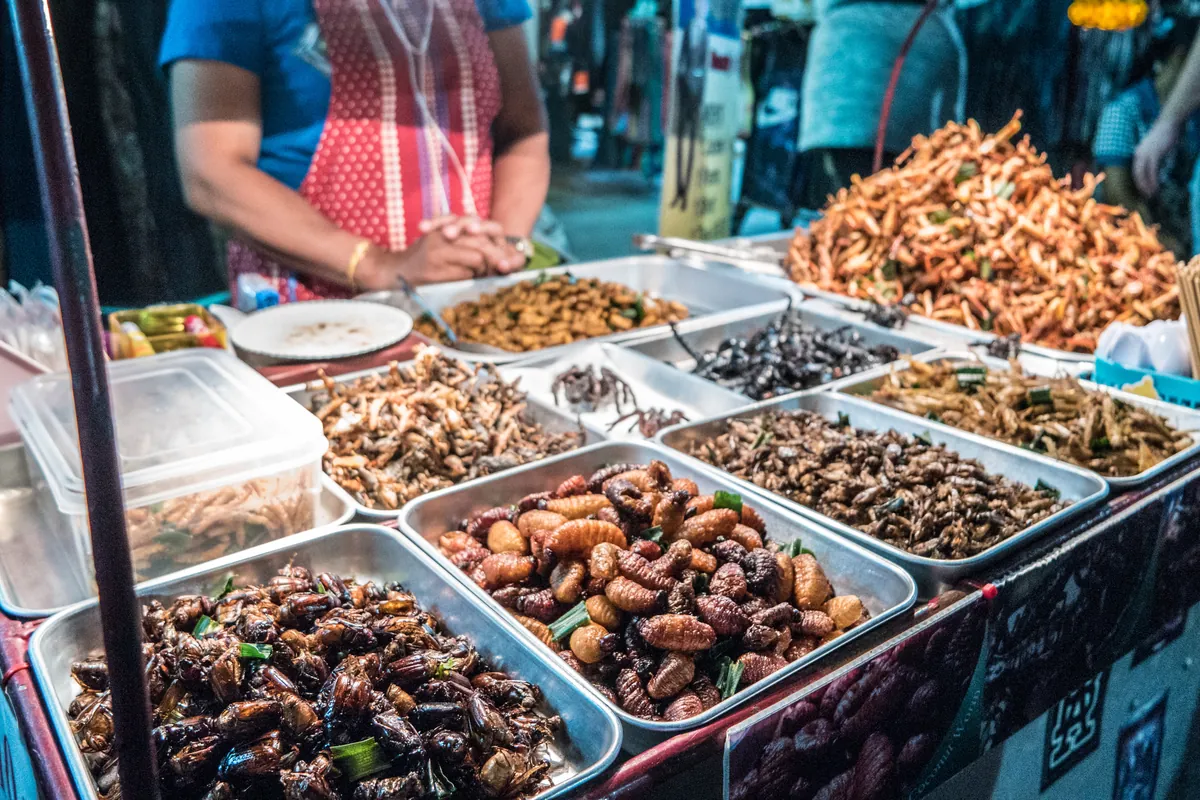 Insect snacks remain the consumer-facing side of the sector, while the wider industry is increasingly focused on feed and aquaculture markets.“On review: the report underwent SEI’s standard double-blind internal peer review process, and external reviewers were also invited to comment.”
The reviewers included experts from SEI, the Good Food Institute, and Oxford University, as well as published insect-farming researchers. Verkuijl says they provided quality assurance only and did not determine the report’s conclusions.
The environmental impact of insect protein
The report challenges the assumption that insects have a lower environmental impact than the products they seek to replace. Likely displaced ingredients, such as soymeal and fishmeal, often have lower emissions, the research suggests.
“Assessing the emissions per protein weight produced shows that even the highest insect emission figures are well below those of beef (approximately 75–170 kgCO2eq/kg protein),” says Verkuijl.
Barbosa points out that industrial-scale data confirms the sector’s environmental benefits. He argues the report “overlooks verified data from large-scale producers like Protix and Innovafeed, which demonstrate significant environmental advantages.”
Verkuijl responds that some peer-reviewed studies in the report used commercial data from companies such as Ynsect and Protix, but three industry-linked assessments were excluded because they fell outside the June 2025 cut-off or did not meet the report’s inclusion criteria.
“We acknowledge the report should have stated this cut-off explicitly and regret the omission,” she says. However, including the 2020 Innovafeed and Protix figures would slightly lower the report’s median impact estimate, “but would not change its overall conclusion.”
Consumer acceptance remains a barrier for insect protein
The report describes the insect sector as less of a human-food revolution, as most farmed insects in high-income markets do not directly replace meat for humans. Insect protein is more often used in pet food, aquaculture, and livestock feed.
Consumers in Western markets have shown limited interest in entomophagy, where insects are rarely seen as a direct substitute for meat, reads the report.
 Cleo Verkuijl: In Western markets, insect products rarely replace meat and are often added to foods like pasta, cookies, and bread instead.Recent research has challenged insect farming’s suitability as a viable protein for feed and food sectors due to low consumer acceptance, with SEI noting that most farmed insects “never reach human plates.”
Barbosa does not directly contest SEI’s point on low consumer acceptance, but argues that insect farming should not be judged only as a human-facing alternative protein.
“Insect farming offers a unique value proposition through its circular economy model. It transforms low-value organic side-streams into high-value outputs (protein, lipids, and frass) — a capability not shared by plant-based or fermentation-derived proteins,” he says.
Can insect farming compete with alternative proteins?
The report’s main conclusion is that insect farming should not be considered a promising alternative protein.
It highlights seven challenges for this emerging industry — outdated and regionally limited LCAs, under-utilization of organic waste as feed, limited meat substitution, animal feed rather than replacement for animal agriculture, biodiversity and ecological risks, emerging animal welfare concerns, and opportunity costs.
Only the first challenge concerns LCA/carbon data, and only the second concerns organic-waste feed, says Verkuijl. “Even if the environmental picture improved, challenges three to seven would still stand, as would our conclusion.”
“On the first two, we remain unconvinced they will be resolved soon, at least in the high-income, temperate contexts on which the report focuses.”
Regarding animal welfare concerns, Verkuijl argues that insect sentience is poorly understood, and “welfare is rarely considered across hatching, transport, and slaughter.”
Barbosa responds: “EU producers operate under strict and highly regulated conditions, including specific rules on slaughter methods that apply across all rearing industries.”
IPIFF: Insects as strategic food system solution
IPIFF calls for insect-based ingredients to be recognized as a distinct and strategic category. Relegating them to the alternative protein category risks underestimating their role as a systemic solution for food security and feed sovereignty, says Barbosa.
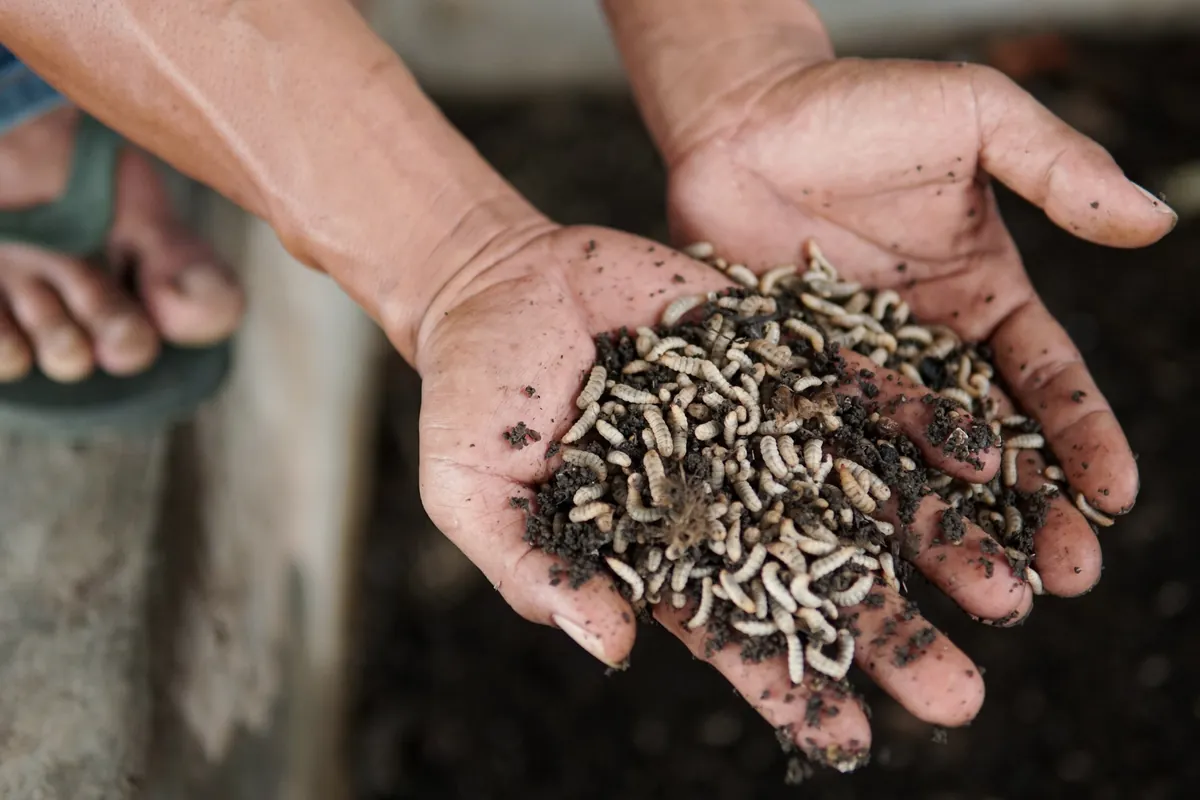 Both SEI and IPIFF acknowledge that insect farming’s environmental case depends on better data and whether the sector can deliver circular production at scale.Verkuijl does not dispute a possible circular economy model for the industry, but says it is realized only when insects are reared on waste, “which, at present, most commercial production is not.”
The report authors also argue that prioritizing insects may divert capital, policy attention, and consumer acceptance from plant-based, fermentation-derived, and cultivated proteins.
They recommend that alternative protein funds should not automatically treat insect farming as equivalent to these other sectors, and should assess whether it fits their objectives.
What evidence could change the insect farming debate?
The report states that after years of investor and government backing, insect farming is facing financial headwinds.
Recent studies have highlighted that about US$2 billion was invested in the sector by 2024, mostly in black soldier fly larvae (59%) and mealworm (36%) producers. But companies representing 37% of that investment have failed or are reportedly struggling.
“On the basis of more recent developments, one projection suggests the production of dried insects by 2030 may be less than half that predicted by Rabobank in 2021, although the author notes a high degree of uncertainty,” reads the report.
However, Barbosa describes the report as a “curated selection of arguments designed to slow down the insect farming industry, backed by well-funded organizations rather than a neutral scientific contribution.”
“The industry’s environmental performance is now verifiable through real-world data that demonstrates a clear and rapid trajectory of improvement.”
Verkuijl says SEI is open to seeing new, independent, and peer-reviewed LCAs with the promise of replicability, or evidence of large-scale food waste, and “would be happy to adjust the findings under the first two headings (mentioned above) if these emerge.”
“The other challenges would remain,” Verkuijl maintains.
The report, “Rethinking insects as alternative protein: emerging environmental and animal welfare considerations,” was developed by researchers from SEI, Leiden University in the Netherlands, and the European Institute for Animal Law & Policy.




Upcoming webinars

Oat-Standing Ingredients - Showcasing Irish Grain Through Innovation
Tirlán Ingredients

2027 Food Safety Risks for Quality & Compliance Leaders
FoodChain ID

Formulating for function: Developing benefit-led beverages with natural colours, botanicals, and flavours
Givaudan Sense Colour