



“Hybrids are not a silver bullet”: Industry charts pragmatic path for protein innovation

Key takeaways
- Manufacturers are blending animal proteins with plant- and fermentation-derived ingredients to reformulate familiar meat and dairy products.
- Mainstream adoption hinges on familiar taste and texture, competitive pricing, and clear nutritional benefits.
- The right blend varies by product, with potential for hybrids to expand into dairy, snacks, and other everyday foods.
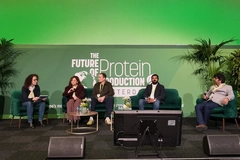 Left to right: Moderator Fanny Dézert, business development manager Meat & Alternatives, Mane; Anna El Tahchy, CTO, Nourish Ingredients; Tore Kiilerich Johansen, open innovation and R&D manager, AAK; Ramkumar Nair, founder and CEO, SMAQO; Vaskar Mukherjee, principal scientist, RISE Research Institutes of Technology
Hybrid foods are emerging as a practical reformulation strategy as manufacturers increasingly combine animal-derived ingredients with plant-based and fermentation-derived alternatives instead of pursuing complete replacement.
Competitive pricing and nutritional functionality are becoming central to their commercialization as the protein transition enters a more pragmatic stage.
At the Future of Protein Production (FPP) in Amsterdam, the Netherlands (Nov 4–5), industry experts discussed the commercial potential of hybrid meat and dairy products and the challenges of balancing animal and alternative proteins without compromising sensory appeal.
The event was co-located with The Cultured Meat Symposium.
Taste and affordability drive hybrid innovation
Hybrid foods offer a more accessible route to market than fully plant-based alternatives, according to Tore Kiilerich Johansen, open innovation and R&D manager at AAK.
However, fully replacing animal protein can introduce challenges involving flavor, fat incorporation, and texture, which may be less pronounced when some animal-derived ingredients are retained, he told Food Ingredients First at FPP.
 At FPP Amsterdam 2026, conversations spanned ingredients for hybrid meat and dairy and the challenge of delivering the taste consumers expect at a price they wil pay.Johansen also identified familiarity as a significant factor influencing consumer acceptance of hybrid foods. “We like what we know,” he said, explaining that hybrid products can offer an eating experience closer to conventional meat.
During a panel discussion titled “Hybrid Products as the Commercial Bridge,” Ramkumar Nair, founder of hybrid food brand SMAQO, which combines meat and mycoprotein, emphasized the role of taste and affordability in hybrid food advancements.
Nair argued that nutritional value must be delivered at a price consumers are willing to pay.
“The cost part is actually very critical here because they don’t want to pay a premium for a product which has higher nutrition,” he told FPP attendees. Hybrid formulations could offer opportunities to improve nutritional profiles while maintaining price competitiveness with conventional meat products.
Sustainability is also an important business driver, but a weaker standalone consumer proposition, he added. Drawing on SMAQO’s experience in Sweden, Nair said very few consumers actually buy hybrid food products “because it’s good for the environment.”
Finding the right protein balance
For hybrid food developers, determining the optimal proportion of animal and alternative ingredients remains a key challenge. During the panel, participants examined how increasing alternative protein inclusion can affect texture, flavor, and overall product familiarity.
Vaskar Mukherjee, principal scientist at the RISE Research Institutes of Sweden, told FPP attendees that incorporating alternative ingredients beyond approximately 30% presents sensory challenges in certain meat-like applications.
Nair added that the appropriate proportion depends on the product rather than a fixed formulation target. For some applications, alternative ingredients can account for approximately 50% of the product while maintaining sufficient familiarity for consumers.
Upcycled broccoli enters hybrid meat formulations
Upcycled Plant Power (UPP) discussed the potential of hybrid formulations using ingredients produced from underutilized broccoli biomass at FPP. The company converts broccoli stems, stalks, and other agricultural material into functional food ingredients.
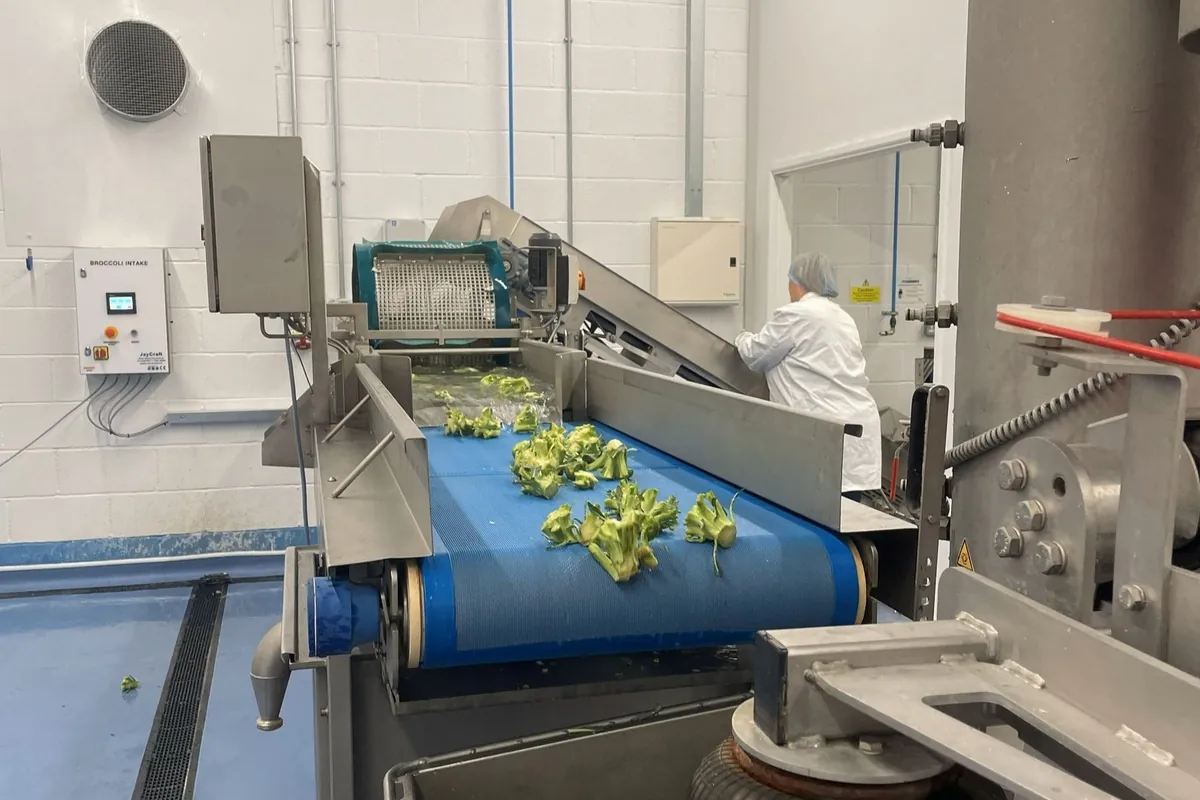 UPP turns leftover broccoli stems and stalks into fiber using patented automation, that can replace some meat in hybrid burgers and sausages (Image credit: UPP).“We’re committed to hybrids because we think that’s the best way to feed the most mouths,” UPP CEO Mark Evans told us at the event.
“We’ve been developing hybrid sausages and burgers, including formulations containing 20% broccoli fiber. You can’t taste the broccoli, but it can help reduce costs and improve the nutritional profile.”
Its other formulations include a burger containing 70% beef, 15% beans, and 15% broccoli fiber.
Evans explained that the fiber helps retain moisture and fat during cooking, potentially improving mouthfeel and reducing shrinkage.
In sausages, UPP is exploring how broccoli ingredients could replace part of the meat content or existing fillers, depending on the manufacturer’s nutritional and commercial objectives. It’s also label-friendly and can appear simply as “vegetable powder” on the ingredient list.
“We expect our ingredients to appear in major supermarkets by early 2027,” he added.
Functional fats tackle sensory limitations
Ingredient suppliers are also turning toward the interaction between fats, flavors, proteins, and texturizing ingredients, besides focusing on the reformulation of conventional meat products with vegetable fibers.
At FPP, AAK showcased shea-based fat solutions for plant-based cream cheese applications. One formulation focused on texture and melting behavior, while another incorporated selected short-chain fatty acids to support cheese-like flavor development.
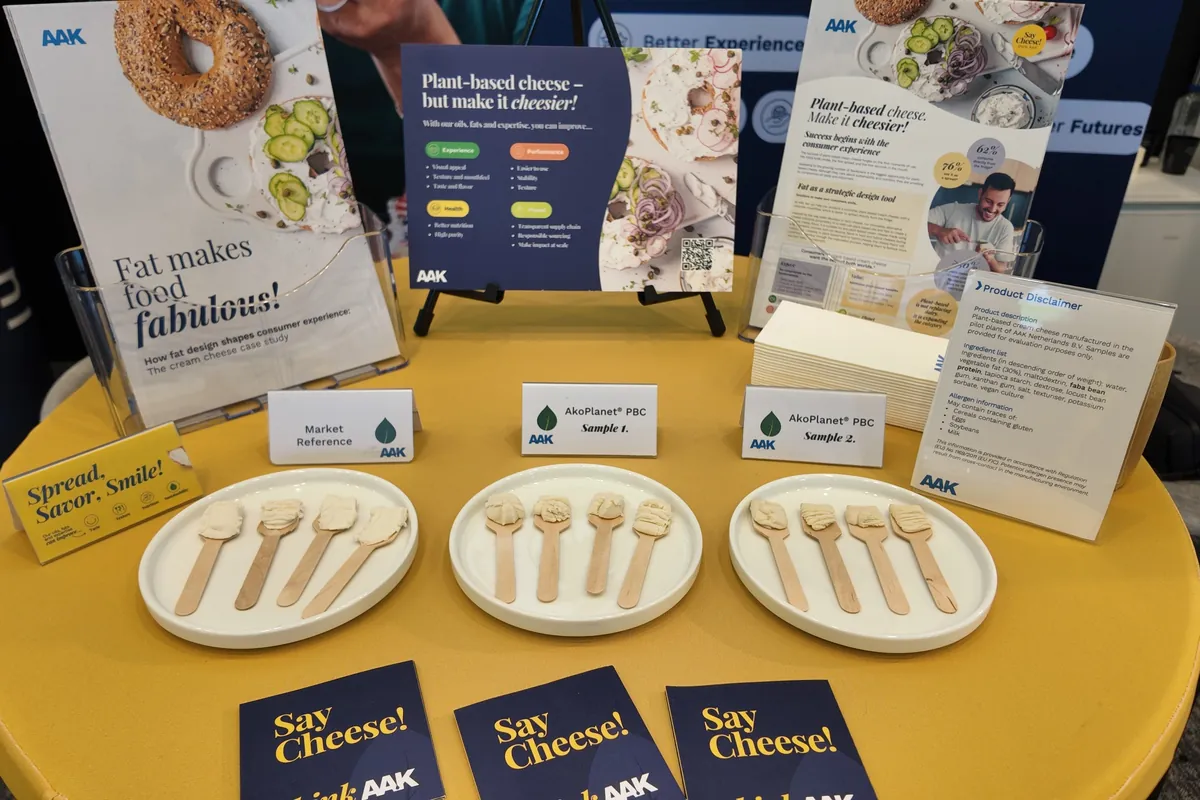 AAK showcased two plant-based cream cheese prototypes containing 30% vegetable fat, faba bean protein, tapioca starch, and vegan culture.AAK’s Johansen pointed to ingredient interactions as one of the most important technical challenges when combining animal and alternative proteins.
“We cannot rely solely on the new protein source. We need to combine it with the right flavors, fats, and potentially texturizing ingredients, such as fibers,” he told us.
“That’s one of the main challenges with hybrid products. We need collaboration between different ingredient suppliers to develop innovative solutions that deliver the desired sensory experience.”
He highlighted fat integration as a remaining technical barrier, explaining that the marbling and melting behavior of conventional meat fats can be difficult to reproduce with vegetable alternatives.
Although AAK showcased plant-based applications rather than confirmed commercial hybrid cheese products, the concepts demonstrate how advances in fat technology could help address formulation challenges relevant to hybrids.
Anna El Tahchy, chief technical officer and founding director at Nourish Ingredients, similarly emphasized the importance of fats in delivering familiar sensory experiences. The company is one of the Dairy Alternative finalists at the upcoming Fi Europe 2026 in Frankfurt, Germany.
It has been nominated for its Creamilux ingredient, a dairy-like lipid obtained from sunflower, enriched with short-chain phospholipids through enzyme technology.
El Tahchy explained to FPP attendees that increasing protein content can introduce undesirable textures and flavor notes. “For example, in yogurt, you start to get sandiness and problems in the texture and bitterness from the protein or off-notes.” Creamilux helps manufacturers obtain a dairy-like creamy mouthfeel and masks plant off-notes in hybrid products.
Hybrids: A revival rather than a new category
Jeroen Willemsen, innovation lead for the Protein Transition at Foodvalley, emphasized that the underlying concept of combining animal and plant ingredients “is not new.”
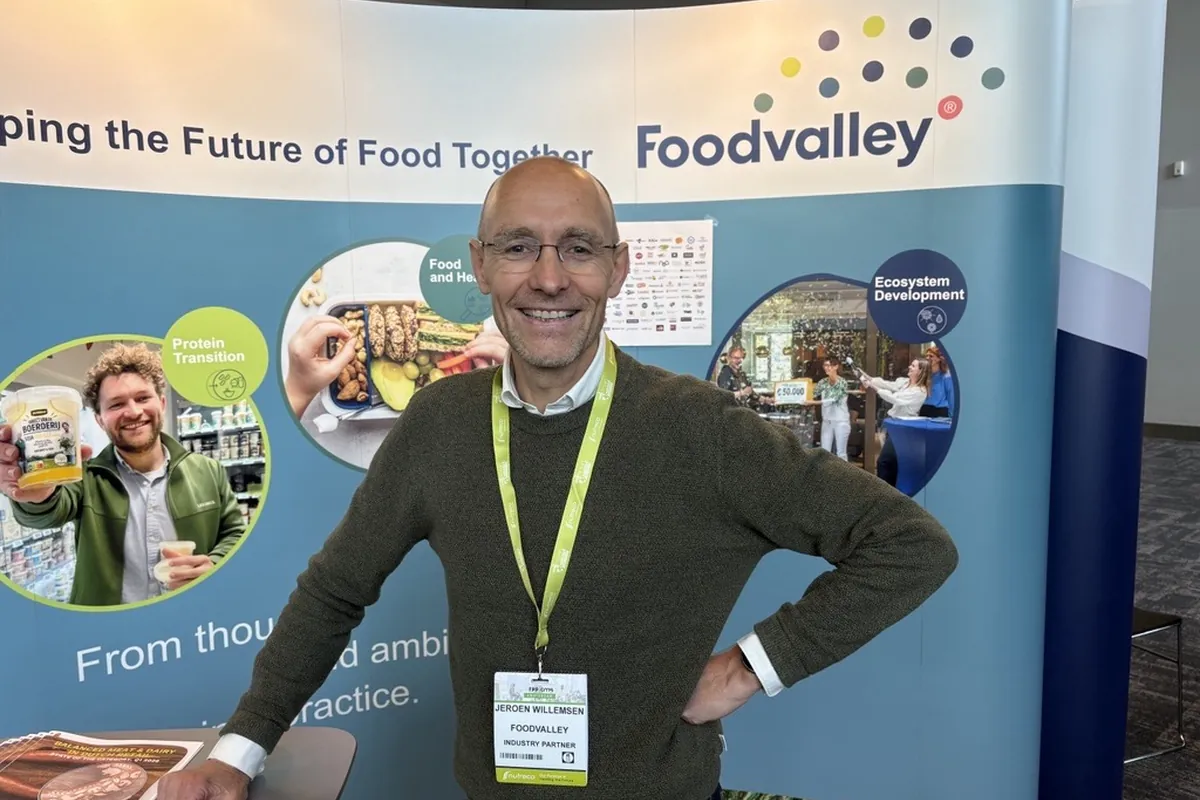 Rising meat prices are giving manufacturers another reason to revisit plant-enriched recipes, says Jeroen Willemsen at Foodvalley.He described the current interest in hybrid foods as a “revival” of traditional formulation practices, rather than the emergence of an entirely new category.
Plant-enriched meat preparations were common during the previous century. “I’ve been shown confidential recipe books from major meat producers dating back to the 1960s. These recipes contained an abundance of plant-based ingredients because they helped manufacturers develop products with excellent nutrition, texture, flavor, and taste,” he told us.
Willemsen added that the alternative protein industry has successfully engaged early adopters, but reaching mainstream consumers requires strategies that respect existing eating habits.
Rather than encouraging shoppers to give up familiar foods, manufacturers can reformulate conventional products with additional plant ingredients.
Foodvalley’s Dutch retail research, published in April 2026, analyzed 115 plant-enriched meat and dairy products. It included 111 meat preparations and four dairy products, depicting how existing categories are being reformulated with plant ingredients.
He described combining plant- and animal-based ingredients as “complementary.”
“That description is appropriate because animal- and plant-derived ingredients can provide complementary benefits when they’re incorporated into the same product,” Willemsen told us.
He sees this as a “new recipe strategy,” where manufacturers adjust established formulations rather than introducing unfamiliar products. This approach could help increase plant ingredient consumption without requiring substantial changes in consumers' everyday routines.
Rising meat prices may also create commercial incentives for manufacturers to explore such hybrid formulations.
Transparency and regulation shape commercialization
Despite their potential, hybrid foods face challenges related to labeling and lengthy EU novel-food approval processes for certain emerging ingredients, delaying commercialization.
Hybrid food manufacturers also face questions about how to communicate the presence of plant-derived ingredients.
“The alternative protein sector right now is still in the trust-building phase with the consumers. So, we definitely need transparency in the labeling,” Mukherjee told FPP attendees.
He stressed that manufacturers should communicate what their products contain, including the proportions of mycoprotein and plant protein. Brands could use labeling to communicate sustainability benefits, including carbon footprint reductions.
 AAK’s Tore Kiilerich Johansen told us growing interest in sustainability and alternative proteins among consumers and policymakers is opening new business opportunities.However, Nair argued that sustainability is unlikely to be the main reason consumers purchase hybrids. He suggested it should be a secondary message rather than the principal front-of-pack selling point.
“Consumers care about the nutrition, taste, and price points,” he said.
Regulatory considerations also affect certain emerging ingredient technologies.
During the panel discussion, AAK’s Johansen raised concerns about lengthy EU novel-food authorization procedures and their implications for EU startups.
“In Europe, we have a very tight regulatory status. The problem is that Europe has a lot of government funding and good opportunities for startups to get started, but more and more startups launch in the US or Singapore,” he told event visitors.
“I’m not advocating for completely lenient regulation where anything can be put out there — that wouldn’t be good either. But the timelines are too long.”
What lies ahead for hybrids?
In the future, industry experts anticipate opportunities for hybrid formulations to expand beyond conventional meat alternatives into dairy, nutrition-focused snacks, and other familiar food categories.
AAK’s Johansen identified hybrid dairy as a promising area, while advances in mycoprotein, functional fats, and vegetable fibers are expanding the formulation options available to manufacturers.
For SMAQO’s Nair, continued ingredient innovation and improvements in production scale could make hybrid products more accessible, provided manufacturers maintain familiar taste and competitive pricing.
Meanwhile, Foodvalley’s Willemsen cautioned that “hybrids are not a ‘silver bullet’ for the protein transition,” but one of several pathways toward making more balanced food products available at scale.