

Rising consumer interest in hybrid meat driven by taste, quality & price, finds Beneo-Meatless study


Key takeaways
- Consumer acceptance of hybrid meat products is rising, especially among flexitarian consumers, a study by Beneo’s brand Meatless finds.
- Taste, quality, and nutritional benefits are the key drivers of consumer purchase intent for hybrid meat.
- Hybrid meats provide a solution to rising meat costs as meat manufacturers seek cost savings and sustainability in production.

Consumer acceptance for hybrid meat products — where plant-based ingredients replace part of the meat content — is rising, particularly among flexitarian consumers, a study by Beneo’s brand Meatless has revealed. The findings highlight why food manufacturers must prioritize taste, quality, and nutritional benefits in NPD, especially to increase hybrid meat’s appeal among flexitarian and health-conscious consumers.
Meatless, which calls itself “one of the first” suppliers to focus on hybrid solutions, processes faba beans, mycoprotein, rice, and quinoa into texturizing solutions and semi-finished products for plant-based and hybrid meat and fish applications.
The company surveyed 3,500 consumers in the UK, Germany, and the Netherlands from November to December 2025, and found that hybrid meat appeals especially to flexitarian consumers who want to reduce meat consumption without sacrificing taste, price, or quality.
Taste and quality emerged as the key drivers of purchase intent, with a preference for a “real meat taste,” rather than positive features of the plant-based ingredient.
Niels E. Hower, managing director at Meatless, says the idea to conduct the study stemmed from the observation that meat manufacturers are testing the waters by putting small volumes of such hybrid meat products on shelves initially to evaluate consumer acceptance.
“If those volumes don’t convert to sales, the outlook for hybrids may be questionable. That is exactly why we have recently conducted thorough consumer research across Germany, the Netherlands, and the UK to gain insights into what the consumer is looking for when it comes to hybrid meat products, and what terminology is most appealing,” he tells Food Ingredients First.
“This in turn, allows us to support our customers with their successful product development. For example, the findings highlight that taste and price are the main concerns for consumers that could be barriers to buying hybrid meat products.”
The company’s Meatless texturates directly address these factors by allowing producers to reduce recipe costs. Manufacturers can also integrate the ingredients “seamlessly into their production process and improve nutritional profiles,” as well as increasing the juiciness of burgers, he adds.
Impact of social media and protein demands
Globally, consumers are interested in hybrid meat products as they feel these options address a combination of health, taste, and ethical concerns, according to Innova Market Insights.
 Niels E. Hower: Finding the right on-pack labeling and marketing messaging will be crucial to drive purchase intent for hybrid meat.Meatless’ survey showed that for UK consumers, taste, quality, and price, as well as nutritional considerations, are primary drivers behind buying hybrid meat products. Six in ten consumers expressed willingness to buy hybrid meat products “if the taste is good and the product is offered at an acceptable price,” says Meatless.
It also shows that UK consumers lean toward nutritional factors, particularly high protein content, especially among Millennials and Gen Z consumers. In Germany and the Netherlands, while still relevant, nutritional considerations are less of a dominant factor compared to the UK.
“Thanks to the health halo that social media and the wider fitness industry has created around the consumption of protein for muscle growth, this is fuelling demand, along with other drivers such as a need for energy and stamina and for weight management,” explains Hower.
“As a result, protein is proving a very popular choice, with 81% consumers across the globe saying they are (extremely) interested in it, and two out of five saying it is the most important ingredient to them.”
When it comes to product formats, the survey found sausages to be the top preference for UK shoppers, with almost half opting for that version, followed by minced meat (33%) and hamburger patties (15%).
How flexitarians impact hybrid meat innovation
Despite the current dominance of animal proteins, Hower points out that more consumers are bolstering their protein consumption with plant-based or hybrid protein options.
Rising awareness around sustainability issues, such as the changing climate and resource conservation, is also driving more consumers toward plant-based alternatives.
“Almost one in three consumers globally now identify as flexitarian, and four in five consumers have already adopted, or are on their way to adopting, a meat-reduced lifestyle. In response to this, we are seeing an increasing number of producers reformulate using plant-based protein sources. In fact, figures now show that 63% of consumers are (extremely) interested in plant-proteins,” he tells us.
 Four in ten UK consumers identify as flexitarian, with a preference for sausages and minced meat formats.In hybrid meat formulations, the plant-based component enriches protein.
“For instance, Meatless’ newest ingredient is a high-protein frozen faba bean flake ideal for hybrid meat products with high plant protein content. Off-white in color and ranging in flake size from 2 to 20 mm, it contains 13% protein and delivers a firm bite.”
This textured faba bean protein can be used in hybrid-meat applications with a “higher plant-based to meat ratio,” allowing manufacturers to reduce meat content without compromising taste, texture, or nutritional value.
“On-pack, it can be declared as ‘textured faba bean protein.’ Beyond its technical benefits, this new flake also ticks all the boxes — from sustainability and taste to a more favorable cost-in-use compared to soy and pea protein alternatives,” Hower adds.
Meanwhile, the findings also point to premium meat quality, such as premium cuts, certified meat, real taste and texture, playing a decisive role in choosing hybrid meat on market shelves.
Addressing rising meat costs
Besides allowing manufacturers to tap into growing consumer demand, the study also points to hybrid meat’s potential as a practical response to the surge in meat costs.
To address these concerns, Meatless has designed a cost calculator that manufacturers can use to compare their recipes with hybrid formulations in terms of costs, CO2 equivalents, saturated fat, and energy.
“We are seeing huge interest from meat producers because of the cost reduction potential that our Meatless texturates offer them as well as the push from retailers — their direct customers — to reduce their scope 3 emissions in the meat category,” says Hower.
“The texturates’ frozen format results in improved processing quality as it can be easily combined with animal protein.”
Hybrid meat’s consumer acceptance
Hybrid meat offers a gateway for consumers who want to reduce meat consumption but are not ready to fully switch to plant‑based options.
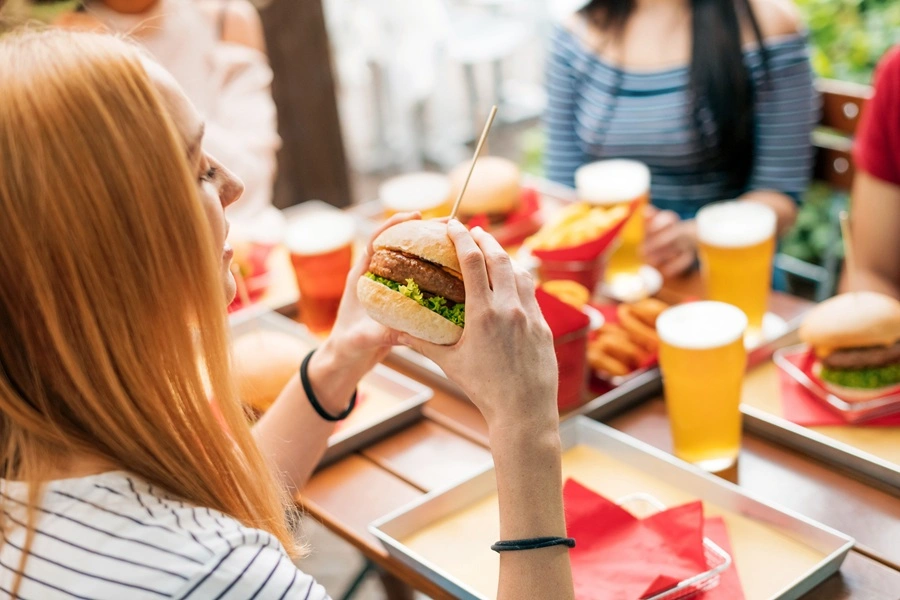 Millennials and Gen Z consumers are open to hybrid products as long as they deliver on taste and remain affordable.“For the food industry, this creates a clear opportunity for manufacturers to innovate and reformulate popular, everyday products. Categories such as sausages, minced meat, and burger patties are especially well placed to evolve, helping brands meet growing demand for options that balance health, sustainability, and familiarity without asking consumers to compromise,” Hower notes.
“Our research has shown that there are clear regional differences when it comes to terminology and claims. It is therefore crucial how retailers position hybrid meat products. Whether they’re marketed as blended, enriched, or mixed-source, one thing is certain: ‘hybrid’ is only industry jargon and there’s a broad consensus that it’s not the right term to use.”
He describes product positioning as “crucial,” along with the need to clearly reassure the consumer on the product quality and good taste. Highlighting additional benefits, such as an improved nutritional profile and being a more responsible choice, is increasingly important too.
“Ultimately, product quality alone isn’t going to cut it with consumers. People need to properly understand what hybrid or blended products are and why they’re worth choosing. It’s no longer a question of if or when, it’s a matter of how to create and successfully position hybrid and blended meat products in the market to win,” Hower concludes.