


Fi Europe 2026 Innovation Awards: Winners tackle color stability, dairy alternatives and decarbonization

Key takeaways
- Fi Europe 2026 Innovation Awards recognize eight winners from 133 submissions across alternative proteins, dairy alternatives, manufacturing, foodtech, and sustainability categories.
- Winners include GNT’s spirulina stabilization technology, Nourish Ingredients’ dairy fat alternative, and Arborea’s BioSolar Leaf microalgae cultivation platform.
- The awards ceremony in Frankfurt introduced the inaugural Alternative Protein Innovation Award this year.
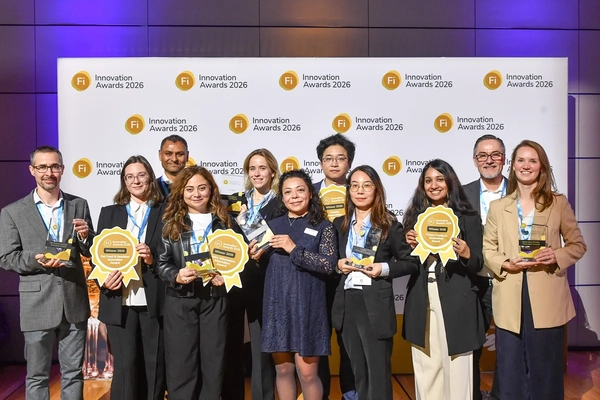
Fi Europe has announced eight winners of its 2026 Innovation Awards in Frankfurt, Germany, recognizing advances ranging from heat-stable natural blue colors and dairy-like fats to cultivated pet food and low-carbon agricultural ingredients.
The winners were selected from 25 finalists and 133 submissions by a nine-member expert jury chaired by professor Colin Dennis of the International Food Information Service. The awards ceremony took place yesterday evening (Nov 17) and introduced an Alternative Protein Innovation category for the first time.
“Innovation across a broad range of categories is increasingly important at a time when governments and industry are committed to improving the sustainability of our food systems and enhancing the availability of ingredients and products which contribute to healthy lifestyles for everyone,” says Dennis.
Food Ingredients First caught up with several winners at the ceremony to discuss their technologies, commercial progress, and plans to bring their innovations to market.
Plant-based Innovation: GNT
GNT won for its patented technology stabilizing spirulina-derived blue color in beverages, where acidity, pasteurization, and storage can otherwise degrade the pigment and cause precipitation.
The system uses “lambda carrageenan,” a red seaweed-derived hydrocolloid, to form protective complexes with spirulina’s protein-bound pigment without modifying the pigment itself, Stephan Buecker, R&D scientist at GNT, tells us.
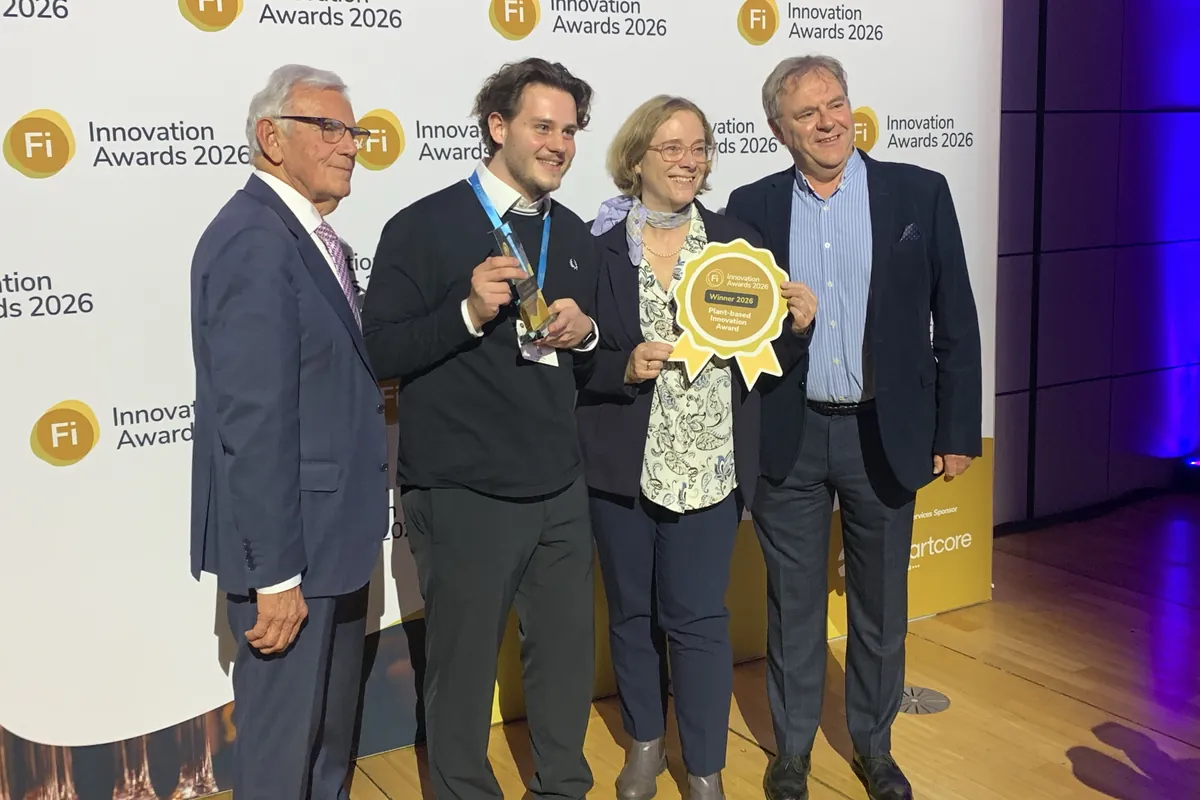 Stephan Buecker (second from left): GNT’s spirulina stabilization technology can extend shelf life and improve natural blue color stability in beverages.“We didn’t change the pigment in any way. We simply protect it.”
The technology retains 93% of color during pasteurization, approximately “doubling color retention” compared with its previous approach, he adds. It also improves colloidal stability, helping prevent sediment from collecting at the bottom of a drink.
Buecker explains that the formulation performs best at pH 2.7–3.5.
“Each application has its own challenges, but we know the operating window would be suited for soft drinks, ready-to-drink beverages, and syrups.”
He points to growing inquiries as US brands move away from synthetic dyes: “The ones that can easily switch are switching right now, and the others are probably a bit more careful.”
Dairy Alternative Innovation: Nourish Ingredients
Nourish Ingredients secured the dairy alternative prize for Creamilux, its dairy-like lipid obtained from sunflower, designed to reproduce the creaminess and functionality of dairy fat in plant-based and hybrid foods.
The Australian company says its animal-free ingredient works at low inclusion levels, helping formulators address sensory limitations often associated with conventional vegetable fats.
“For me, it’s a big reward,” Anna El Tahchy, CTO at Nourish Ingredients, tells us. “It really shows how a start-up can innovate something, make it, scale it, and make a dream work.”
El Tahchy underscores that the company is now a fully commercial scale-up, with its ingredients on the market in six countries.
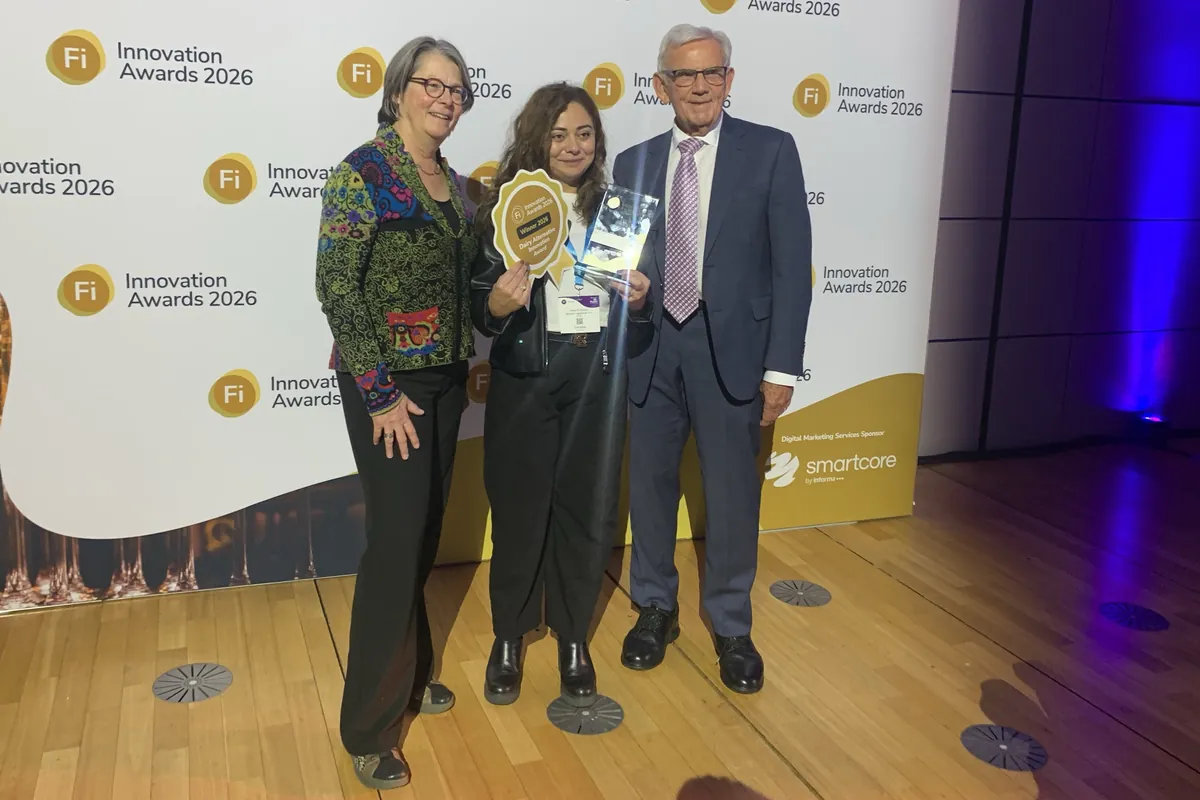 Anna El Tahchy (center) with her team at Nourish Ingredients, which won for its Creamilux dairy fat alternative.“We have very good commercial traction from a range of applications on the dairy and meat sides, whether it’s fully plant-based, hybrid, or traditional. We are bringing this innovation to consumers to meet their expectations for meat, protein, and dairy experiences.”
Future Foodtech Innovation: Arborea
Arborea took the future foodtech prize for BioSolar Leaf — a cultivation platform that harnesses sunlight and carbon dioxide to grow microalgae without relying on fertile farmland.
Dr. Kaly Chatakondu, global commercial director, tells Food Ingredients First that Arborea has closed its Series A fundraising and begun building its first full-scale factory in Portugal. It is targeting operations from mid-2027.
“We have got offtake and multinational agreements in place,” he says. “This technology is now becoming very real in everyday consumer products.”
Arborea expects finished products to potentially reach market shelves by year-end. Its first offerings will center on BioSolar Spirulina, Chatakondu says.
“First, we are starting with nutraceuticals, slushies, smoothies, and ice creams with our partner Vita Actives, which helps us market this throughout the world.”
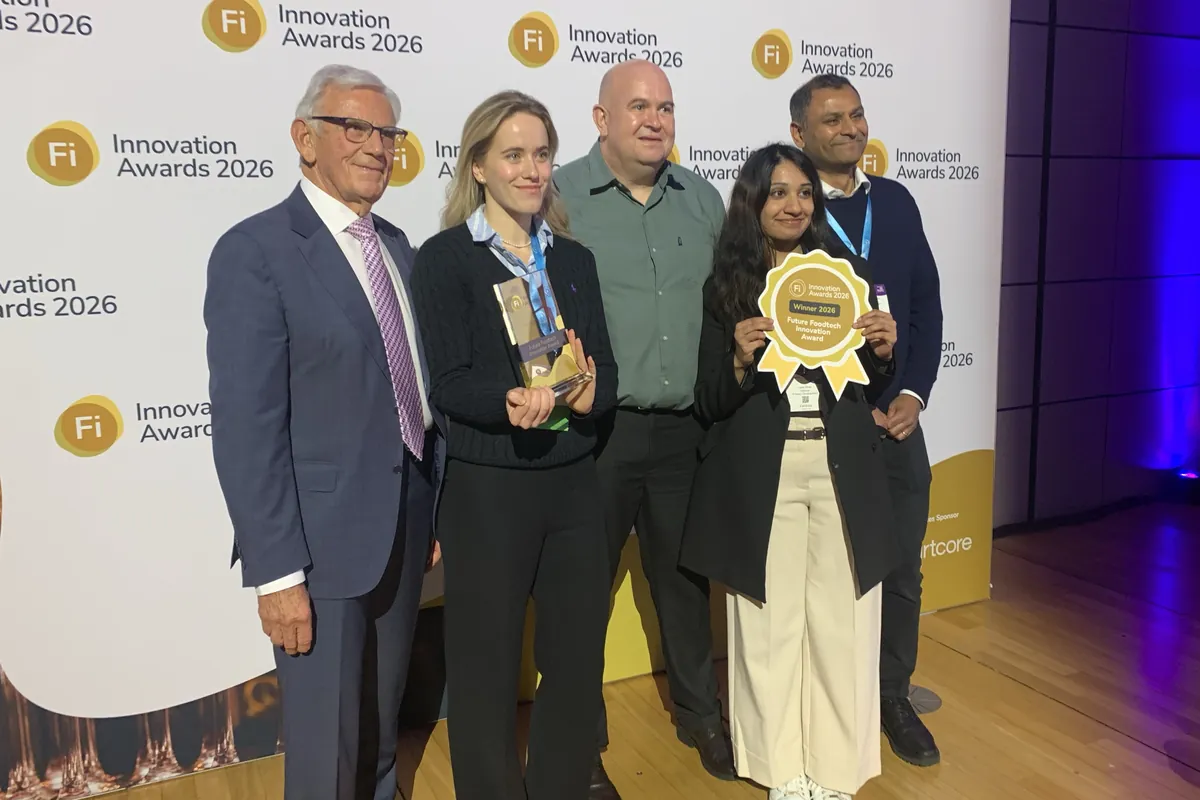 Arborea secured the innovation award for its BioSolar Leaf technology, which uses sunlight and carbon dioxide to cultivate microalgae for food ingredients.Extracted spirulina protein is expected to follow about a year later. Chatakondu also identifies animal nutrition and crop biostimulants as potential markets.
Alternative Protein Innovation: dsm-firmenich
dsm-firmenich won the inaugural category for its Vertis textured vegetable proteins (TVPs) with ModulaSense, which integrates taste modulation during pea protein extrusion.
The technology aims to reduce bitterness and beany, earthy, and cereal notes in plant-based and hybrid meat products for a more neutral base. It reduces the need for additional masking ingredients.
Food Manufacturing Innovation: Spectral Blue
Spectral Blue received the manufacturing award for its continuous Multi-Wavelength, High-Intensity (MWHI) antimicrobial blue light technology.
The non-chemical, UV-free system is developed for food processing environments and uses blue light to reduce microbial contamination on production equipment and surrounding surfaces. This includes slicing machinery and conveyors in meat and fish operations.
Health Innovation: WeCare Probiotics
WeCare won for Weizmannia (Bacillus) coagulans BC99, a spore-forming probiotic strain intended to withstand processing challenges and remain viable in different food formats.
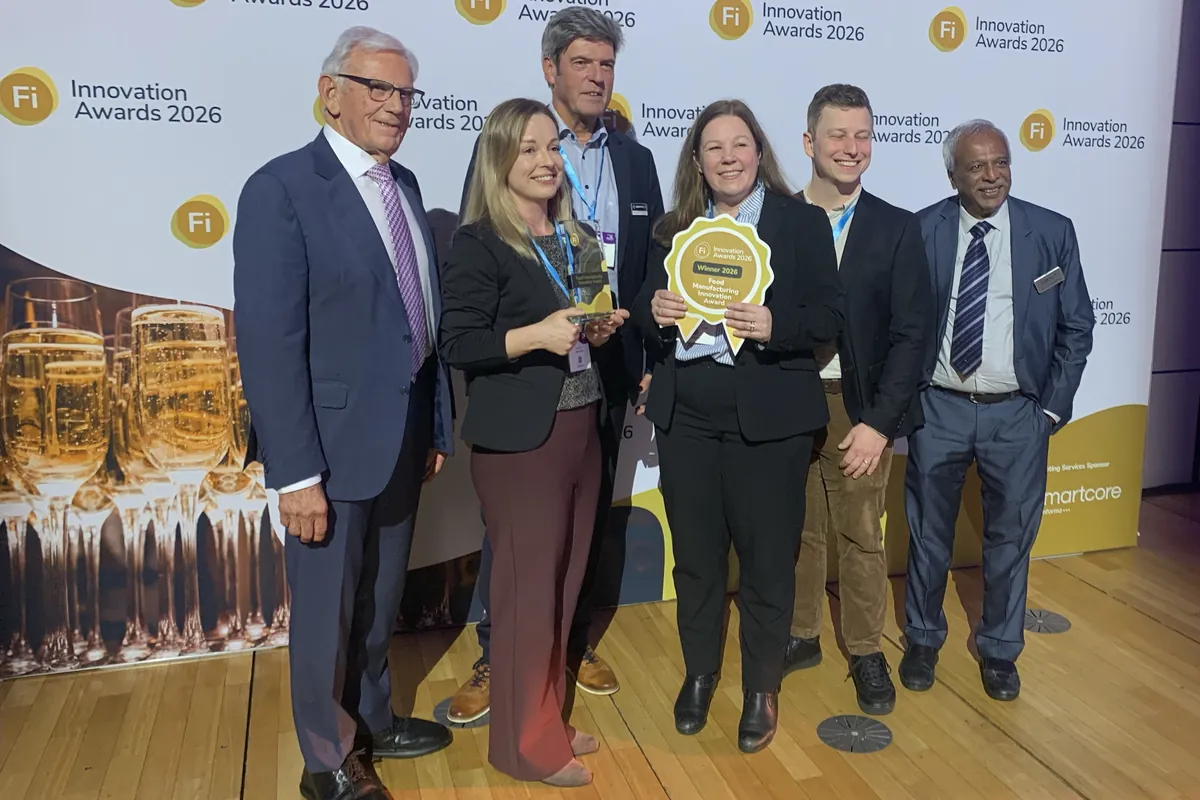 Spectral Blue won for its antimicrobial blue light technology, which continuously reduces microbial contamination in food processing environments.The company cites more than 20 clinical studies and 30 scientific publications examining applications spanning digestive, immune, metabolic, emotional, and physical health.
Pet Food & Nutrition Innovation: Bene Meat
Bene Meat Technologies won in the category for Coolty Meat — a wet dog food developed with Forza10 containing 26% cultivated meat.
Bene Meat describes the innovation as a “monoprotein formulation” that targets dogs with food intolerances, representing a commercial application of cultivated meat in pet nutrition.
Sustainability Innovation: Tereos
French agricultural cooperative Tereos won for Cultivate Net-Zero — an initiative combining regenerative farming of sugar beet, wheat, and corn with industrial decarbonization to help food manufacturers reduce supply chain emissions.
The program offers companies product carbon footprint data certified to ISO 14067 for ingredients including sugar, alcohol, gluten, glucose, and sorbitol. It also supports measurable progress against emissions targets.
Four other nominees received highly commended recognition: Bunge’s PurePro in alternative proteins, dsm-firmenich’s Maxiren Evo in future foodtech, ADM’s Priome Oral Care Postbiotic in pet nutrition, and Roquette’s verified transport decarbonization initiative in sustainability.
“These awards truly represent the best examples of creativity and innovation,” concludes Dennis. “I believe they will drive further innovation by demonstrating what is possible, and thus, stimulate new ingredient and product launches at future Fi Europe events.”