


How Roquette and Tetra Pak tackle texture and stability challenges in high-protein drinks

Key takeaways
- Higher protein loads can make RTD drinks thicker and more prone to grittiness, sediment, and gelation during storage.
- Roquette pairs low-viscosity pea protein with controlled hydration, while Tetra Pak adjusts shear, pH, and heat treatment to suit the formulation.
- Direct UHT, heat-stable proteins, and liquid concentrates offer routes to higher protein levels while protecting taste and texture.

A ready-to-drink (RTD) beverage can hit its protein target and still fail on texture. As manufacturers raise the grams per serving, they have to manage how thick the drink becomes during production and whether it stays smooth months later.
Food Ingredients First speaks with Benjamin Voiry, head of marketing for plant proteins at Roquette, and Vance Sowter, line solution manager, CoE Prepared Food at Tetra Pak, about how protein selection, mixing, and heat treatment can help manufacturers raise protein levels while protecting taste, texture, and shelf stability.
Sowter says: “Consumers increasingly want 10 g, 20 g, or even 30 g of protein per serving, but still expect a smooth, enjoyable drink that remains stable for 9–12 months at ambient temperature. As protein concentration increases, it becomes harder to manage thickness, texture, and heat stability.”
Choosing a protein grade
Voiry highlights that heat, shear, and pH affect how well proteins dissolve, how much viscosity they build, and whether they form a gel. Those properties can work differently across applications.
“For example, in a high-protein fermented dessert, viscosity development is welcomed because it delivers a creaminess consumers expect from a spoonable product like a yogurt. In a protein-enriched beverage, however, that same viscosity could make the drink too thick and difficult to consume.”
Roquette’s Nutralys range includes pea and fava bean protein isolates with different functional profiles. For beverages, Voiry points to one grade designed to keep viscosity down.
“For protein-enriched beverages, Nutralys S85 Plus pea protein isolate supports low viscosity compared to a standard grade isolate. This allows manufacturers to incorporate more protein into the formulation, while keeping the beverage smooth and appealing for consumers.”
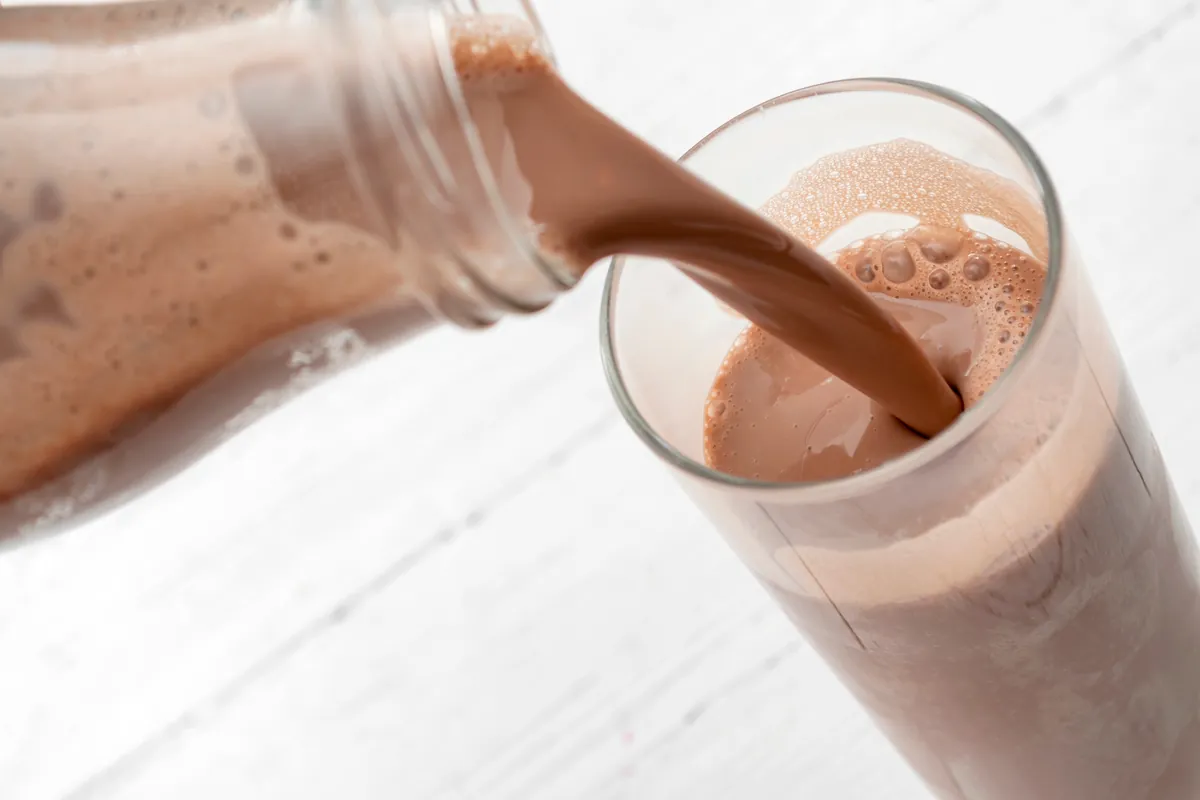 Manufacturers must balance a drink’s thickness during production and its smoothness months later.The recipe can also change when more protein goes in. Voiry explains: “Increasing protein often means reducing or removing another ingredient, which may have had a technical role in the recipe. If the substitute is unable to fulfill that role, the result could be a product higher in protein but harder to produce and less enjoyable to eat.”
Timing heat, shear and pH
Sowter explains that the combined effect of heat, shear, and pH decides whether a protein drink stays smooth and stable or thickens, gels, or forms sediment over its shelf life.
“Whey proteins begin to unfold and aggregate at around 70–75°C. If aggregation goes unchecked, it can cause grittiness, fouling, and gelation during storage. The way heat is applied also affects flavor, color, and viscosity.”
“Direct [ultra-high temperature] UHT (steam injection or infusion) heats and cools within seconds, so the product sees much less heat overall than with indirect heating. That means less of a “cooked” flavor, less ‘Maillard browning,’ and lower viscosity — all of which matter at protein levels of 8–12%.”
Roquette and Tetra Pak give different examples of how manufacturers can manage shear during mixing. Voiry says: “In RTD beverages containing Nutralys pea protein, we recommend hydration at 50°C to optimize solubility and low shear during powder mixing.”
Tetra Pak uses high-shear vacuum mixing to help hydrate proteins while limiting oxidation and foaming. Sowter says aseptic homogenization after direct UHT breaks up aggregates formed during heating.
Acidity also affects how proteins behave under heat, and manufacturers can use that relationship to develop clear whey drinks.
“Acidic whey drinks (below around pH 3.5) can remain clear and stable when heated. Dairy drinks with a neutral pH are more sensitive to small changes in acidity and calcium levels, so the pH needs to be adjusted before heating rather than afterward,” says Sowter.
Clean label pressure
Protein powders can differ between suppliers and batches in terms of solubility, mineral content, and previous heat treatment. This means a “formulation that performs well in the laboratory may behave differently at commercial scale,” explains Sowter.
He also sees demand for simpler ingredient lists putting more pressure on the process. “Growing demand for clean label products is encouraging manufacturers to reduce their reliance on stabilizers, phosphates, and emulsifiers, placing greater pressure on processing techniques to maintain product stability.”
Higher protein levels can also affect how long a plant can run between cleanings. The way heat is applied to whey proteins affects drink flavor, color, and viscosity.
“High-protein products can cause faster build-up of deposits in heat exchangers, shortening production runs and increasing cleaning requirements, water consumption, and energy costs.”
Tetra Pak’s Product Development Centres let manufacturers test formulations at pilot scale under industrial processing conditions. Sowter says protein concentration, heat sensitivity, flavor requirements, and total cost of ownership all factor into the choice between direct and indirect UHT.
What comes next
Voiry at Roquette says that looking ahead, the “most promising progress” lies in grades developed for specific functional behaviors.
“Paired with close attention to the formulation and the process, this will allow brands to increase protein content while keeping the all-important texture and taste of the finished product intact.”
Moreover, Sowter at Tetra Pak sees promise in direct heating technologies, such as steam injection and infusion. He also points to liquid concentrates as a way to improve consistency.
“Meanwhile, membrane-concentrated liquid bases, such as ultrafiltered milk, offer an alternative to reconstituted powders, with potential benefits for flavor, clean label formulations, and consistency.”
“We also see advances in protein ingredients themselves, including micellar casein isolates, heat-stable whey fractions, and partially hydrolyzed proteins designed to better withstand UHT processing.”