
Barry Callebaut returns to volume growth despite challenging chocolate market

Key takeaways
- Barry Callebaut returns to volume growth in Q3, with group volumes rising 5.7% in Q3, while volumes remained down 2.8% over the first nine months.
- Global Chocolate volumes began recovering, declining 2.3% for the nine months but growing 3.2% in Q3, despite a still-challenging chocolate market.
- Barry Callebaut expects a gradual recovery, while advancing its Focus for Growth strategy and operational improvements.
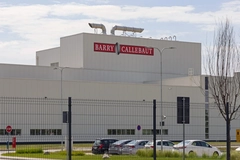
Barry Callebaut returned to volume growth in the third quarter of fiscal 2025/26, although total volumes remained down across the first nine months. Group volumes rose 5.7% in Q3, helping narrow the nine-month decline to 2.8%.
The recovery was supported by stronger Global Cocoa demand, continued momentum in AMEA, and improved service levels in North America.
Global Chocolate volumes also turned positive in Q3, growing 3.2%, but remained down 2.3% across the first nine months. Barry Callebaut says it expects only a gradual recovery, as the chocolate market remains challenging.
According to the company, Food Manufacturers (-2.3%) was impacted by challenging market demand dynamics and supply disruption in North America in the first half. The division returned to growth in the third quarter.

Volumes in Gourmet also decreased for the nine months, down by 2.8%, as the declining cocoa bean price environment resulted in “intense competitive dynamics.”
Signs of stabilization amid challenging conditions
Sales revenue was CHF 9,557.1 million (US$11.85 billion), a decrease of 9.5% in local currencies, reflecting lower volume and negative cocoa bean-linked pricing.
“In the third quarter, sales revenue decreased by -21.0% in local currencies (-23.4% in CHF), with pricing declining significantly as a result of lower cocoa bean prices,” says the company.
The group now expects a volume decrease of around -1% for the fiscal year 2025/26.
“We are encouraged by the return to positive volume growth in the third quarter, which partly reflects early signs of stabilizing fundamentals and service levels in North America. At the same time, the chocolate market remains challenging, and our improvement will be gradual,” says Hein Schumacher, CEO of Barry Callebaut.
“During the quarter, we took targeted steps to evolve our organizational setup and advance our Focus for Growth journey by strengthening regional empowerment while preserving global functional alignment. We are unwavering in our focus on further reinforcing our fundamentals to gain market share and drive sustained profitable growth,” says the former Unilever boss who Barry Callebaut appointed in January.
Barry Callebaut’s strategic reset
As part of plans to drive growth in a volatile cocoa market, Barry Callebaut launched its Focus for Growth initiative in June. This action plan aims to accelerate operational and financial performance as well as stabilizing core operations and “concentrating resources on a reduced number of priorities with the highest potential for value creation for all stakeholders.”
At the time, Schumacher said that the Focus for Growth plan — which came amid continuing challenges in the cocoa market following a period of record cocoa prices which began to ease at the beginning of 2026 — marks a shift toward sharper investment choices combined with driving operating discipline across the group.
“Following a period of unprecedented industry disruption and transformation, we must first stabilize our fundamentals, restore customer service, and prioritize customer-centricity. At the same time, we are accelerating our focus on higher-value and differentiated solutions for everyday chocolatey occasions.”
Barry Callebaut is also expanding its alternative chocolate offerings through a partnership with Planet A Foods to develop and scale cocoa-free chocolate alternatives worldwide.
Alvaro Alonso, president Western Europe at Barry Callebaut, and Max Marquart, CEO of Planet A Foods, previously spoke to Food Ingredients First about cocoa-free formulations, their role in strengthening supply chain resilience, and the consumer and sustainability trends reshaping chocolate innovation.
In February, Barry Callebaut said it will invest €250 million (US$297 million) in a multi-year upgrade plan for its Wieze factory in Belgium, the largest chocolate production facility in the world. A separate €125 million (US$149 million) investment is also earmarked for the company’s factory in Halle, Belgium.
In the same month, the company opened a global innovation center in Singapore to pioneer chocolate product development using AI.



Upcoming webinars

2027 Food Safety Risks for Quality & Compliance Leaders
FoodChain ID

Formulating for function: Developing benefit-led beverages with natural colours, botanicals, and flavours
Givaudan Sense Colour

Let's reveal the grain potential: Innovate
Meurens Natural