
Nestlé to build AI-enabled Nescafé hub in Thailand in CHF563M investment

Key takeaways
- Nestlé will invest CHF563 million (US$688 million) to build a new AI-enabled Nescafé production and distribution hub in Samut Prakan, Thailand, expected to open in late 2028.
- The facility will make soluble coffee, coffee mixes, and RTD coffee, with a reported capacity of 170,000 metric tons per year and more than 520 new technical jobs.
- The project will use automation, robotics, AI systems, and aroma-recovery technology, while supporting local sourcing and Thailand’s role as a regional coffee manufacturing hub.
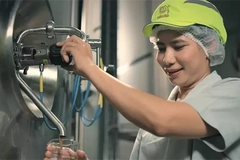
Nestlé is investing CHF563 million (US$688 million) in a new Nescafé production facility and distribution center in Thailand. The move strengthens Southeast Asia’s coffee manufacturing capacity, as demand for soluble coffee, coffee mixes, and ready-to-drink (RTD) beverages rises across domestic and export markets.
The greenfield facility, located in Samut Prakan province, is expected to begin operations in the latter part of 2028. It will produce Nescafé soluble coffee, coffee mixes, and RTD coffee beverages. An on-site distribution center is intended to shorten delivery times, improve inventory management, and increase supply chain agility.
According to Thailand’s Board of Investment (BOI), the facility will be based at Araya Industrial Estate and have an annual capacity of 170,000 metric tons. The BOI says the project is expected to create over 520 jobs for Thai engineers and technical specialists.

Automation and aroma recovery
Nestlé says the plant will deploy advanced technology, automation, and AI-enabled systems to support quality, efficiency, and sustainability. This includes new coffee extraction and aroma recovery technology designed to preserve aromas released during roasting and deliver a fresher coffee experience. Robotics and automated systems will also be used across packing, transport, and inventory management.
The investment underscores the growing role of digitalization in F&B manufacturing, particularly in high-volume beverage categories where manufacturers are looking to build resilience, reduce operational waste, and respond more quickly to changing regional consumption patterns.
Coffee as a strategic growth platform
Nestlé describes Thailand as a dynamic coffee market worth roughly CHF1 billion (US$1.24 billion) and one of its biggest coffee markets globally. Remy Ejel, executive vice president and CEO of Nestlé’s Zone Asia, Oceania and Africa, says coffee is Nestlé’s largest global business and that the investment will increase Nescafé production capacity in Southeast Asia.
The BOI notes that Nescafé has led the Thai coffee market for more than 50 years, with more than half of the market share. The agency says the project will position Thailand as a strategic production and logistics hub for Southeast Asia.
Local sourcing and farmer support
The factory will support Thai farmers and suppliers through the use of local ingredients and raw materials worth more than CHF100 million (US$124 million) annually. The BOI separately places annual local sourcing at US$130 million, or THB4.3 billion, across agricultural inputs and raw materials.
The company says the new site builds on more than 40 years of support for Thai coffee farmers, including the supply of coffee plantlets and programs focused on regenerative agriculture and climate resilience.
Nestlé will also work on upstream agricultural development through research into climate-resilient coffee varieties, distribution of high-quality saplings, and farmer training in sustainable, high-yield cultivation practices, according to the BOI.
Alignment with Thailand’s BCG agenda
The project has received BOI investment support and aligns with Thailand’s Bio-Circular-Green economic agenda. The BOI says the use of AI-driven systems and robotic automation is intended to maximize operational efficiency while minimizing the facility’s environmental footprint.
Narit Therdsteerasukdi, secretary general of the Thailand BOI, says the investment will strengthen Thailand’s coffee value chain “from farming and processing to logistics and export,” while supporting the country’s strategy to become a leading F&B production base.


Upcoming webinars

2027 Food Safety Risks for Quality & Compliance Leaders
FoodChain ID

Formulating for function: Developing benefit-led beverages with natural colours, botanicals, and flavours
Givaudan Sense Colour
Let's reveal the grain potential: Innovate
Meurens Natural