



Cocoa prices ease but alternatives and reformulation stay in focus
Favorable weather conditions lift supply expectations as cocoa exporters lock in future prices

Key takeaways
- Cocoa prices drop over 10% year-on-year as favorable weather and harvest forecasts in West Africa boost supply expectations.
- The EU Deforestation Regulation continues to reshape sourcing costs, requiring traceability and due diligence for cocoa exports.
- Producers, exporters, and chocolate makers are hedging, reformulating products, or exploring alternatives to manage price volatility.
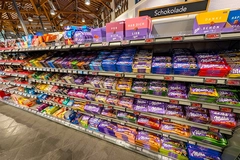
Cocoa prices have nosedived in early 2026, signaling a shift in the global cocoa market that has been battered by high prices and supply chain volatility in recent years. The turnaround is driven by buoyed confidence in harvest prospects in West African cocoa-growing regions amid favorable weather forecasts.
Meanwhile, exporters are reportedly locking in future prices for cocoa beans to minimize the risk from unexpected market volatility and ensure more stable costs and revenues.
Respite from record high cocoa prices
A myriad of weather conditions, climate change-related problems, and supply chain difficulties drove up the price of cocoa in 2024 and 2025, leading to record highs. Erratic rainfall, drought, and diseases such as Cocoa Swollen Shoot Virus have been impacting cocoa yields in Côte d’Ivoire and Ghana. These two regions collectively dominate global cocoa production, providing more than 60% of the world’s supply.

But, cocoa market dynamics are changing, as much better weather and subsequent crop forecasts are on the horizon in Côte d’Ivoire (where early flowering is showing some promising signs for harvests), and Ghana, where cocoa exporters are confident about harvest expectations.
These factors, among others, are contributing to declines in cocoa prices due to the anticipated increase in production.
Cocoa prices dropped more than 10% year-on-year in the first 12 days of 2026, building on a downward trend that began in late 2025.
The International Cocoa Organization daily price data for early January 2026 show cocoa at around US$5.4k–US$6.0k/ton.
Cocoa fluctuations through 2026
While good weather predictions support supply balance, there are reports that West African exporters are turning to futures contracts to lock in prices and mitigate volatility.
Weather, of course, is volatile, and a single incident, such as a drought or heatwave, could tighten supply again.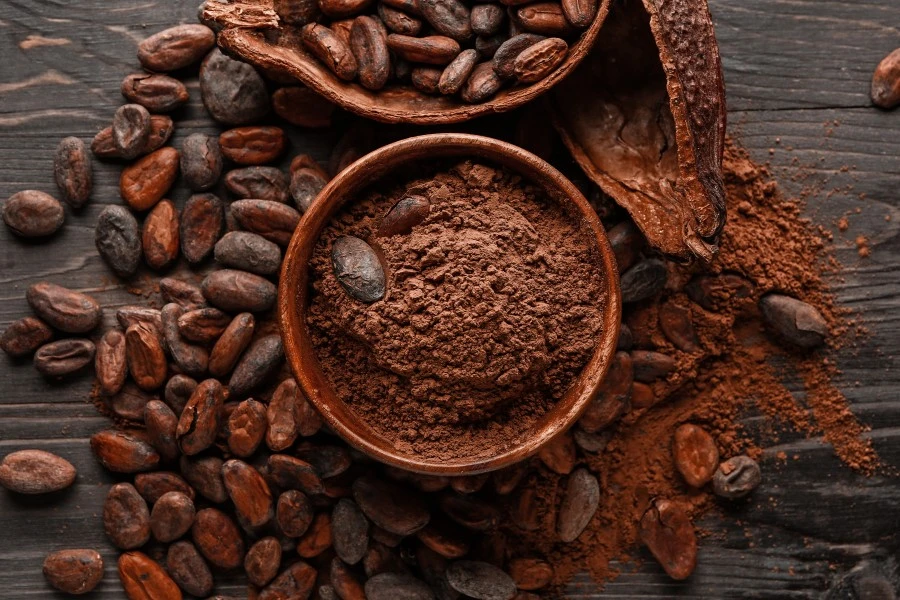 Analysists forecast surpluses from the 2025/26 and 2026/27 cocoa bean season, and for the downward price trend to continue.
“With the 2025/26 and 2026/27 seasons expected to bring surpluses — driven by higher prices incentivizing a global rebound in production as well as demand destruction, which will rebuild global stockpiles — we expect prices to trend downward as these surpluses materialize, assuming normal weather conditions. However, I do not expect prices to return to historical levels within the next year or two, as systemic supply-side issues in Côte d’Ivoire and Ghana will persist,” Oran van Dort, Rabobank commodity analyst, tells Food Ingredients First.
“Instead, we appear to be in a period of transition, where global production is shifting away from these two countries toward others, particularly Latin America and other West African nations. This shift has made the threat of long-term overproduction very real.”
“The ramifications of overplanting, including a potential price collapse, may be felt as early as the 2027/28 season. While climate change, particularly changing rainfall patterns, disease, and other structural supply-side issues, will eventually curb output, these factors will not act quickly enough to prevent this looming crisis.”
Despite fundamentals pointing toward declining prices, significant volatility is likely to persist, with scope for considerable upside and downside moves, Van Dort notes.
“Volatility will remain elevated due to low open interest (liquidity) and depleted global stockpiles. Additionally, erratic West African weather and heightened geopolitical tensions will continue to play a role.”
EUDR reshaping supply costs
The EU Deforestation Regulation (EUDR) is also expected to impact the cocoa market this year, as ingredient supply chains adapt to more stringent transparency rules. Last month, the European Parliament formally adopted a further delay and revision to the EUDR, meaning that large companies and operators will have until December 30, 2026, to comply, while small and micro-enterprises will have until June 30, 2027.
Some argue that the new regulations — which ban the sale, import, or export of products linked to deforestation or forest degradation in commodity markets such as cocoa, coffee, palm oil, and soy — will burden smaller businesses due to the costs and resources required to comply with the EUDR. These challenges may constrain cocoa suppliers for certain companies as they adjust to EUDR compliance.
Companies must trace supply chains back to the land of origin and perform due diligence to ensure commodities like cocoa are not linked to land deforested after 2020.
Protecting from price swings
The more optimistic outlook for cocoa in 2026 comes as the world’s largest chocolate maker, Barry Callebaut, reportedly explores the separation of its cocoa division from its chocolate business to reduce exposure to volatile cocoa prices, improve financial stability, and focus on its core chocolate operations.
The aim would be to reduce the company’s exposure to volatile cocoa prices.
Food Ingredients First asked Barry Callebaut for a reaction to recent reports that it is considering separating its cocoa division.
"As a matter of policy, we generally do not comment on market rumors. As announced during our Full Year presentation, we are making strong progress with our strategic investment program, BC Next Level, supported by full commitment across the organization and by our main shareholders. As outlined at that time, our strategic priorities remain clear: deleveraging to strengthen our financial position, preparing the company for renewed sustainable growth through best-in-class customer experience and innovation, and decoupling from market volatility," says a company statement shared with us.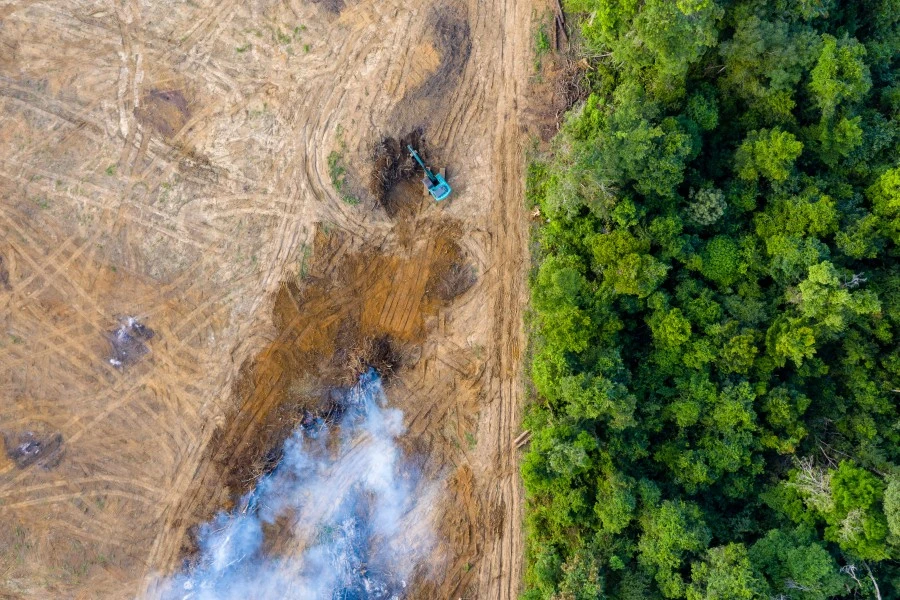 The EU Deforestation Regulation is expected to impact the cocoa market this year as the new rules are phased in.
Burgeoning cocoa-growing regions
There is increased cocoa output elsewhere in the world, such as Ecuador, which is at the forefront of Latin American cocoa expansion. Some experts predict that it will supersede Ghana as the world’s second-largest cocoa-growing region.
Production expansion is also expected from Peru and Brazil, although they currently account for a relatively low percentage of global cocoa production. Parts of East Africa, like Uganda and Tanzania, are also increasing production, while there is also potential in Southeast Asian regions such as Indonesia, Vietnam, and the Philippines.
“Due to historically high prices, we continue to expect a rebound in production alongside demand destruction. Higher prices encourage better farm care, improved husbandry, greater input usage, and new plantings. By the 2027/28 season, plantings initiated during the 2024 bull run may begin producing meaningful crops,” Van Dort adds.
“On the demand side, deterioration will persist this year despite prices easing from 2024 levels. Manufacturers’ business models were based on prices less than half of current levels, and they are still working through costly inventories while attempting to recoup losses from the bull run.”
“Additionally, higher retail prices, shrinkflation and skimpflation, reformulations, increased innovation in cocoa alternatives, and the growing adoption of GLP-1 drugs in consuming regions will continue to weigh on demand. Looking at the 26/27 season, we do expect demand to start recovering, however, because of prices declining in 2025/26.”
Companies tap alternatives and reduce cocoa
Some companies have been adapting to price volatility by reducing the cocoa content in products. The industry has also innovated a host of alternative cocoa solutions to formulate recipes using no or less cocoa (known as “skimpflation,”) to mitigate high costs and maintain their margins. For example, Cargill recently unveiled its no-cocoa confectionery alternative to chocolate, NextCoa, made from gently roasted grape and sunflower seeds.
Last year, the major players in chocolate and confectionery (Mars, Mondelēz, Nestlé, Hershey) responded to the previous high prices in cocoa by offering smaller pack sizes and product reformulations with reduced cocoa content.
Nestle’s reformulations had a knock-on effect recently when UK authorities stated that Toffee Crisp and Blue Riband bars can no longer be called chocolate because milk chocolate in the UK must contain at least 20% cocoa solids and 20% milk solids.
This development closely followed McVitie’s Penguin and Club bars changing their labels to “chocolate flavor” after parent company Pladis changed the recipe to use less cocoa.



Upcoming webinars

2027 Food Safety Risks for Quality & Compliance Leaders
FoodChain ID

Formulating for function: Developing benefit-led beverages with natural colours, botanicals, and flavours
Givaudan Sense Colour

Let's reveal the grain potential: Innovate
Meurens Natural