

PepsiCo’s strategic price cuts and healthier snacks drive Q1 2026 revenue growth

Key takeaways
- PepsiCo saw an 8.5% revenue increase, driven by consumer price cuts and healthier snack innovations, with organic revenue growing 2.6%.
- The company implemented up to 15% price cuts, reduced its US product lineup by 20%, and started closing Frito-Lay plants.
- PepsiCo targets growing demand for functional snacks, and expects continued solid growth in 2026.
Consumer price cuts and new, healthier snacks have helped PepsiCo boost its sales and drive an 8.5% revenue increase to US$19.44 billion in Q1 2026, compared with the same period last year. Organic revenue also grew by 2.6%, as the first-quarter performance provides an indicator for how CPGs can effectively navigate challenging economic headwinds and consumer price sensitivity.
“We are pleased with our first-quarter results, which featured an acceleration in both net revenue and organic revenue growth — with a notable improvement in convenient foods organic volume,” says PepsiCo chairman and CEO, Ramon Laguarta.
“An extensive commercial agenda, which includes the restaging of large global brands, innovation activity, and certain affordability initiatives, is being executed well, and business performance has improved. We are encouraged by the resilience of the international business while North America continued to make progress in the first quarter.”

In North America, PepsiCo Foods and PepsiCo Beverages experienced a sequential increase in net revenue and organic revenue growth. PepsiCo Foods saw volume growth, as its innovation and affordability initiatives started to make an impact. Similarly, PepsiCo Beverages also showed improvement in volume trends, both sequentially and compared to the previous year.
PepsiCo’s international operations performed strongly, with each segment showing a sequential boost in net revenue growth. Organic revenue growth was driven by solid performance in Asia Pacific Foods, Europe, the Middle East, and Africa, and the International Beverages Franchise, while Latin America Foods continued to show resilience.
Price cuts and broader restructuring
PepsiCo revealed in February, ahead of the 2026 Super Bowl LX, that it would cut snacks and beverage prices by up to 15% to recapture cost-conscious consumers. The company’s Q1 2026 results indicate that these cuts, which were intended to boost sales volumes and strengthen competitive positioning, are having the desired impact.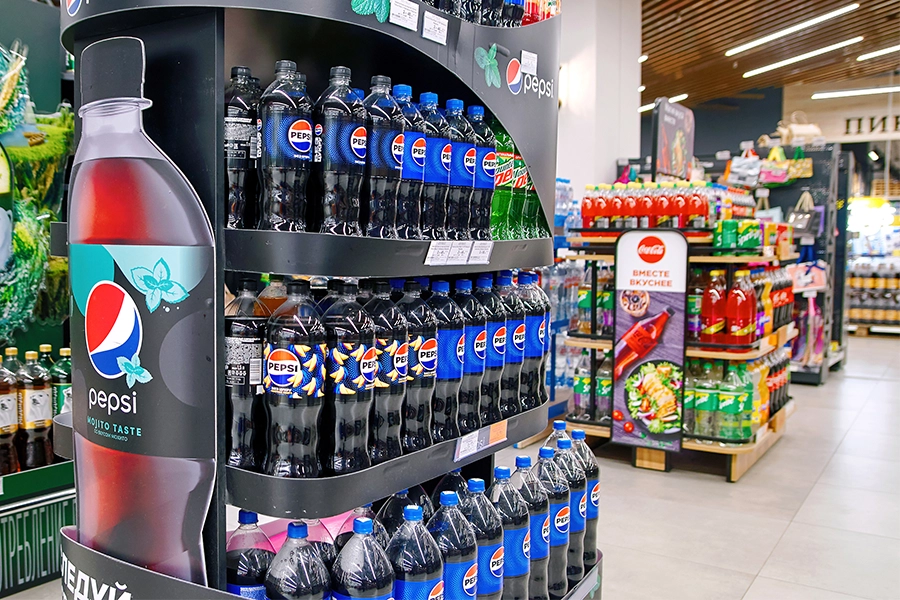 PepsiCo’s Q1 2026 success was driven by price cuts, innovative snacks, and strong international performance.
The cuts came after PepsiCo agreed with activist investor Elliott Investment Management to cut its US product lineup by 20% and reduce prices on core brands, formalizing a broader restructuring. The company planned to reduce its workforce across US and Canadian operations, ramp up automation and digitization, and invest savings into lowering prices on core brands.
PepsiCo had also revealed plans last year to close Frito-Lay plants in Florida, California, and New York, as part of this cost-cutting restructuring.
The multinational, which is estimated to be the world’s second-largest F&B business behind Nestlé, based on net revenue, profit, and market capitalization, also saw its operating profit increase by 24% to ~US$3.2 billion in Q1 2026 YoY.
Healthier snacking trend
PepsiCo has capitalized on shifting consumer preferences by introducing snacks that cater to the growing demand for healthier, cleaner options. New products like Cheetos NKD and Doritos NKD, which are free from artificial ingredients, are drawing in health-conscious consumers.
Meanwhile, snacks with added nutritional benefits, such as Smartfood FiberPop and Doritos Protein, are capturing the attention of those looking for functional foods that support a balanced diet. These products are helping PepsiCo stay ahead of the curve, attracting a new wave of shoppers who are seeking both taste and better-for-you ingredients in their snack choices.
According to Innova Market Insights, 60% of consumers globally look for protein, and 55% seek fiber, when purchasing snacks. However, 74% say flavor, taste, and texture are the most important factors when choosing between snacks.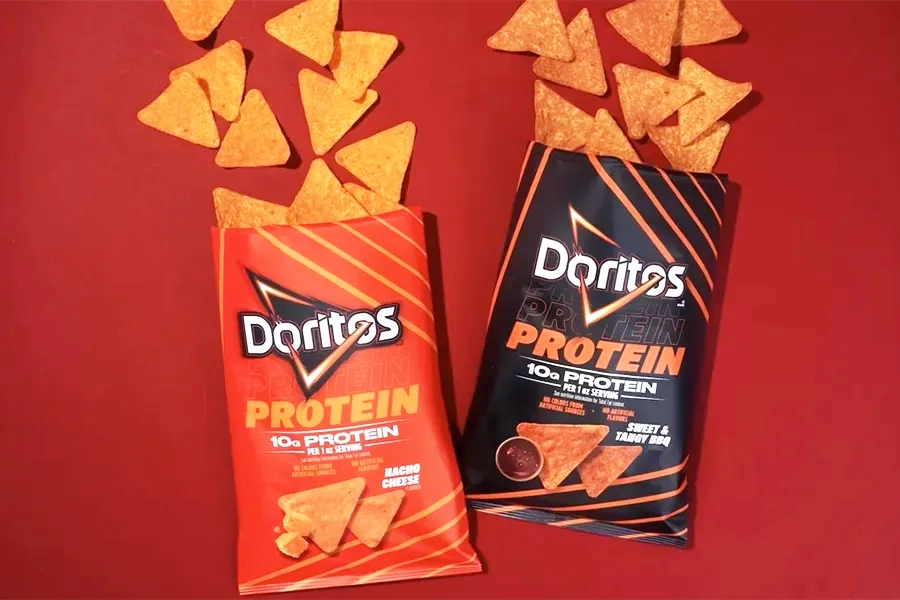 New healthier snack options, such as Doritos Protein, help PepsiCo meet shifting consumer demands.
PepsiCo’s future outlook
PepsiCo expects solid growth in 2026, with organic revenue rising 2–4%, core constant currency EPS increasing 4–6%, and a core effective tax rate of around 22%. The company plans to keep capital spending below 5% of net revenue, achieve a free cash flow conversion ratio of at least 80%, and return approximately US$8.9 billion to shareholders through US$7.9 billion in dividends and US$1 billion in share repurchases.
“As we look ahead, we aim to successfully execute our commercial plans and tightly manage costs to help fund investments to accelerate growth,” says Laguarta. “Therefore, we are affirming fiscal 2026 financial guidance and expected cash returns to shareholders, including the previously announced 4% increase in the annualized dividend per share beginning with the June 2026 payment, which will represent our 54th consecutive annual increase.”
The broader industry will likely take cues from PepsiCo’s ability to combine affordable pricing, innovation, and cost management, while still offering shareholder returns. It’s a balancing act that PepsiCo’s competitors, from Coca-Cola to Nestlé, will be looking to replicate, especially as consumer preferences and market conditions continue to evolve.