

“Innovation at origin”: IFF’s Madagascar hub to boost vanilla R&D and resilience


Key takeaways
- IFF unveils a vanilla innovation center in Madagascar to enhance sustainability and innovation in vanilla sourcing.
- The center supports advanced R&D capabilities like lab analysis and flavor creation to focus on local consumer preferences and real-world vanilla conditions.
- IFF’s hub reinforces Madagascar’s importance in vanilla production, promoting a resilient and sustainable vanilla supply chain.

International Flavors & Fragrances (IFF) has opened a vanilla innovation center in Madagascar to enhance its ability to “innovate at origin” by tracking vanilla’s journey from extraction to flavor creation. The innovation hub will reportedly help the flavor giant strengthen the sustainability and resilience of one of the world’s most complex natural ingredients.
Vanilla, which remains a go-to global flavor for diverse F&B innovation, is shaped by climate, post‑harvest handling, and curing methods, says IFF. The 650‑square‑meter center in Toamasina, Madagascar’s principal seaport, will help the company ensure greater consistency in vanilla quality and supply. The site is close to vanilla-growing areas and post‑harvest processing activities.
Audrey Borie, global vanilla business development lead at IFF, points to a “renewed focus” on vanilla as a platform for innovation across the F&B industry. With the new site, the company is further strengthening and expanding its expertise and resources around the key ingredient, she tells Food Ingredients First.
“Vanilla sits at the crossroads of indulgence, familiarity, and functionality, making it one of the most strategic ingredients across categories. At the same time, growing complexity in sourcing, quality, and consumer expectations is forcing the industry to rethink how vanilla is developed.”
“For IFF, that means investing more deeply in understanding the ingredient at its source to unlock new dimensions of performance and differentiation.”
Vanilla extraction to flavor creation
IFF stresses that its new innovation hub supports its ability to follow vanilla’s journey from origin extraction and in‑field testing to advanced lab analysis and flavor creation, expanding its material understanding of the ingredient.
 Audrey Borie: Proximity to vanilla-growing areas enables better alignment of agronomy, regulation, and flavor innovation.The process also shortens development cycles and enables solutions informed by real crop conditions.
Borie underscores that the center aims to turn complexity into actionable solutions. “It brings together end-to-end capabilities — from agronomy and sustainable sourcing to extraction, analytics, and flavor design — within a single, integrated ecosystem.”
The Africa-based site gives IFF teams direct access to the raw material in its natural environment, which she says enables insights that “cannot be generated remotely.”
“For manufacturers, this translates into more distinctive flavor profiles, faster development cycles, and solutions that are better adapted to real-world supply and regulatory constraints.”
The facility also allows faster and more targeted NPD. Teams can co-create solutions that balance taste, cost, and supply resilience, to maintain signature profiles, meet clean label expectations, or navigate raw material volatility, Borie notes.
“By connecting market insights with technical expertise, the center shortens the path from concept to commercialization. The result is a shift from reactive problem-solving to proactive, future-ready innovation.”
Lab analysis capabilities offered at the site include the application of contaminant and disease-detection protocols to safeguard product integrity, and molecular profiling to decode and develop distinctive IFF signatures.
For extraction, the hub offers facilities with scalable rigs to explore vanilla types and optimize extraction and post-harvest variables. A flavor creation unit that allows customized regional profiles, including application lab capabilities for dairy, bakery, and confectionery, is also present. It helps IFF validate performance in real market prototypes.
 IFF’s Vanilla Innovation Center in Madagascar offers lab analysis, extraction, and scent and flavor creation facilities to advance vanilla R&D (Image credit: IFF).Additionally, a research greenhouse, “The Bloomery,” showcases various vanilla varieties and supports future exploration of varietal performance and post-harvest techniques.
“Multi-faceted” vanilla innovation
Industry experts state that vanilla is evolving from a standalone flavor into a multi-functional formulation tool for F&B companies. Innova Market Insights data suggests a 79% CAGR in product launches with vanilla between 2023 and 2025, signaling sustained cross-industry demand.
Borie agrees that, beyond its role as a recognizable and authentic flavor, vanilla has become increasingly multifaceted in formulation.
“It shapes product identity, enhances mouthfeel, boosts perceived sweetness, and helps mask off-notes in more complex systems, such as protein-based applications. This expanded functionality makes vanilla a critical tool for balancing sensory performance with formulation constraints,” she explains.
Against this backdrop, IFF’s Vanilla Innovation Center will act as a source of information for IFF’s experts, who will develop new tools and capabilities based on the insights.
Combined with the company’s Re-Master Vanilla team, it delivers hands-on training, workshops, and laboratory programs that bring together experts, customers, and local teams to advance best practices and strengthen vanilla innovation capabilities, says IFF.
Crafting vanilla to balance health and indulgence
IFF says its new innovation hub will also focus on developing flavors based on local consumer preferences for each region.
Borie describes consumer expectations around vanilla as increasingly “more nuanced and regionally differentiated,” which is shaping flavor development strategies.
“While vanilla remains universally loved, consumers are increasingly seeking authenticity, origin cues, and more sophisticated taste experiences. This is driving demand for greater specificity — from richer, more indulgent profiles in some markets to cleaner, more natural expressions in others — while continuing to support product identity and premium positioning,” she explains.
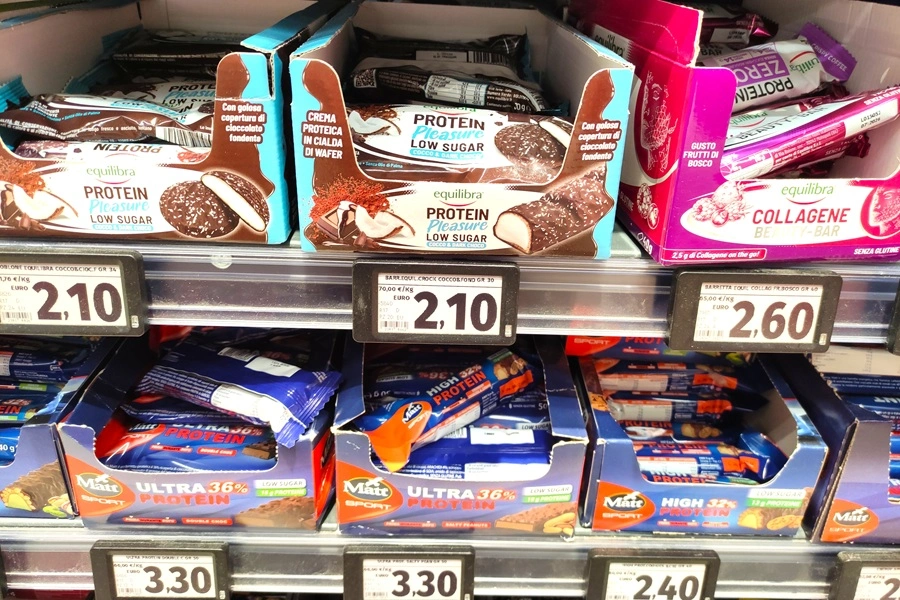 Vanilla can round out sweetness and mask off-flavors in reduced-sugar formulations, such as in protein products.Consumers are also looking for products that balance indulgence with better-for-you credentials. “In this context, vanilla plays an important functional role — helping round perceived sweetness in reduced-sugar formulations and masking off-notes in fast-growing categories such as protein-based products.”
As flavor preferences become more expressive, vanilla is evolving from a “supporting note into a defining element that can be layered, amplified, or reinterpreted across applications,” adds Borie.
The market is shifting toward more flexible, application-specific vanilla solutions that are adaptable across regions, formats, and price points while consistently delivering an authentic, high-quality sensory experience, she tells us.
Proactive vanilla sourcing: IFF’s Madagascar advantage
IFF highlights the center’s proximity to vanilla-growing areas, such as its Madagascar hub, as an enabler of closer collaboration with farmer networks, improved traceability, and ethical sourcing.
“Climate change is directly reshaping vanilla sourcing, with stronger and more frequent cyclones driving greater variability in yields, quality, and supply. For buyers, this means increased uncertainty around availability, cost, and sensory consistency,” Borie explains.
“This is why working at the origin matters. By maintaining a strong presence in Madagascar, IFF can monitor changes in real time, anticipate changes earlier, and support more resilient farming practices.”
The proximity also enables faster response, more adaptive sourcing strategies, and better alignment between agronomy, regulation, and flavor innovation, she adds.
“Ultimately, climate change is accelerating the shift from reactive sourcing to proactive, origin‑led innovation — where anticipating disruption, rather than responding to it, will become a key driver of resilience and differentiation in vanilla.”
IFF’s Madagascar site reinforces the F&B industry’s focus on the region as one of the main sources of vanilla supply. Food Ingredients First previously reported on Ugandan exporters advocating for sourcing vanilla from the region to reduce dependency on Madagascar, citing climate and price challenges. However, Madagascar dismissed these suggestions, maintaining that its vanilla beans are superior to Uganda’s.



Upcoming webinars

Oat-Standing Ingredients - Showcasing Irish Grain Through Innovation
Tirlán Ingredients

2027 Food Safety Risks for Quality & Compliance Leaders
FoodChain ID

Formulating for function: Developing benefit-led beverages with natural colours, botanicals, and flavours
Givaudan Sense Colour