


Vanilla’s adaptive edge: From formulation tool to fermentation frontier

Key takeaways
- ADM highlights vanilla’s expanding role as a formulation tool in plant-based, high-protein, and sugar-reduced products, beyond traditional bakery and dairy.
- Lallemand’s precision fermentation vanillin launch signals a maturing middle tier between premium bean extract and petrochemical-synthetic vanillin.
- Global oversupply and falling Madagascar prices create a paradox: vanilla commodity values are dropping while NPD featuring the ingredient surges.
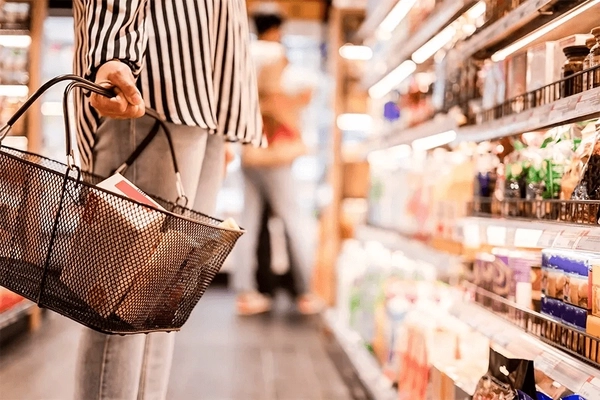
Global food and beverage launches featuring vanilla ingredients recorded a 79% compound annual growth rate between 2023 and 2025, according to Innova Market Insights data, with Europe accounting for more than a third of new products. The growth comes as the vanilla commodity market is in oversupply and bean prices are falling, which is leading to fundamental shifts in how manufacturers are using and sourcing the ingredient.
We speak with industry leaders who say vanilla is being redefined — less a standalone flavor, more a multi-functional formulation tool available at price points ranging from premium Madagascan extract to precision fermentation-derived vanillin.
We also look at what is driving the drop in prices and how the market is forecast to grow in the years ahead.

A 300-compound toolkit
Vanilla’s role in product development has expanded considerably beyond bakery and dairy. Travis Green, VP of Global Vanilla at ADM, tells Food Ingredients First that the ingredient’s complexity — more than 300 flavor compounds — makes it central to the company’s natural flavor strategy.
“Its depth supports indulgence, warmth, and familiarity, while also functioning as a tool to amplify creaminess, soften acidity, or mask off-notes in challenging formulations, such as plant-based or high-protein products,” he says.
Beverages are where much of that growth is concentrated. Shanyn Seiler, product marketing manager at ADM, says that vanilla plays a critical role in alternative dairy drinks, ready-to-drink coffees, and functional beverages.
“Its mild yet complex profile makes it particularly effective in balancing oat, almond, or other plant-based protein bases, in addition to helping round out mouthfeel in high-protein offerings,” she says. As demand for sugar reduction increases across categories, vanilla can help deliver a perception of sweetness and fullness without added sugar, Seiler adds.
The crossover into culinary-inspired territory is also notable. Seiler points to pairings with cardamom, cinnamon, and nutmeg, as well as floral notes like lavender and earthy profiles such as matcha, as evidence of vanilla’s versatility in globally inspired product development.
This aligns with Innova’s sweet flavor trends research from February 2026, which positions vanilla alongside brown and creamy profiles as flavors consumers associate with comfort and emotional well-being — noting that 48% of global consumers turn to food to cope with stress.
Origin as a sourcing strategy
Around 70–80% of the world’s vanilla supply comes from Madagascar, and that concentration creates inherent risk. Green describes a multifaceted approach to managing it: “We look at many factors, including supply, anticipated demand, carry-over inventory, quality, profile, weather cycles, and geopolitics, which ultimately help us form an opinion on purchasing decisions and recommendations to our customers.”
For formulators willing to explore beyond the dominant Madagascan profile — which Seiler characterizes as creamy, rich, and bourbon-like — origin diversification offers both supply resilience and sensory differentiation. Indonesian vanilla tends toward smoky, woody notes; Ugandan beans offer sweet and balsamic characteristics; and Papua New Guinea contributes floral-fruity profiles.
“Brands that are open to subtle flavor profile variations may be better positioned to leverage diversified sourcing strategies while maintaining consistent product quality,” Seiler says.
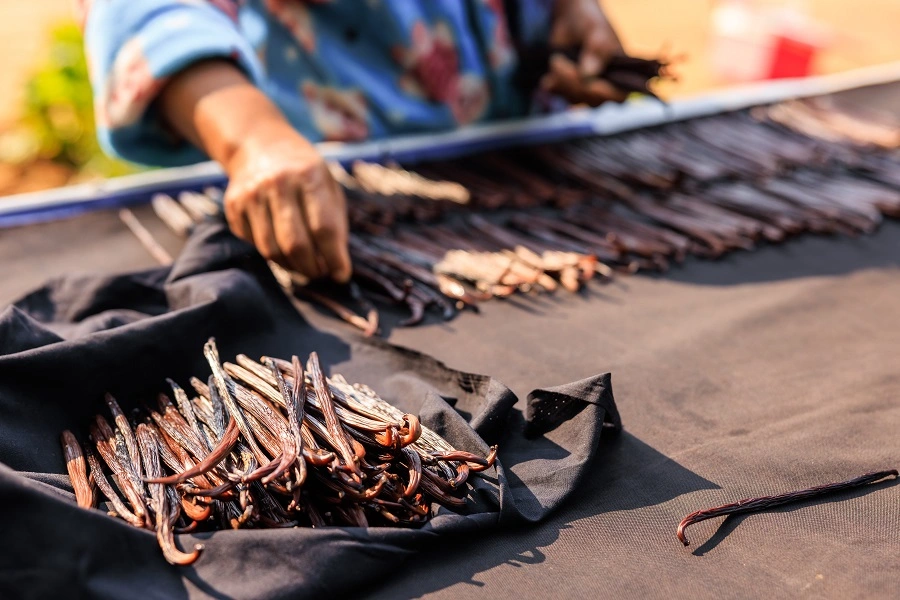 As Madagascar’s vanilla prices drop amid global oversupply, manufacturers can now access natural vanilla at more affordable price points, creating opportunities for product reformulation.
The price paradox
These sourcing issues are unfolding against a backdrop of falling commodity prices. According to a March 2025 market report from Cooks Vanilla, Madagascar exported 4,300 Metric Tons of vanilla in the first half of 2024 alone — a volume driven not by rising demand but by large industrial buyers locking in multi-year supply at depressed prices. Exports in the second half of 2024 and into 2025 were minimal, while the 2025 crop was expected to be abundant, adding to an already significant global surplus.
Prices have continued to fall. The Malagasy government maintains what Cooks Vanilla describes as a de facto export price band of US$50–70 per kilogram, despite officially claiming the market is liberalized.
The broader global vanilla market was valued at approximately US$3.88 billion in 2025, according to Fortune Business Insights, and is projected to grow at a 6.29% CAGR through 2034 — growth fueled by clean label demand and premiumization even as raw bean prices soften. The result is a window of opportunity — manufacturers who previously defaulted to synthetic vanillin can now reformulate with natural vanilla at more accessible price points.
Fermentation enters the frame
A third option is also maturing. Lallemand Bio-Ingredients this week launched Hevani — a vanillin ingredient produced through yeast-based precision fermentation technology, acquired through its 2024 purchase of Swiss biotech firm Evolva. The product carries 98% purity and holds natural status in both the EU and the US without requiring GMO labeling.
Lallemand isn’t alone in this space. Syensqo (formerly part of Solvay) has supplied fermentation-derived vanillin from rice bran ferulic acid for years under its Rhovanil Natural brand, while US start-up Spero Renewables is developing a bioconversion route from corn fiber.
The vanillin market overall is projected to grow from around US$0.9 billion in 2026 to US$1.5 billion by 2036 at a 6.9% CAGR, according to Future Market Insights.
Synthetic vanillin from petrochemicals still dominates roughly 95% of global vanillin volume at around US$12 per kilogram, according to Mordor Intelligence, but fermentation-derived alternatives are closing the cost gap, while offering label credentials that synthetic cannot match.
A regulatory nuance adds complexity — the definition of “natural vanillin” differs between the EU and the US, particularly around starting materials and production methods — a divergence that forces global suppliers to manage separate inventory streams and labeling strategies.
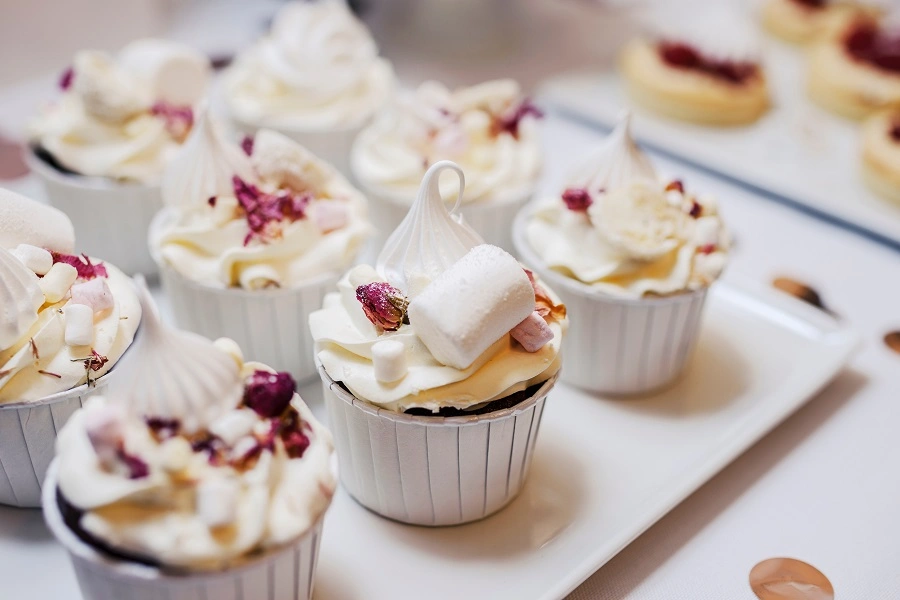 Vanilla’s versatility is expanding beyond bakery and dairy, becoming a key ingredient in plant-based, high-protein, and sugar-reduced formulations.
A three-tier market takes shape
The vanilla landscape is stratifying. At the top sits premium natural extract — origin-specific, bean-derived, rich in the hundreds of compounds that give whole vanilla its complexity. In the middle, fermentation-derived vanillin offers natural-label positioning, year-round consistency, and scalable supply. At the bottom, petrochemical-synthetic vanillin continues to serve cost-sensitive applications at scale.
For manufacturers, the strategic question is which tier — or combination — fits their product positioning, label claims, and cost structure. Vanilla’s top positioning in recent global launches were vegetarian, halal, and gluten-free, according to Innova data, reflecting its alignment with broad dietary and lifestyle trends rather than a single category.
“As consumers continue to seek clean label, plant-based, and globally inspired products, vanilla remains a foundational yet highly adaptable flavor within innovative formulation strategies,” Seiler says.
In an oversupplied market where commodity prices are soft and technology is widening the options, that adaptability may be vanilla’s most valuable compound of all.