

Debut and Oterra to develop Red dye 40 alternatives amid stricter color regulations


Key takeaways
- Debut and Oterra are partnering to accelerate development of a precision fermentation–based alternative to Red 40, targeting high-performance natural color solutions for F&B.
- Increasing regulatory pressure in the US, including proposed FDA phase-outs and state-level restrictions, is driving urgent reformulation efforts across the synthetic color market.
- Precision fermentation is emerging as a scalable route to natural color production, offering improved supply security and reduced reliance on agricultural variability.
 (Image credit: Oterra).
Regulatory scrutiny of synthetic food colors in the US is intensifying, pushing manufacturers to accelerate reformulation strategies that have long been under consideration.
With the US Food and Drug Administration (FDA) and Department of Health and Human Services (HHS) signaling a phase-out of certain FD&C-certified color additives by the end of 2026, demand is rising for alternatives that can match the performance of widely used synthetic dyes such as Red 40.
Red 40 remains approved by the FDA, though it has faced bans or restrictions in several European countries. Although it is permitted in the EU, Red 40 is subject to stricter labeling requirements and has seen reduced use in some markets due to consumer and regulatory pressure. California passed legislation recently that will restrict several synthetic food dyes in school meals starting in 2027, and Red 40 is included among them.
Strategic collaboration to bridge innovation and scale
Red 40 is widely used, particularly in soft drinks, candies, cereals, baked goods, dairy desserts, and flavored snacks. However, growing restrictions are being introduced, including a planned phase-out by the US government due to ongoing health concerns about synthetic dyes.
AI-driven biotech company, Debut, and global supplier of natural colors, Oterra, have announced a “multi-million-dollar” collaboration aimed at developing and scaling a precision fermentation-based alternative to Red 40 for F&B applications.
The collaboration will see both companies developing a precision fermentation-based, high-performing natural alternative to Red dye 40 to be used across various F&B applications, once it has gone through the relevant approval processes.
The rise of natural colors
Natural colors are making significant advances, replicating the stability, intensity, and cost efficiency, but synthetic reds remain one of the most technically challenging reformulation goals in the sector.
 Luc Ganivet: Oterra’s goal is to launch a new natural food color that combines the performance of red beet and anthocyanins, offering shades from orange-red to violet-purple.Red dye 40 is widely used in F&B because it delivers a consistent, stable red color that holds up under heat, light, and changing pH, making it a cost-effective benchmark that natural alternatives still struggle to match in performance and versatility.
This creates an ongoing performance gap that has slowed widespread replacement in mainstream uses, particularly in products where stable color, strong visual impact, and long shelf life are non-negotiable.
Oterra brings extensive experience in natural color systems and industrial application across food, beverage, dietary supplements, and pet food markets. Debut contributes its AI-enabled biotechnology platform and precision fermentation capabilities, which are increasingly being explored as a route to high-performance ingredient development.
Precision fermentation combined with color expertise
Debut and Oterra using precision fermentation signals a broader expansion of this technology beyond its established use in proteins and other functional ingredients into the color category.
Precision fermentation uses engineered microbes to produce specific molecules in controlled conditions, delivering reliable quality, scalable output, and far less exposure to agricultural variability like weather and crop fluctuations. For color production, it enables the design of precise pigment compounds tailored for strong stability and performance across food applications.
The two companies aim to scale natural color solutions spanning orange, red, and violet. Any Red 40 alternative will work in a broad range of applications and be compatible with vegan, kosher, and halal certifications for F&B companies.
Luc Ganivet, Oterra’s chief innovation officer, tells Food Ingredients First that the partnership is working toward an FDA approval filing, with the goal of bringing a commercially scaled product to market in approximately three years.
“We want to complement, not replace, Oterra’s existing botanical red solutions. Oterra already has a range of naturally-derived products that are being used by US manufacturers. We hope to develop and scale a product that gives food and beverage manufacturers more options to choose from. Each of the natural raw materials we use for color has different characteristics that make them better for one application or another,” he says.
“Our ambition is to bring to market a new natural food color that bridges the performance characteristics of red beet to anthocyanins (black carrot, sweet potatoes, and radish), offering a full range of new shades from orange red to violet purple with improved stability.”
“Anthocyanins can cover low pH applications with great heat and light stability. Red beet can cover high-pH low-temperature applications with some light sensitivity.”
Precision fermentation is the enabling technology for this collaboration, offering stronger supply security, consistent quality, and reduced exposure to crop variability or geopolitical disruption. It also allows production to be located closer to key markets while ensuring precise process control and reliable output.
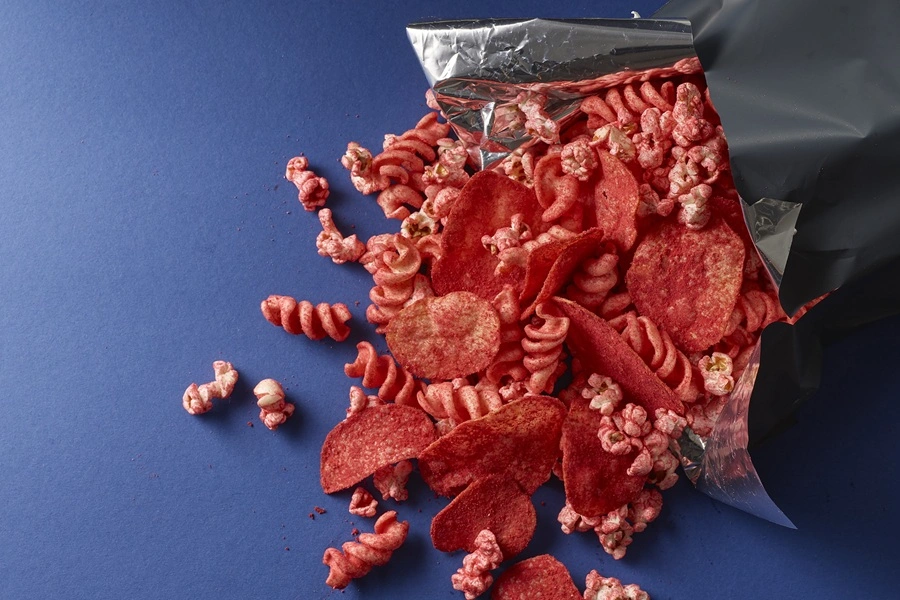 The partnership will develop a replacement for Red40 in applications such as prepared food, meat, and confectionery (Image credit: Oterra).Ganivet explains how both companies bring their own expertise to the partnership. “Oterra has a 150-year heritage of innovating colors from natural sources, including several Red 40 alternatives, and has experience developing applications for leading consumer brands around the world. Debut is an innovator in biotechnology and has done amazing work in overcoming technical limitations and scaling up the technology to commercial size — something they have done for more than five other products,” he says.
“Reformulating at scale takes time. This is not a quick fix: it is something that we are building together with the food industry to meet their needs and the wishes of consumers. The molecule is well understood, but changing the production method requires regulatory approval, which Oterra and Debut fully respect. We will need FDA approval for the final product, but we know the processes and have done so already with the FDA approval of Jagua Blue,” he concludes.
Other moves in eliminating synthetic colors
As the US tightens regulations around synthetic colors as part of the “Make America Healthy Again” initiative, Red dye No. 3 — which was widely used across industry for decades to give products a cherry-red color — has already been banned by the FDA in foods and ingested drugs due to thyroid tumor concerns in lab rats.
Meanwhile, last July, Kellanova announced plans to phase out synthetic FD&C color additives across its US food portfolio, committing to remove them from all school foods by the 2026-2027 academic year and from retail products by the end of 2027.
Kellanova’s move was quickly followed by Walmart saying it would remove 11 synthetic dyes and dozens of other additives from its private-brand foods in what it described as “one of the largest reformulations in retail history.”