
Arla Foods Ingredients: How aeration is reshaping texture in high-protein bars


Key takeaways
- Aeration is transforming high-protein bars beyond nutrition by offering lighter and fluffier textures that increase consumer appeal.
- As consumer demand for novel textures grows, manufacturers face challenges in formulation and process stability to maintain the integrity of aerated bars.
- Arla Foods Ingredients’ AirBar concept uses a protein blend that allows stable air incorporation and texture stability during processing and shelf life.
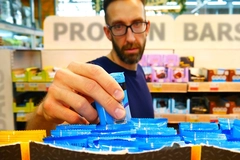
High-protein bar manufacturers are thinking beyond traditional formats as consumers demand more than just nutrition — they now seek a variety of textures and exciting sensory experiences in snacks. Aeration, the process of incorporating air to create a lighter, fluffier texture in foods, is emerging as the “next frontier” in protein bar innovation, according to Arla Foods Ingredients.
This technique allows manufacturers to move away from dense, chewy bars to offer lighter, more appealing products that meet consumer desires for a different texture experience.
While many snack bar brands reference texture in product names and descriptions, few emphasize it in their positioning, according to Innova Market Insights. Companies, particularly those focusing on indulgence, should consider highlighting their textures to enhance the enjoyable eating experience consumers seek, suggests the market researcher.
Arla Foods Ingredients, which uses aeration in its protein bar solution AirBar, says the product’s whipping capacity allows stable air incorporation, creating a soft texture that stays stable during processing and shelf life. This, in turn, helps protein bar manufacturers and mainstream confectioners expand their market reach.
“The aerated texture trend represents a significant change in how we experience textures in this category,” says Christian Jonassen, senior application specialist, Beverage, Bars, and Bakery at the company.
“The driver behind it is coming from consumers as well as from manufacturers, with 60% now prioritizing novel textures as much as nutrition labels. In addition, 60% of global consumers say they want to explore new formats when they seek indulgence, yet the protein bar market is dominated by products with similar textures,” he tells Food Ingredients First.
AirBar mass can be used in aerated fillings for coated marshmallow-type treats, whipped layers in composite bars, and light, soft centers in cookie-based snacks. When combined with normal bar mass, it can also help manufacturers create a “novel overall texture.”
Aerated protein bars: Thinking beyond flavors
Jonassen further points to the need for innovation in high-protein bar textures, besides the flavor focus.
“In our dialogue with brands and bar manufacturers over the last couple of years, the industry has been asking for new textures. This has often been limited to new flavors. However, when a new development is just creating a new flavor, there is a risk that brands will only cannibalize from sales of other bars.”
“So the next frontier in protein bars isn’t simply more protein — it’s sensory multi-dimensionality, with aerated textures providing a new, lighter eating experience.”
 Christian Jonassen: Protein aeration has the potential to become a mainstream trend, as it is versatile and offers novel textures and functional protein benefits.
Overcoming protein bar formulation challenges
While incorporating air in aerated high-protein bars, manufacturers face two key formulation challenges — maintaining stability and processability.
“You also need to pay attention to ingredients that can destabilize an aerated system, so that has been a big part of our protein aeration project. A robust protein solution should also allow more freedom to choose between the other ingredients, such as fibers and polyols,” Jonassen explains.
“As with any other protein bar, the main functionality in our new AirBar aerated protein bar concept is from the proteins. We experimented with more than 30 Arla Foods Ingredients products to develop AirBar.”
Nutrilac PB-8420, one of the company’s milk protein blends for the protein bar category, offers manufacturers “a complete source of essential amino acids and enables a 30% protein claim.”
It allows stable air incorporation and a soft aerated texture, which can withstand processing and storage conditions for aerated high-protein bars.
The team also used a small amount of “standard gelatin” to ensure that air stays in the bar and doesn’t collapse, helping create synergy with Nutrilac PB-8420.
“The level of gelatin can be changed according to the desired texture. Behind the concept lies a massive test scenario with a lot of different fiber choices, but AirBar is not dependent on any specific ingredients other than Nutrilac PB-8420,” Jonassen adds.
Stabilizing texture and shelf life in aerated protein bars
Texture remains a persistent R&D challenge in high‑protein bars, with scientists noting that its deterioration impacts shelf life in these products. Moisture loss, protein and lipid oxidation, are identified as some of the reasons behind bar hardening.
Jonassen describes shelf life in protein bars as “subjective” since it depends on texture changes, which the company analyzed in internal tests.
“Arla Foods Ingredients conducted a 12-month real-time study at 20°C. Rather than being an accelerated program, it closely monitored the textural changes for a year.”
The findings indicated that aerated protein bars maintain a stable texture during storage, and flavor change is more likely to impact the shelf life than textural degradation. This is because “flavors containing acids can destabilize aeration,” he explains.
However, supporting aerated protein bar systems might need modifications in current manufacturing processes to work on new textures.
“Our AirBar concept required a different mixing profile compared to the widely used Z-blade mixers, so we used an old-fashioned planetary bakery mixer with a paddle. It’s well known for its use in the bakery and confectionery sectors, but other mixer types could also be relevant,” Jonassen explains.
“On top of that, the treatment of the mass before extrusion or further processing will depend on the exact setup available.”
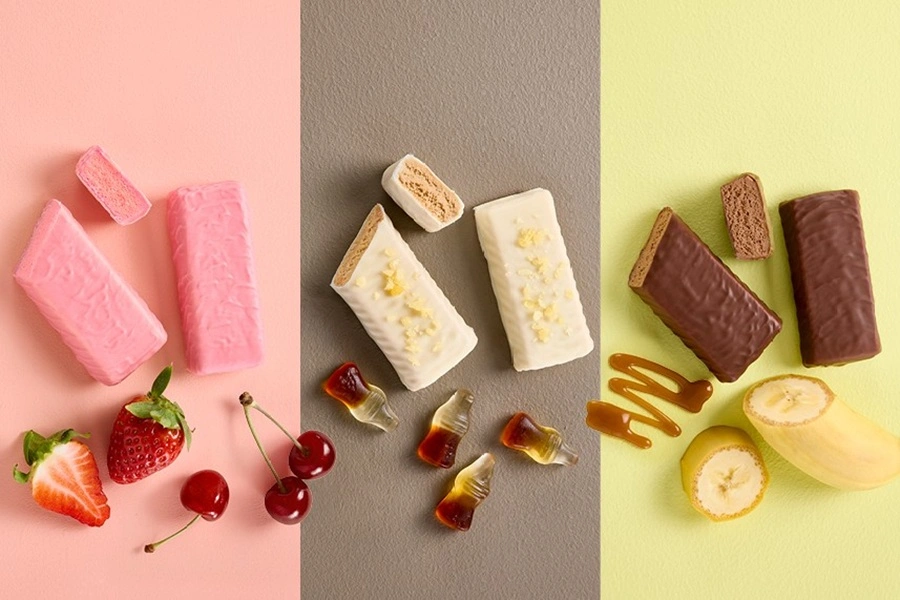 Arla Foods Ingredients’ AirBar solution can be used in aerated fillings for marshmallow-type treats and whipped layers in composite bars (Image credit: Arla Foods Ingredients).
Making “protein aeration” mainstream
Arla Foods Ingredients is showcasing AirBar as a “single-layer bar” currently, but Jonassen expects “almost endless” possibilities for innovation in aerated protein bars.
“Used with more traditional masses or in combination with other applications, it provides a new platform to develop from, giving confectionery businesses the opportunity to tap into the high-protein trend,” he tells us.
“The concept’s versatility highlights the potential for protein aeration to become a mainstream platform for consumers seeking novel texture indulgence in bars with functional protein benefits.”
The company showcased its aerated protein bar solutions at Vitafoods Europe 2026 in Barcelona, Spain, this week, along with high-protein, nutrient-dense application concepts for GLP-1 users.


Upcoming webinars

Oat-Standing Ingredients - Showcasing Irish Grain Through Innovation
Tirlán Ingredients

2027 Food Safety Risks for Quality & Compliance Leaders
FoodChain ID

Formulating for function: Developing benefit-led beverages with natural colours, botanicals, and flavours
Givaudan Sense Colour