

Inside FrieslandCampina Ingredients’ NAM Application Center for high-protein innovation

Key takeaways
- The new NAM Application Center helps brands accelerate high-protein product development.
- Taste, texture, and stability remain key challenges in protein formulation.
- Demand is shifting toward protein products with targeted functional benefits.

As demand for high-protein foods and beverages continues to accelerate across North America, manufacturers are under increasing pressure to deliver products that combine nutritional benefits with exceptional taste, texture, and functionality. At the same time, evolving consumer expectations around convenience, personalization, and added health benefits are reshaping innovation priorities across categories ranging from ready-to-drink beverages to functional snacks.
To help brands navigate these challenges, FrieslandCampina Ingredients has opened a new North America Application Center in New Jersey, US, designed to bring technical expertise, formulation support, and development-scale testing capabilities closer to customers. The facility aims to help manufacturers streamline product development, validate performance under real-world processing conditions, and bring new concepts to market more efficiently.

Auke Zeilstra, regional sales director at FrieslandCampina Ingredients, speaks with Food Ingredients First about the role of the new center, the key formulation hurdles facing protein innovators, and the trends shaping the next generation of functional F&B products.
How will the New Jersey application center help F&B companies shorten development timelines for high-protein products?
Zeilstra: Our new North America application center is designed to do something very simple, but very powerful for our customers — move ideas forward, faster. In a category where high-protein innovation is accelerating, speed to market is no longer a nice-to-have, it’s a competitive advantage. This application center helps shorten development timelines by bringing advanced technical expertise and lab-scale capabilities closer to the customer. With dedicated application scientists and a purpose-built lab in one location, customers can develop, troubleshoot, and refine high-protein formulations more efficiently. This integrated setup streamlines development cycles, helping teams resolve challenges, such as taste, texture, and functionality, in real time, rather than across multiple sites or stages.
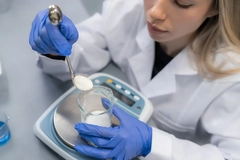
The center is also fitted with development-scale equipment, which allows formulations to be tested under real-world processing conditions. This reduces reliance on multiple development iterations and helps minimize costly trial-and-error approaches. Just as importantly, our testing capabilities help assess stability, performance, and sensory outcomes early in development, allowing teams to identify potential issues sooner and refine formulations with greater confidence. What that means in practice is faster answers. Long feedback loops across time zones or facilities are removed, enabling teams to iterate, refine, and progress in one place.
Ready-to-drink and ready-to-mix beverages are becoming increasingly crowded categories — what formulation challenges are brands bringing to you most often?
Zeilstra: Brands are keen to load up on protein in RTDs and RTMs, which is great for front-of-pack messaging, but can be difficult for formulators, as technical needs become more complex. One of the industry’s biggest challenges is increasing protein content without compromising stability or eating experience. It’s a careful balancing act that manufacturers have to master. Texture is one of the most complex variables. While consumers expect a smooth, easy-drinking experience, high-protein systems can quickly tip into excessive viscosity or poor mouthfeel if not carefully controlled. As protein levels rise, sensory challenges compound, bringing chalkiness, grittiness, and bitterness to the forefront. Particle structure is a critical driver of this experience — larger aggregates tend to feel powdery or sandy, while smaller, controlled structures support creaminess and stability. Heat treatment can be especially tricky. It’s a process often used to ensure microbiological safety and shelf life stability, but certain proteins can denature as a result. This can cause thickening, sedimentation, or unwanted gelation over shelf life. The result is compromised stability, as well as a less consistent and enjoyable drinking experience over time.
To combat this, brands are increasingly looking for not just a protein ingredient, but a formulation partner that can optimize the entire system. This requires a holistic, system-level approach to formulation; combining smart protein selection, ingredient innovation, process optimization, and sensory design. Different proteins bring distinct functional and sensory characteristics, so blending complementary sources (such as whey for clean taste and caseinates for creaminess and stability) can help deliver more balanced, high-performing products.
 Consumers increasingly want protein products tailored to specific needs, such as hydration, joint health, or gut support, rather than simply higher protein content.
What consumer trends are driving the strongest demand in functional snacks and protein bars, and how are brands adapting their formulations in response?
Zeilstra: The biggest change in functional snacking is how protein is increasingly showing up in moments where consumers aren’t necessarily making conscious health choices, just everyday food ones. People aren’t just reaching for a protein bar after a workout; they’re grabbing one between meetings, on the school run, or instead of a chocolate bar. However, protein is only part of the story. Shoppers now expect more, including fiber, low sugar, and clean ingredients lists. Smart brands are moving beyond simply adding more protein into an existing recipe. The focus is shifting to optimizing the whole bar: texture, flavor, format, and added benefits like gut health. This is precisely the type of innovation challenge our new North America application center is built for.
Many high-protein products still struggle with off-notes and chalky textures. What advances are you seeing in ingredient technology to improve sensory appeal?
Zeilstra: Some of the most significant advances are in how dairy proteins are processed and applied, improving performance across formats. For example, our microparticulated whey ingredient uses a special patent-pending process to create heat-stable whey protein aggregates. This helps overcome the typical instability of whey under high-heat processing, stopping the whey from aggregating and enabling smooth, low-viscosity RTD beverages with a clean, neutral taste. Meanwhile, innovations in bar systems such as our Excellion Textpro are specially designed to help maintain softness and prevent hardening over shelf life in high protein bars, improving long-term texture, and eating experience.
Are you seeing stronger innovation activity from established FMCG players or from emerging challenger brands in categories like RTD beverages and functional snacks?
Zeilstra: We’re seeing strong innovation momentum from both sides of the market, but often in very different ways. Challenger brands tend to move quickly, pushing boundaries on formats and consumer experience, particularly in fast-growing spaces like RTD beverages and functional snacks. They’re often highly attuned to emerging lifestyle trends and willing to experiment with new concepts. At the same time, established FMCG players are investing heavily in reformulation, scientific backing, and portfolio expansion as protein becomes increasingly mainstream. What’s particularly interesting is that larger brands are now moving with much greater agility than they were a few years ago, driven by rising consumer expectations. Interestingly, we’re increasingly seeing a convergence between the two: challengers are raising the pace of innovation, while larger players are bringing scale, technical expertise, and route-to-market strength. Together, that’s creating a very dynamic environment for protein innovation.
How important is personalization and functional positioning — such as energy, gut health, or satiety — in shaping the next generation of protein-enriched F&B products?
Zeilstra: With a wealth of information at their fingertips, consumers are actively seeking out products that speak to their specific needs. As part of this, many consumers are moving beyond simply wanting “more” protein. They want protein-enriched products that do more, whether that’s supporting hydration through electrolytes, joint support through collagen, or gut support with a fiber boost. Protein offerings with added health benefits are rising in relevance, as consumers connect the dots between what they eat and how they feel. Our Fermentis ingredient is designed to tap directly into this need, bringing together protein and prebiotic functionality in one single ingredient. The brands winning in this space aren’t just adding protein for the sake of it. They are anchoring development in specific functional benefits and building from there, which is a process that demands a sharp read of evolving consumer needs, alongside the formulation expertise needed to bring those concepts to life.
The facility includes equipment that can simulate real-world processing conditions. Why is this becoming more important for brands launching complex functional beverages and snacks?
Zeilstra: As functional beverages and snacks become more sophisticated, the biggest challenge is often not the concept itself but delivering consistently in the finished product. That’s where lab-scale development and testing come in, enabling teams to design and stress-test formulations early under controlled, replicable conditions. This helps them understand how ingredients behave under commercial realities, such as heat, pressure, and homogenization, identify risks sooner, and build more robust prototypes before moving further along in the development process. For high-protein products in particular, even small shifts in processing can dramatically alter texture, stability, and taste. By replicating these conditions early, brands can spot issues sooner, refine with greater precision, and avoid costly iterations further down the line. It ultimately shifts development from assumption to evidence — giving brands a far clearer view of how a product will behave at scale, and far greater confidence that what is created in concept will hold up in the real world.